Courses and training

I teach metal additive manufacturing to industry teams, universities and research groups. Every course is built from real build data and adapted to your machines, materials and parts.

Ask about a course See a delivered program

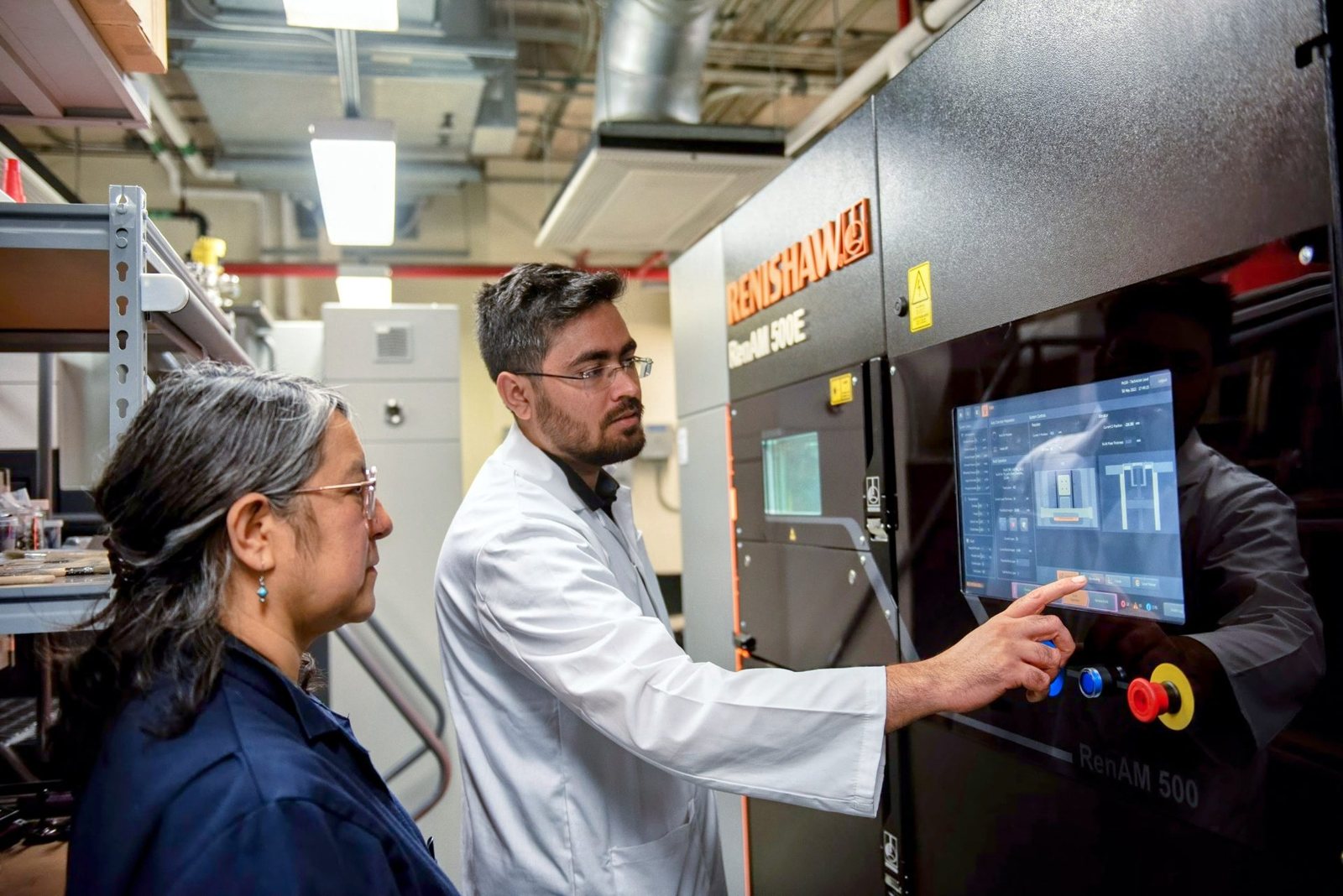
Amit Kumar explaining the controls of a Renishaw RenAM 500E
Explaining build setup on the Renishaw RenAM 500E at McGill.

What I offer

Take a single topic as a short workshop, or combine several into a full program like the four-week course I delivered for Stryker.

LPBF in depth: from machine to qualified part

A detailed course on laser powder bed fusion: laser and optics, melt-pool physics, recoating, spatter, gas flow, build plates, monitoring and powder handling, then defects, process parameters, heat treatment and qualification.

For
Engineers, technicians and researchers who run or buy LPBF machines
Length
2–5 days
Built on
The full 360-slide Stryker program

Materials, characterization and qualification

From a printed part to a qualified one: dimensional accuracy, surface, density and defects, microstructure, mechanical testing, residual stress, heat treatment and HIP.

For
Quality, materials and process engineers
Length
1–2 days
Built on
Part B-S1 of the Stryker program

Powder characterization, spatter and reuse

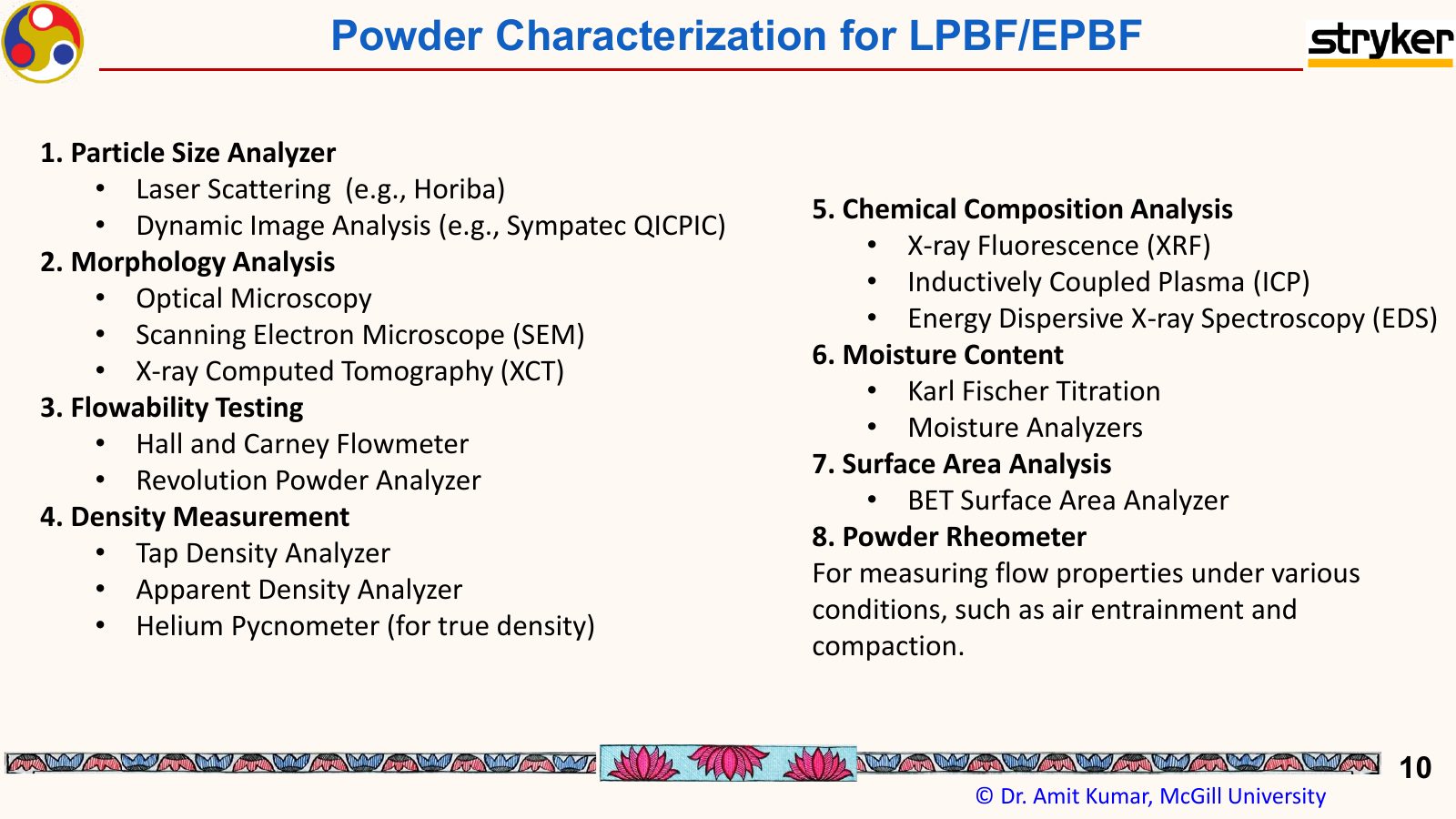
Particle size, morphology, flowability and chemistry; spatter formation and its effect on properties; reuse schemes, oxygen pickup and powder economics.

For
Powder users, quality teams, powder suppliers
Length
1 day
Built on
Part B-S2, plus my powder reuse model

Materials science of AM alloys, in depth

Physical, pyro-, process, mechanical and powder metallurgy for printed metals: rapid solidification, segregation, recrystallization and precipitation; high-temperature melting, thermochemistry, atmosphere control and heat treatment; strengthening mechanisms, ductility, notches and fatigue; and powder production, characterization, flow and reuse, with IN625, steels, titanium and refractory metals as case studies.

For
Materials engineers, metallurgists and graduate students
Length
1–2 days
Built on
My IN625 heat-treatment and microstructure research

Defects, process parameters and residual stress

Defect mechanisms, P-V maps and energy density, layer thickness and scan strategies, thermal modelling, and how residual stress forms and how to control it.

For
Process engineers and R&D teams
Length
2 days
Built on
Part C of the Stryker program, ASM Handbook chapter

Advanced design for additive manufacturing (DfAM)

Beyond the basic rules: deciding when AM makes sense, machine- and material-specific design rules, low-angle overhangs without supports, orientation, part consolidation, topology optimization, lattices and design for post-processing, with industrial case studies.

For
Design and product engineers
Length
1–2 days
Built on
Stryker program and my IN625 industrial DfAM framework

Simulation for metal AM: FEM and FVM

Finite volume thermo-fluid models of the melt pool and finite element thermal and thermo-mechanical models of the part in Abaqus: element activation, heat sources, material data, residual stress and distortion, and validation against measurements.

For
Simulation engineers and graduate students
Length
1–2 days
Built on
My EBAM and overhang models

Netfabb build preparation and material files

A hands-on walk through Netfabb for Renishaw LPBF: material-file structure, scan ordering, borders and fill contours, hatch, stripe and chessboard strategies, upskin and downskin intervals, and how to qualify a parameter set.

For
Process engineers and build-preparation technicians
Length
1 day, hands-on
Built on
My Netfabb manual written at Productique Québec

Robotics and directed energy deposition

Robot programming and path planning for laser, TIG and MIG deposition with ABB, Fanuc WeldPro and Mastercam, including multi-axis builds.

For
Engineers and researchers setting up deposition cells
Length
2–3 days, hands-on
Built on
Robotics training at IIT Guwahati
How it works

Courses are shaped around your team, not delivered off the shelf.

  1. Step 1

    A short call

    We talk about your team, your machines and materials, and what you want people to be able to do afterwards.

  2. Step 2

    A tailored outline

    I send a module plan, schedule and format: on-site, online or a mix, from a single day to several weeks.

  3. Step 3

    Delivery

    Lectures, worked case studies, exercises and assignments, with slides and notes for every participant.

  4. Step 4

    Follow-up

    A question-and-answer session after the course, and support as your team applies what it learned.

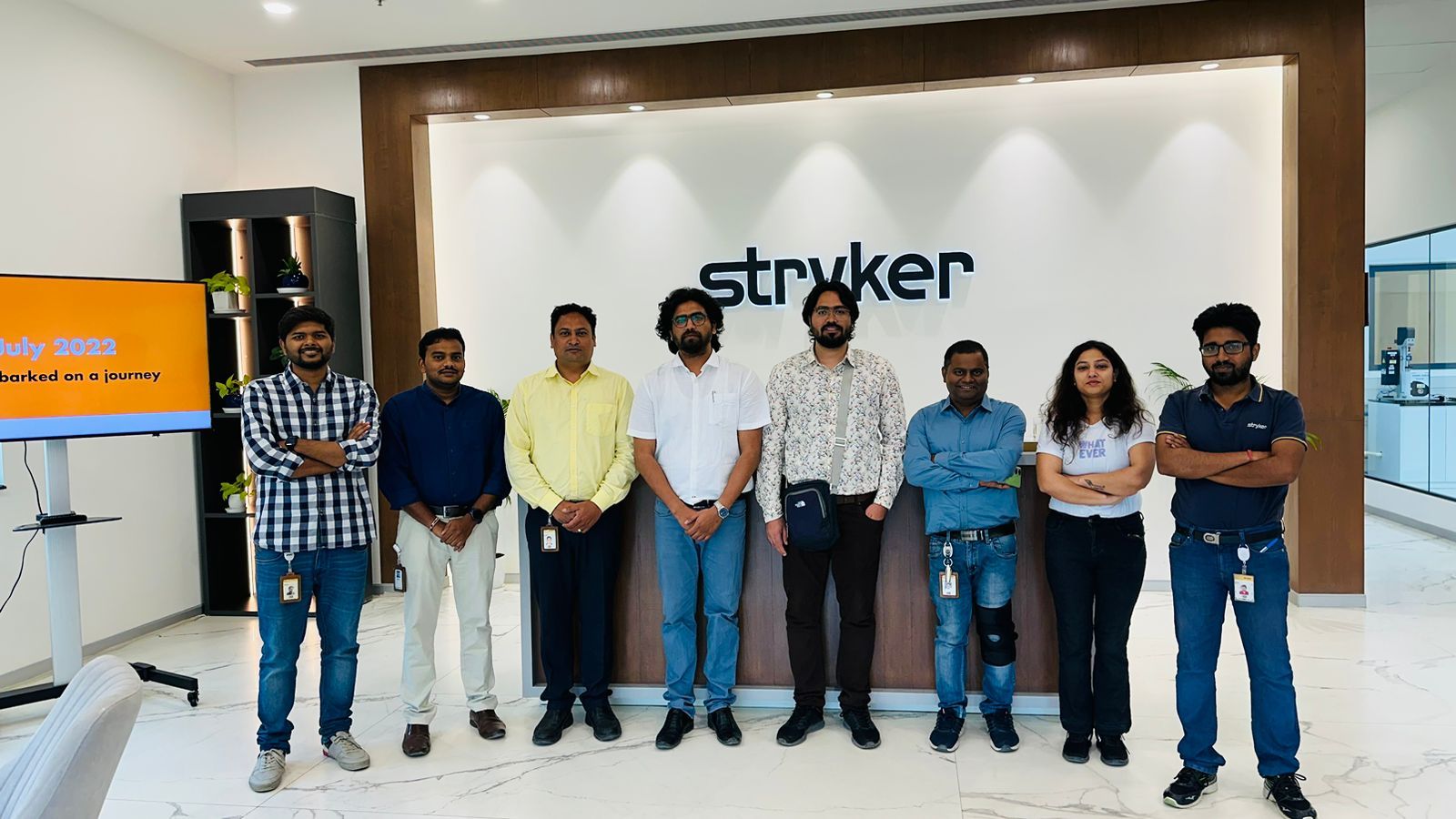
Amit Kumar with Stryker engineers after the LPBF course

Already delivered

A four-week, 360-slide LPBF program for Stryker engineers through IIT Guwahati’s Advanced Training Program on Additive Manufacturing Technologies, July to August 2024. I have also trained doctoral researchers in robotic deposition and taught university courses at McGill, IIT Bombay and IIT Gandhinagar.

Slides from the Stryker program

A selection from all three modules, in teaching order.

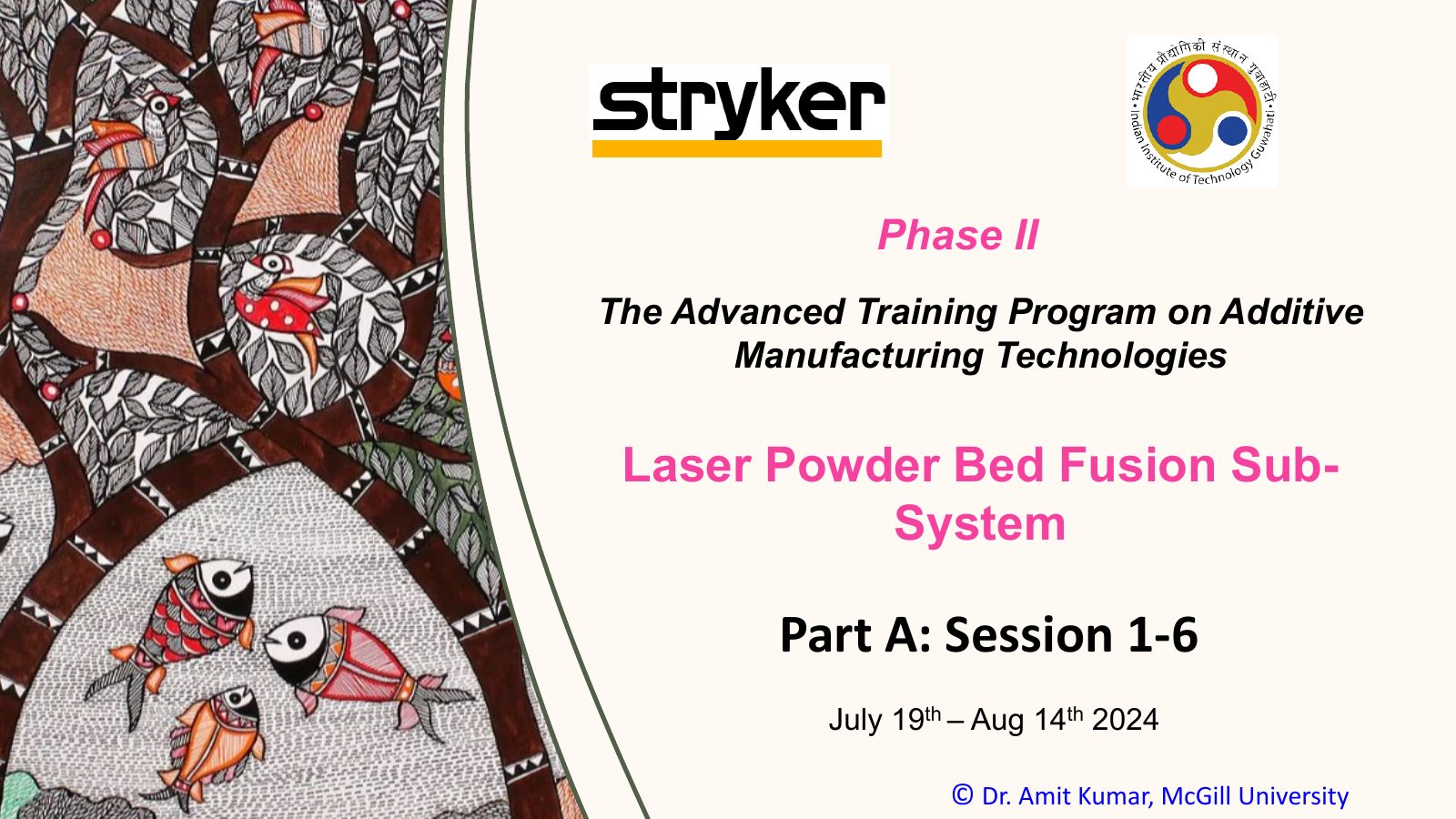
Cover of Part A: Session 1-6
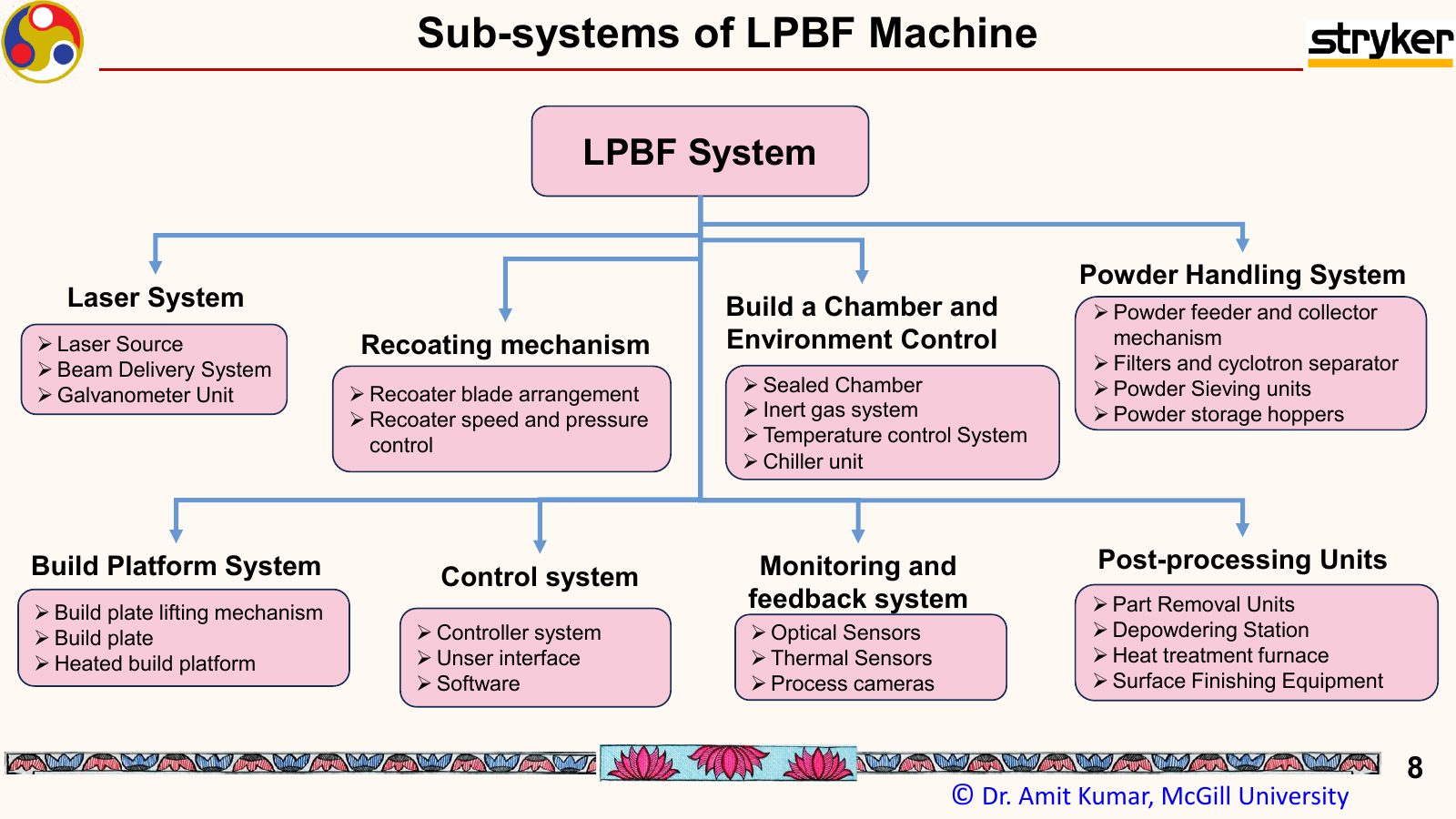
Part A, slide 8. The map used throughout Part A: the eight sub-systems of an LPBF machine.
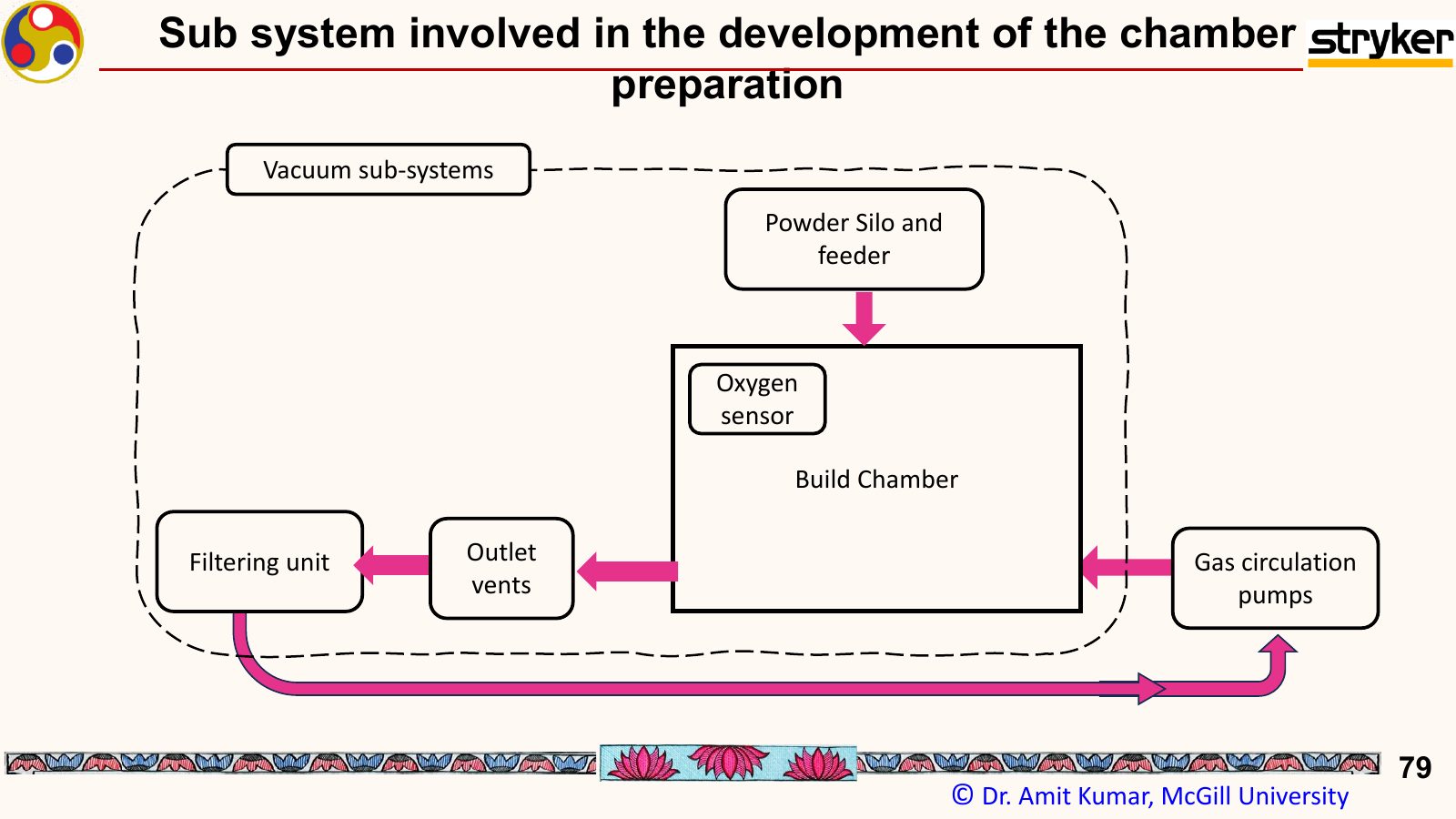
Part A, slide 79. Chamber preparation: how the vacuum, gas circulation, filtering and oxygen sensing work together.
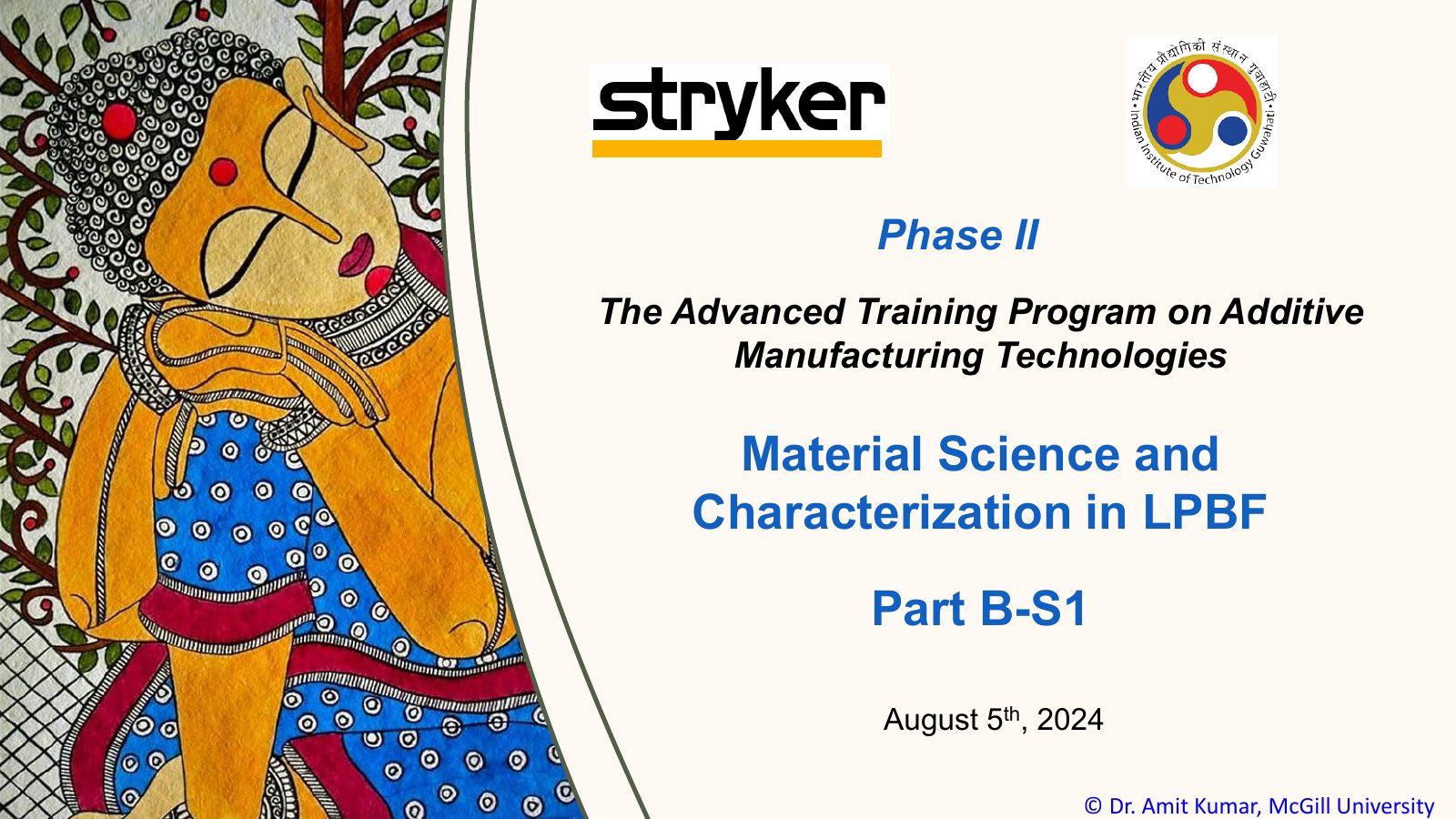
Cover of Part B-S1, 5 August 2024
Cover of Part B-S2
Cover of Part B-S2
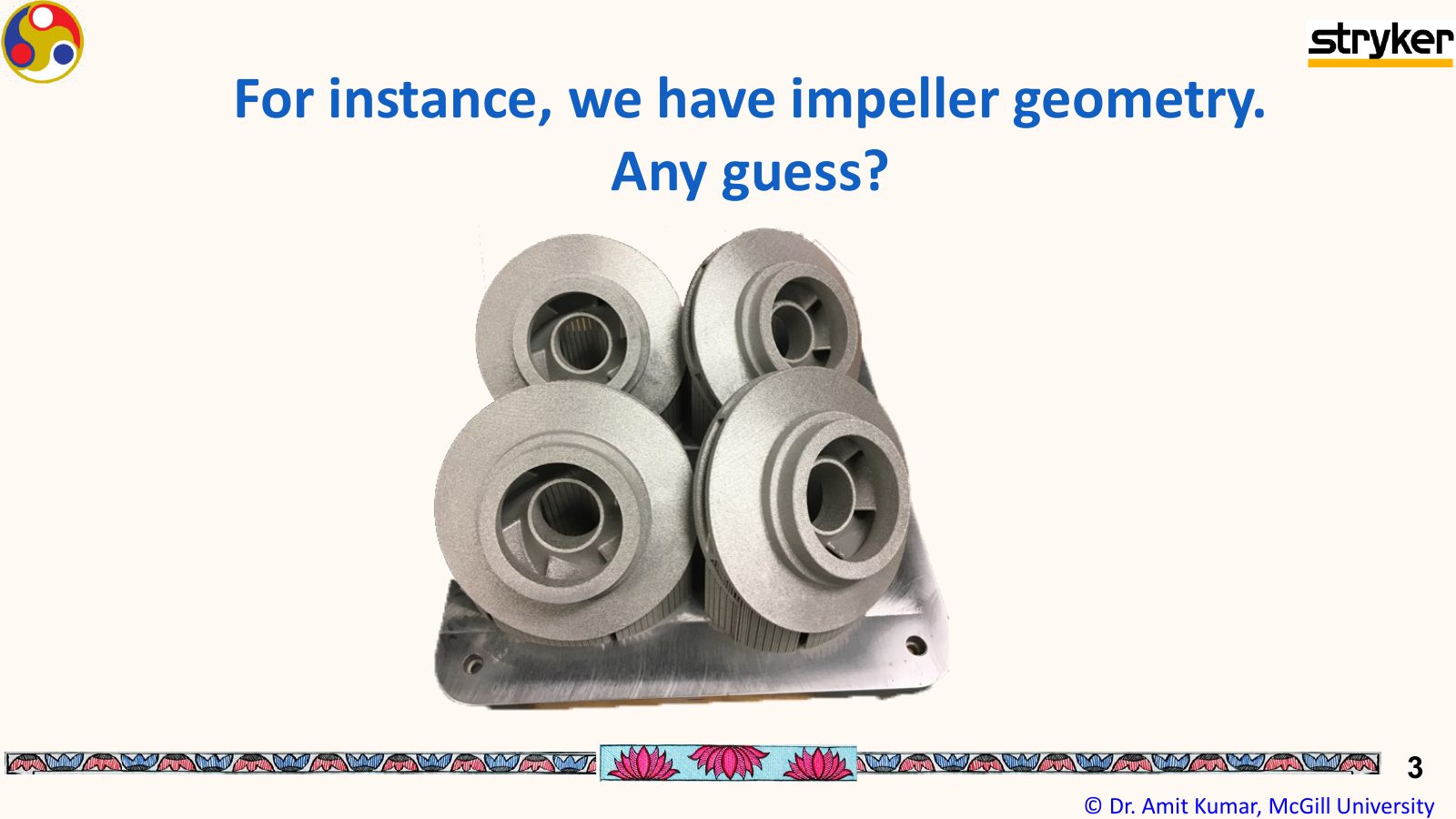
Part B, slide 145. Session S1 opens with a real part: my support-free closed impellers. What would you need to check?
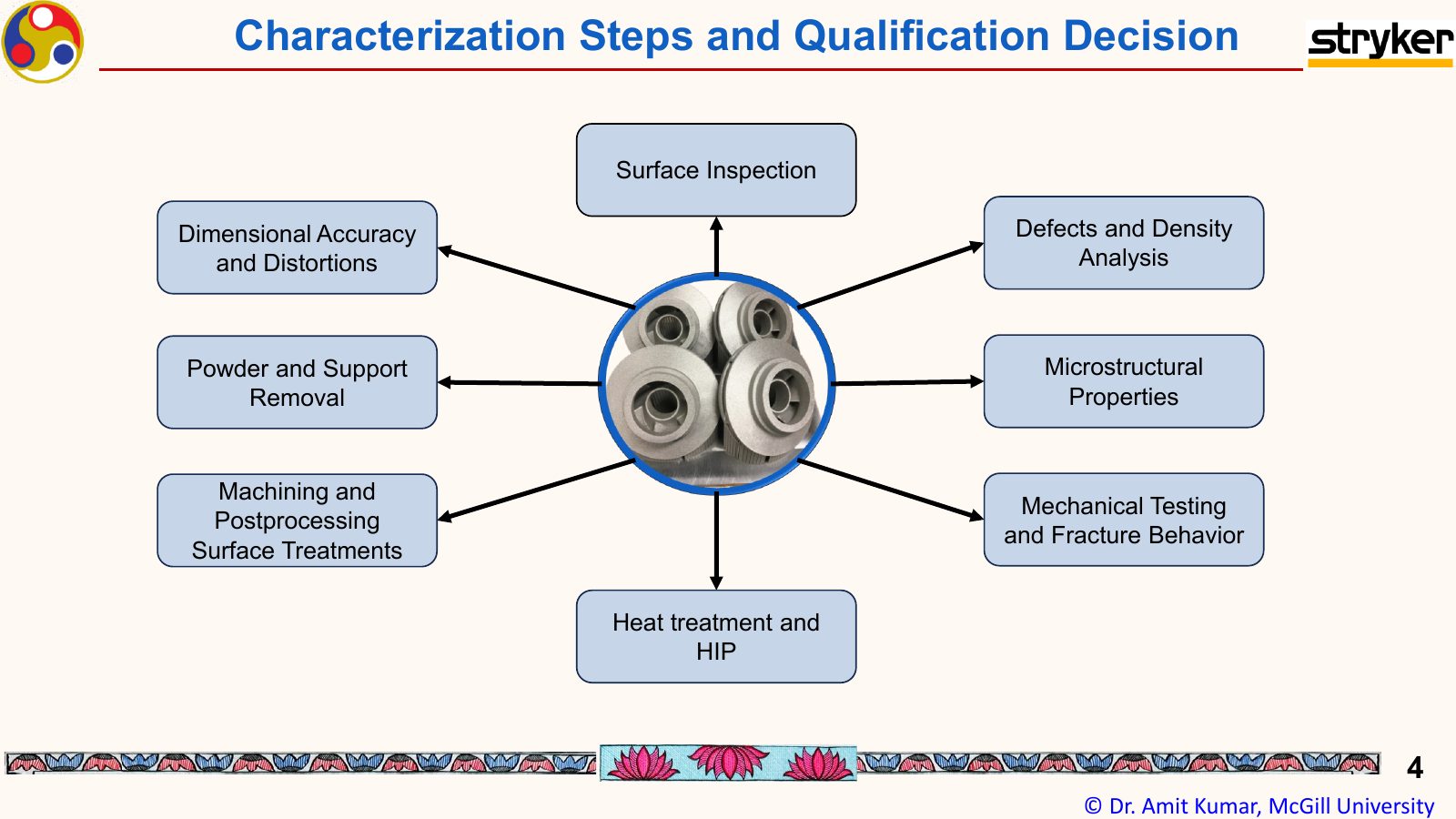
Part B, slide 146. The characterization and qualification map built around that part.
Part B, slide 167. The powder characterization toolkit, from particle size to rheometry.
Cover of Part C
Cover of Part C
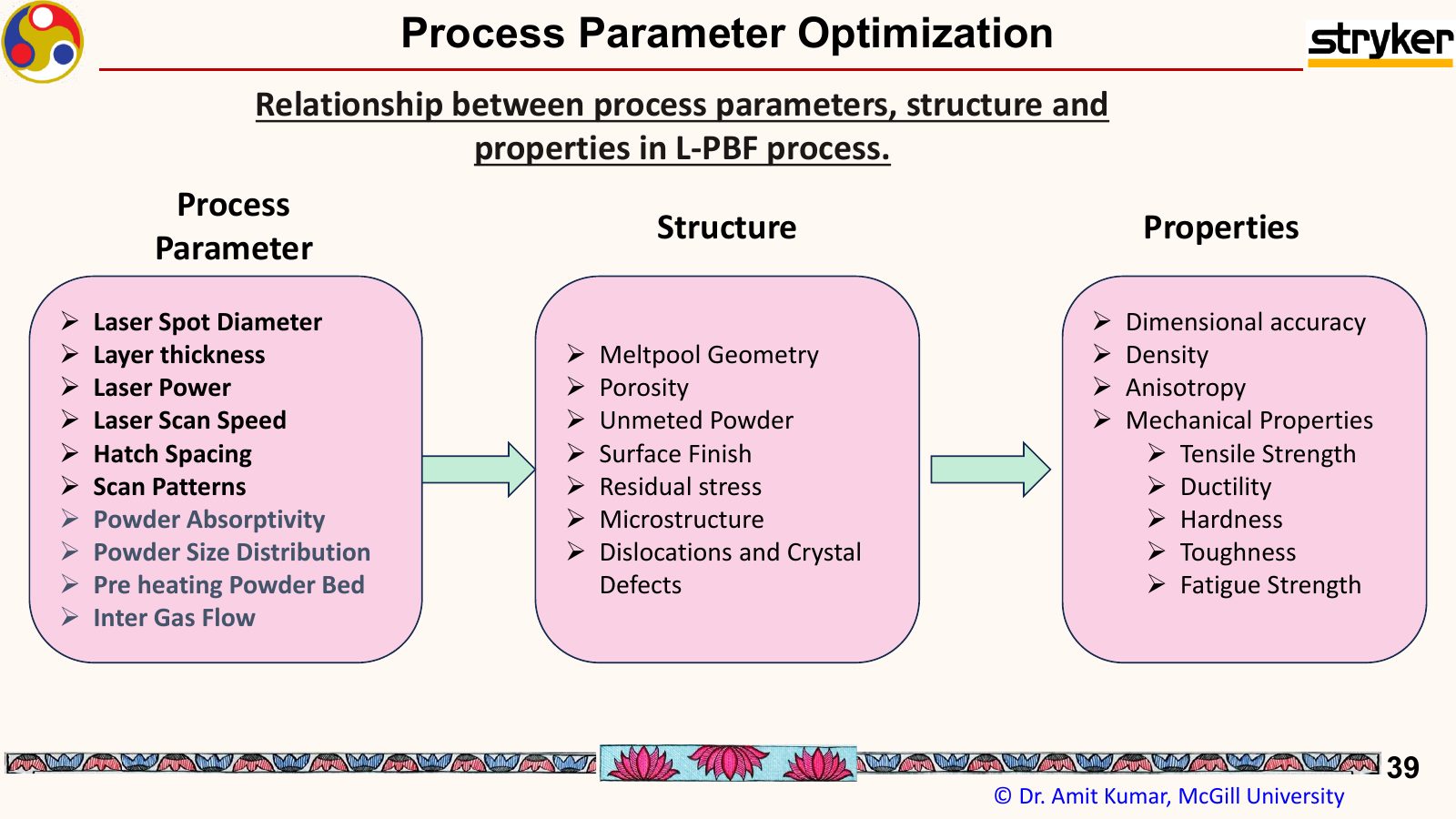
Part C, slide 232. The thread of Part C: process parameters set the structure, and the structure sets the properties.
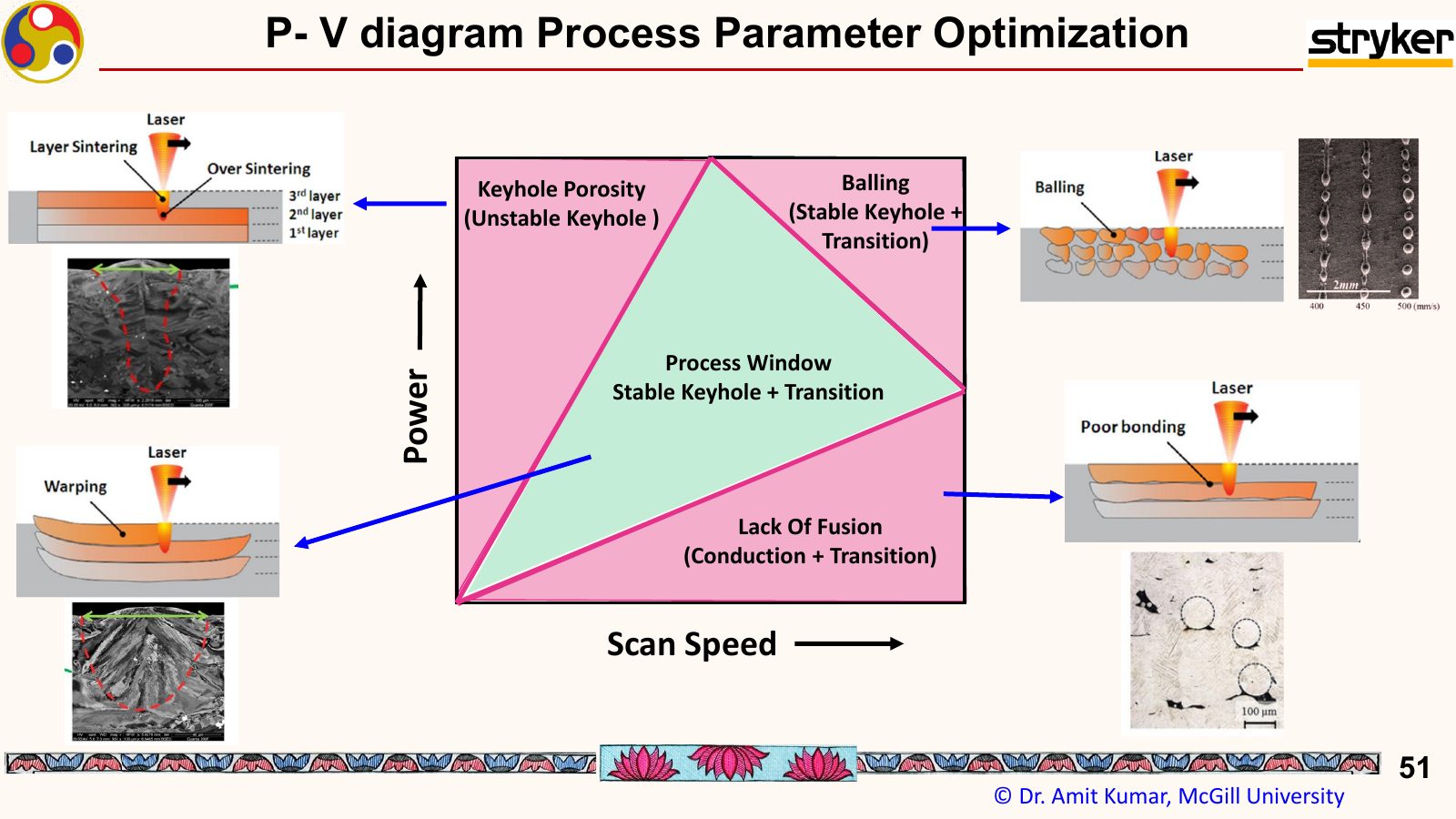
Part C, slide 244. Reading a power-speed (P-V) map: keyhole, balling, lack of fusion and the process window.
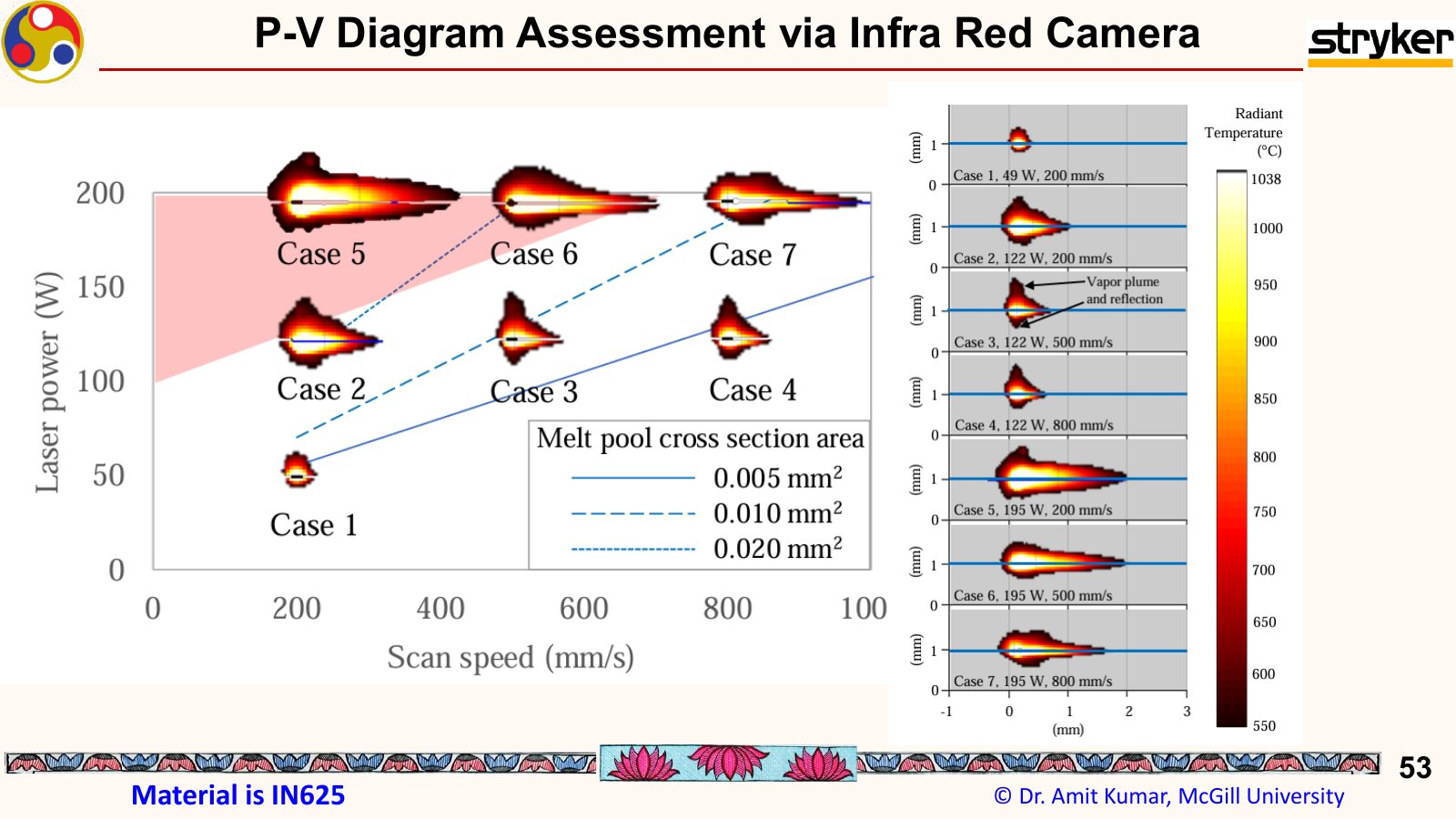
Part C, slide 246. P-V assessment with an infrared camera, IN625: melt pool shape across seven cases.
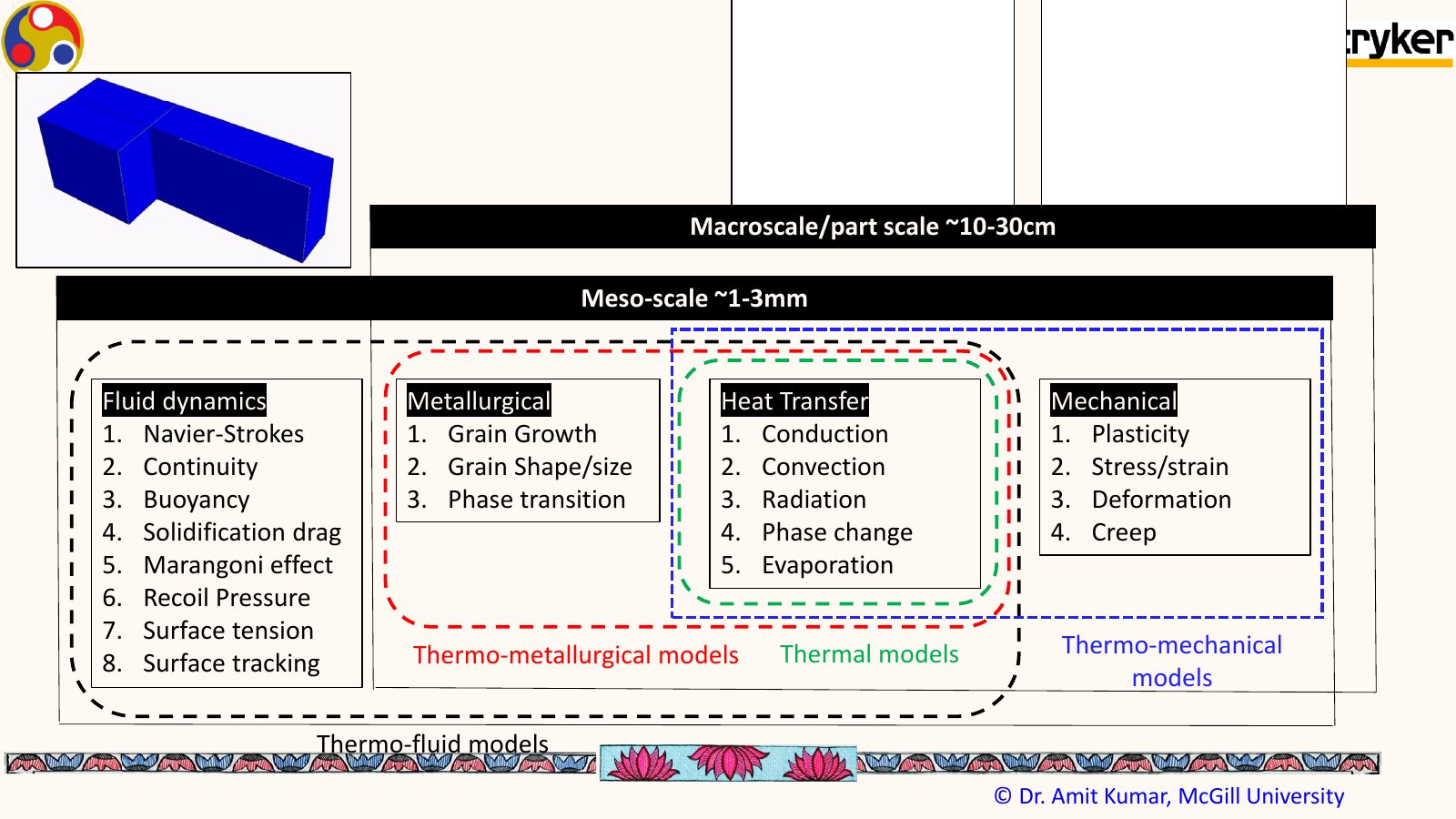
Part C, slide 203. Modelling LPBF across scales: thermo-fluid (finite volume) models of the melt pool, and thermal, thermo-metallurgical and thermo-mechanical (finite element) models of the part.
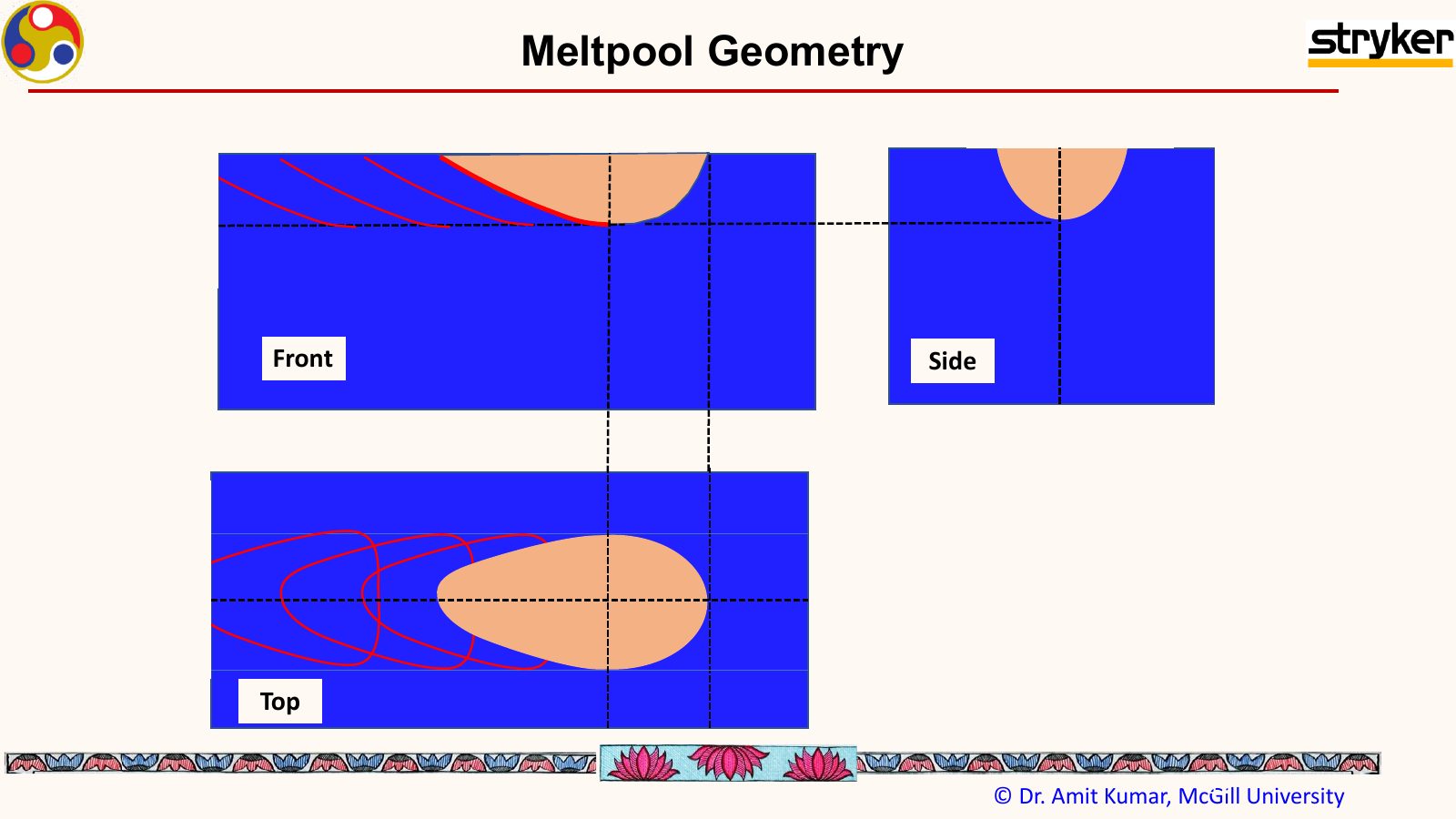
Part C, slide 205. Simulated melt-pool geometry from the front, side and top.
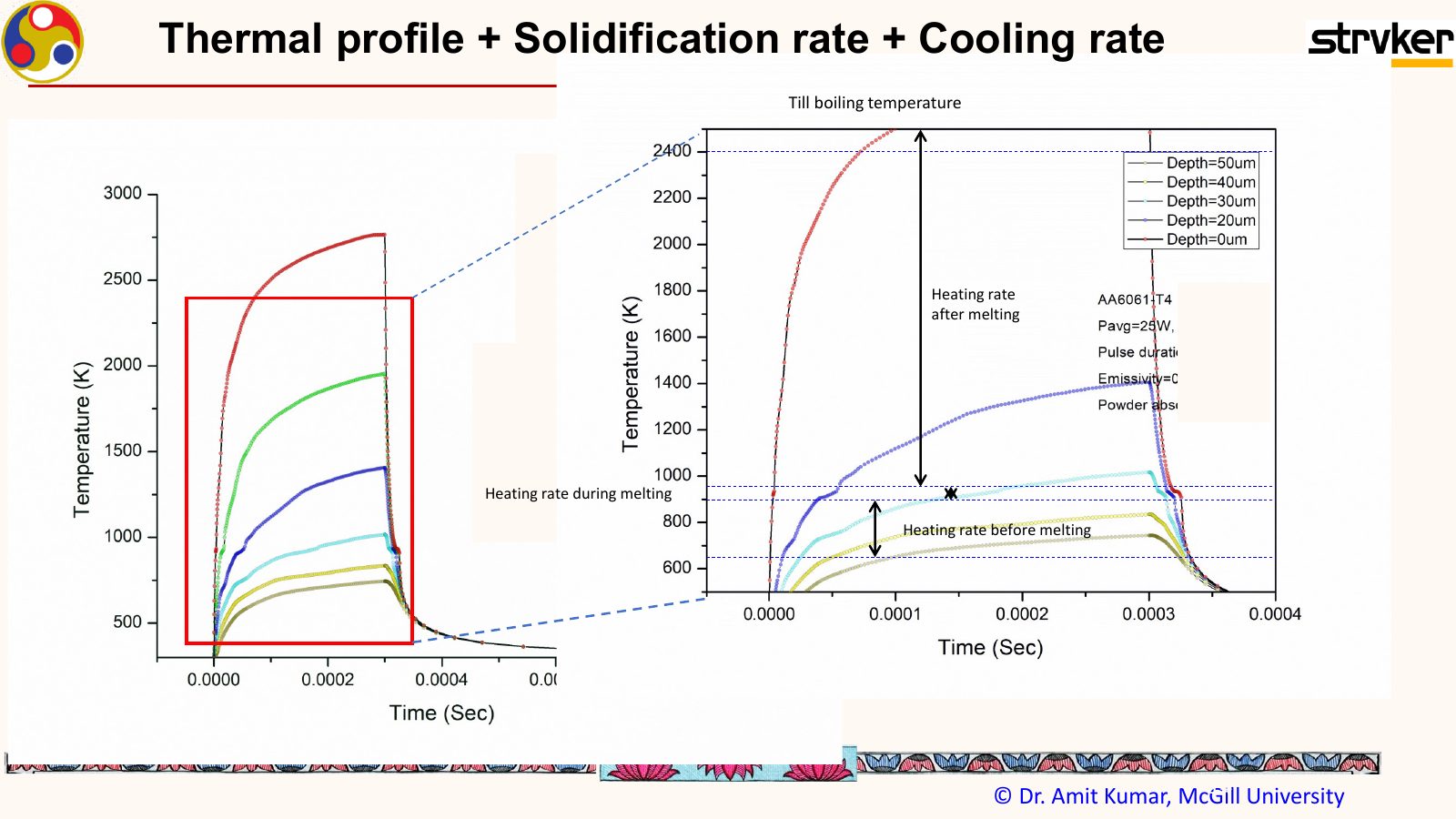
Part C, slide 207. Simulated thermal history with depth: heating rate, solidification range and cooling rate.
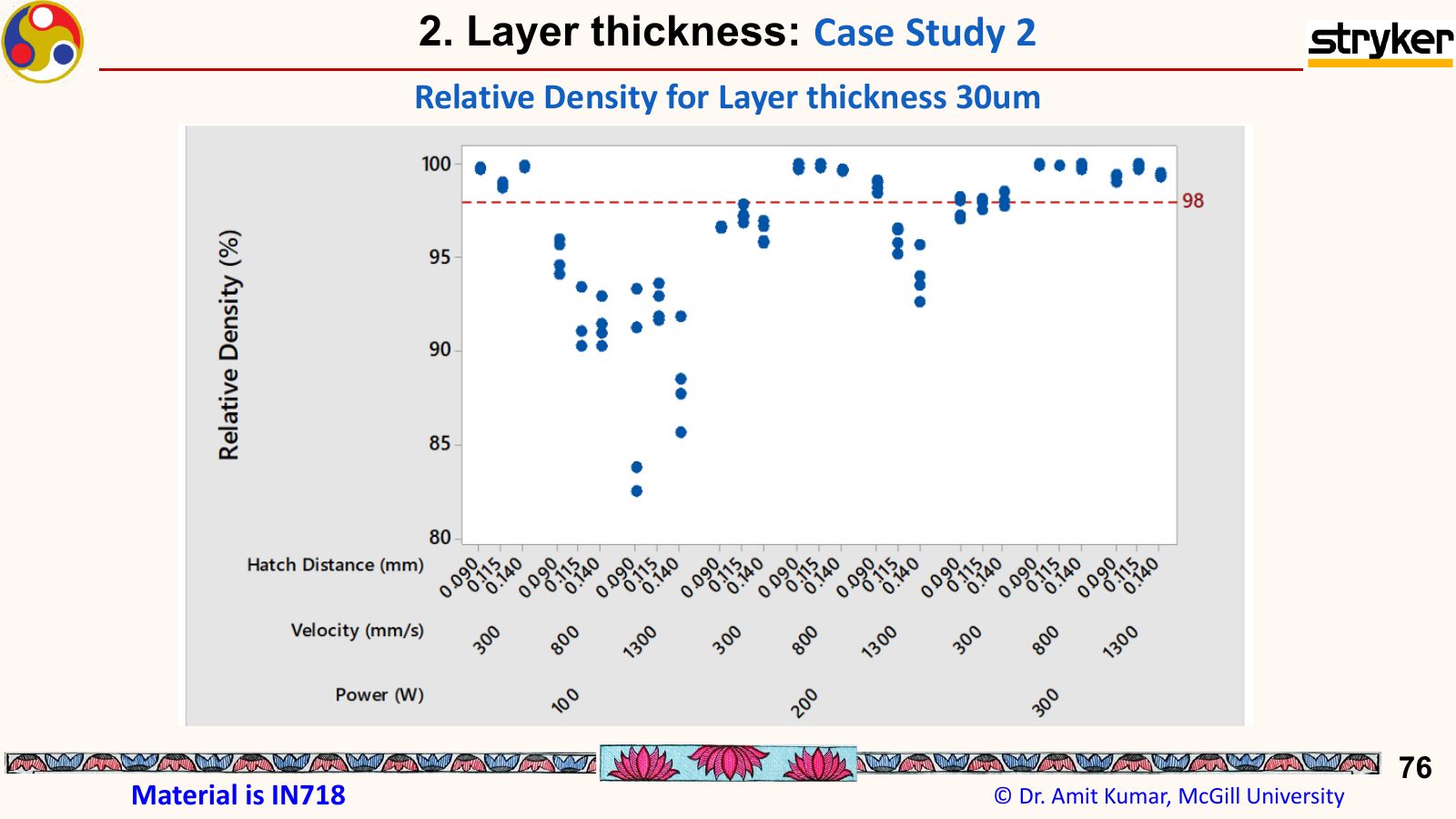
Part C, slide 269. Layer thickness case study, IN718: relative density across power, speed and hatch at 30 µm.
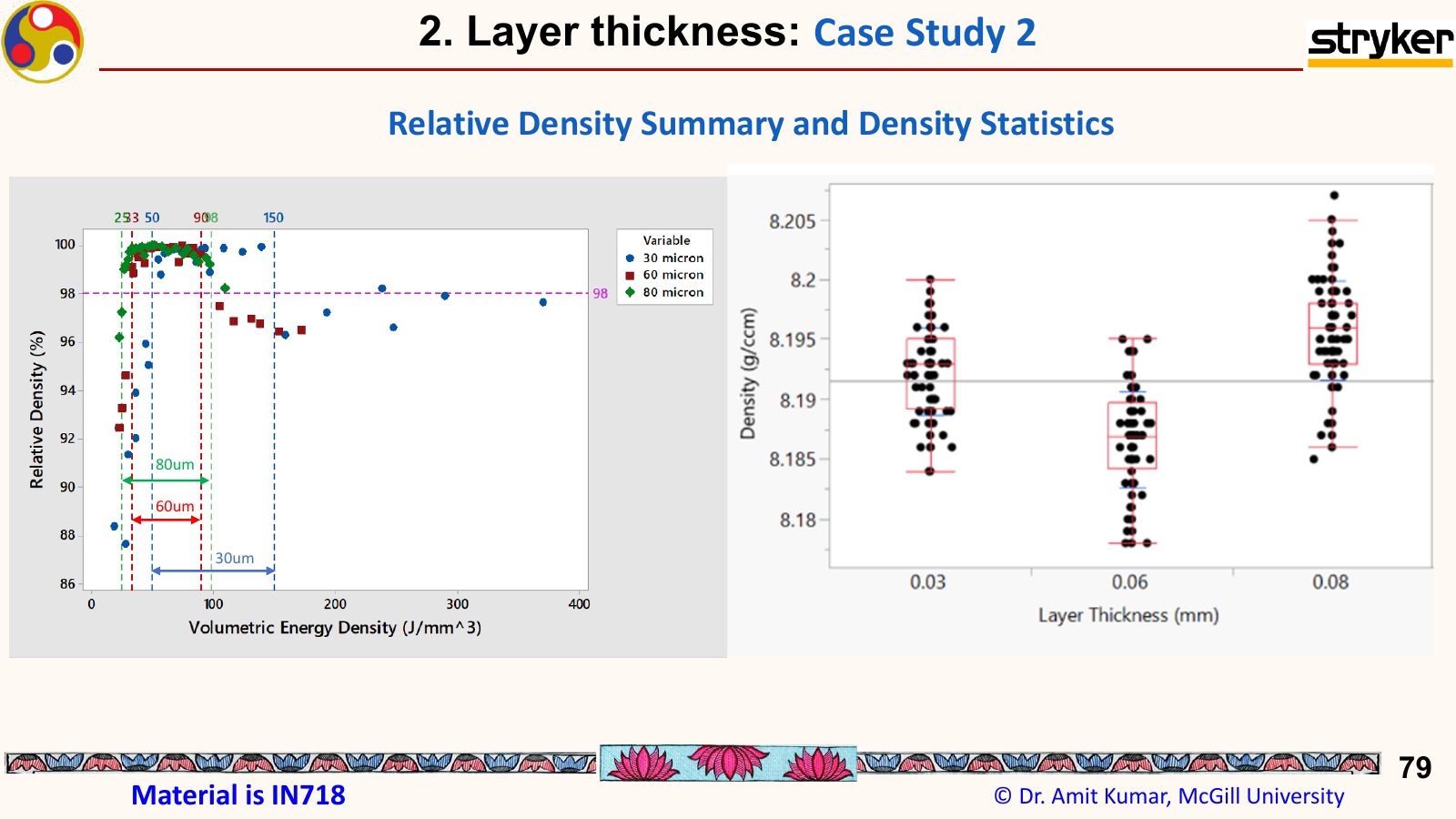
Part C, slide 272. Density summary and statistics across 30, 60 and 80 µm layers, IN718.
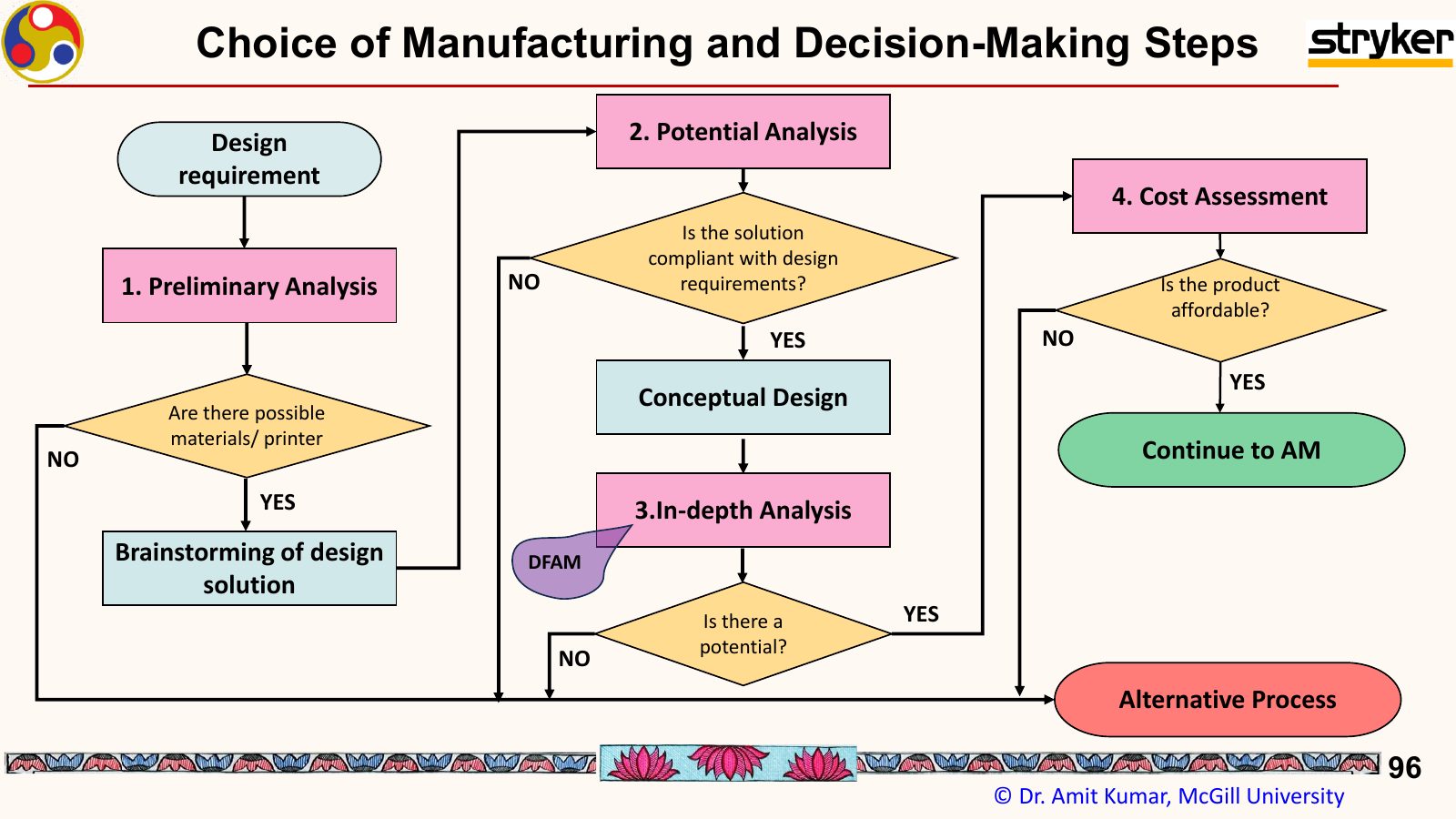
Part C, slide 289. Choosing AM: the decision steps from requirement to cost assessment.
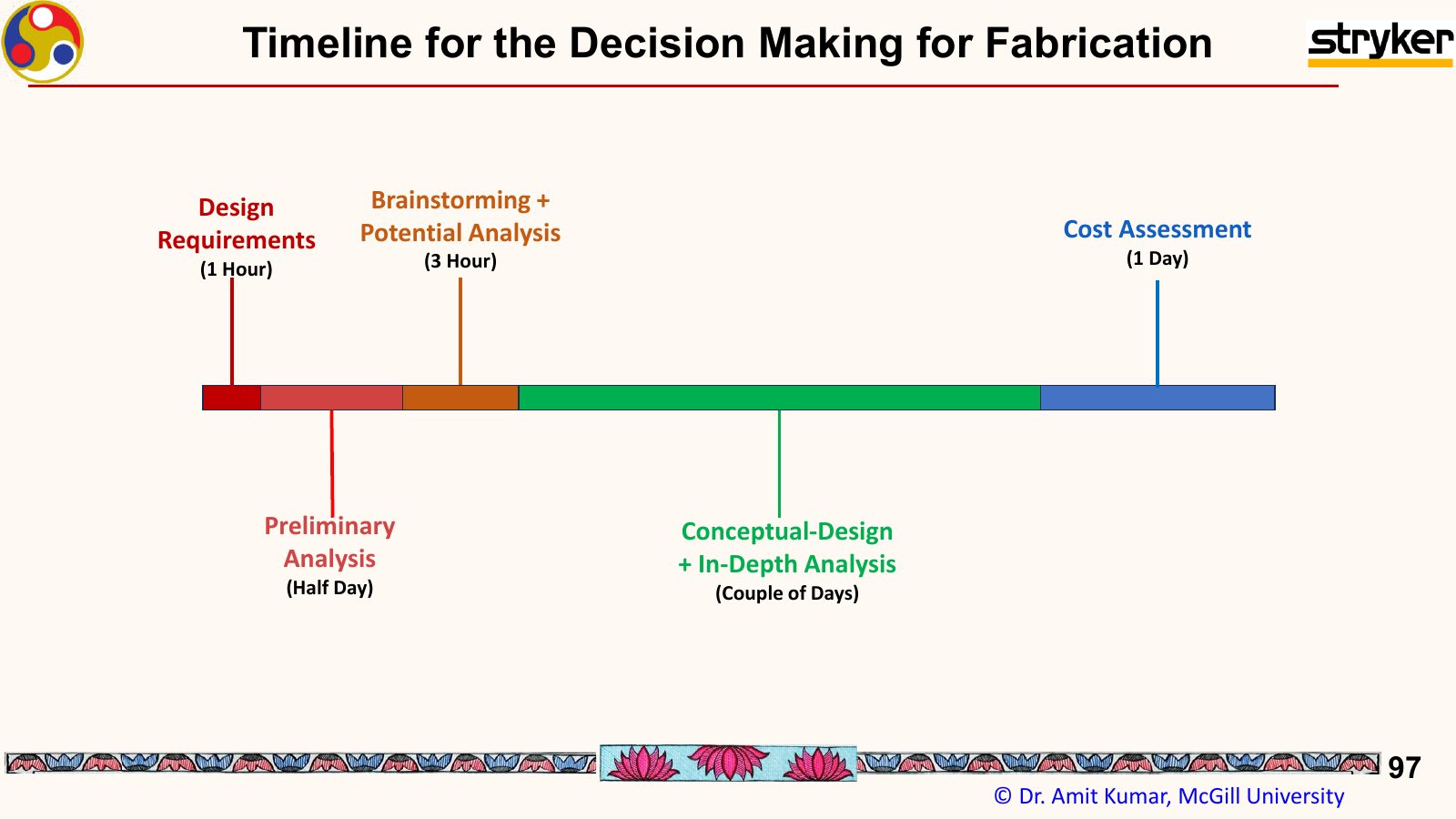
Part C, slide 290. How long each decision step takes in practice.
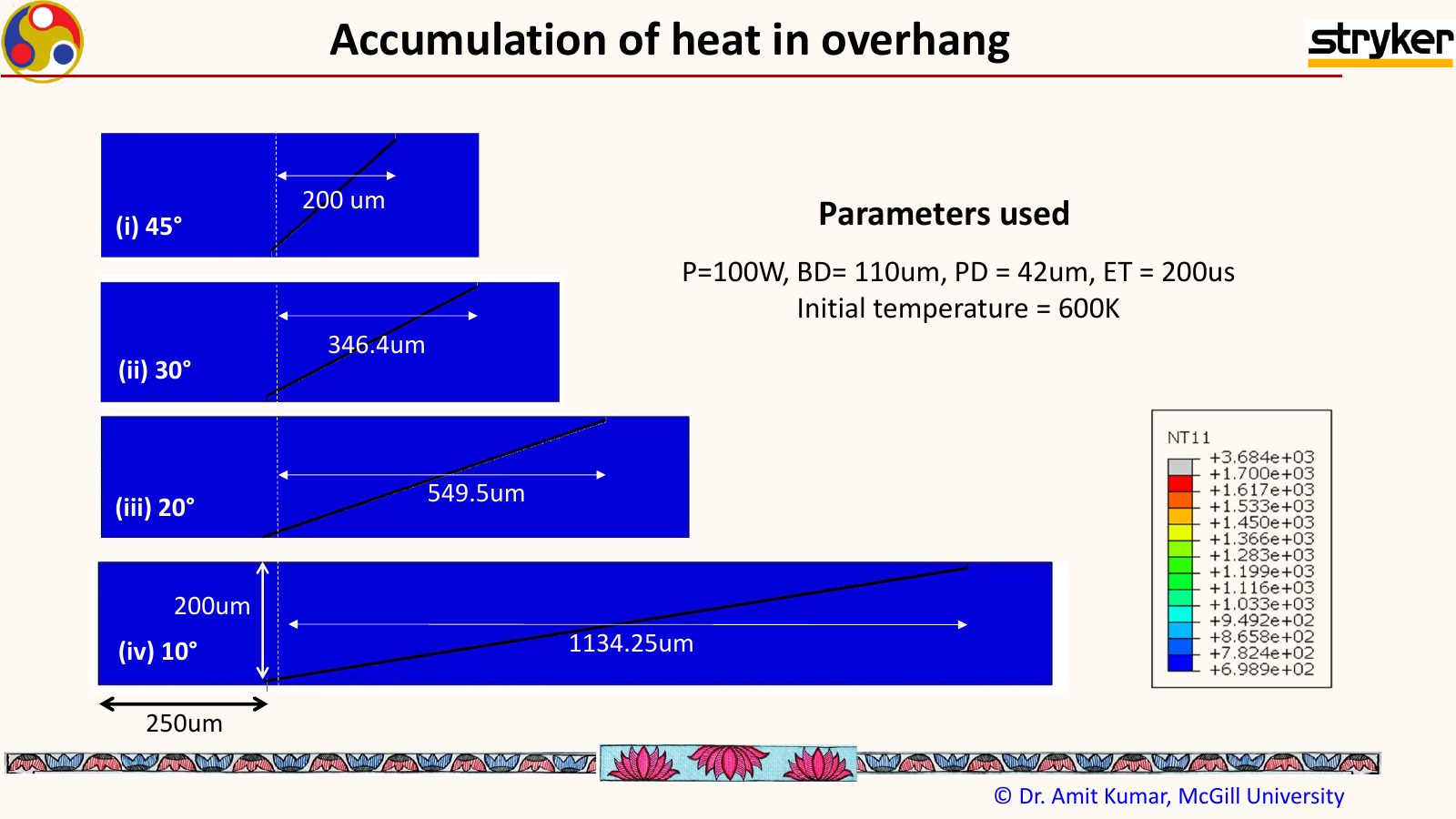
Part C, slide 317. Simulated heat accumulation as the overhang angle drops from 45° to 10°.
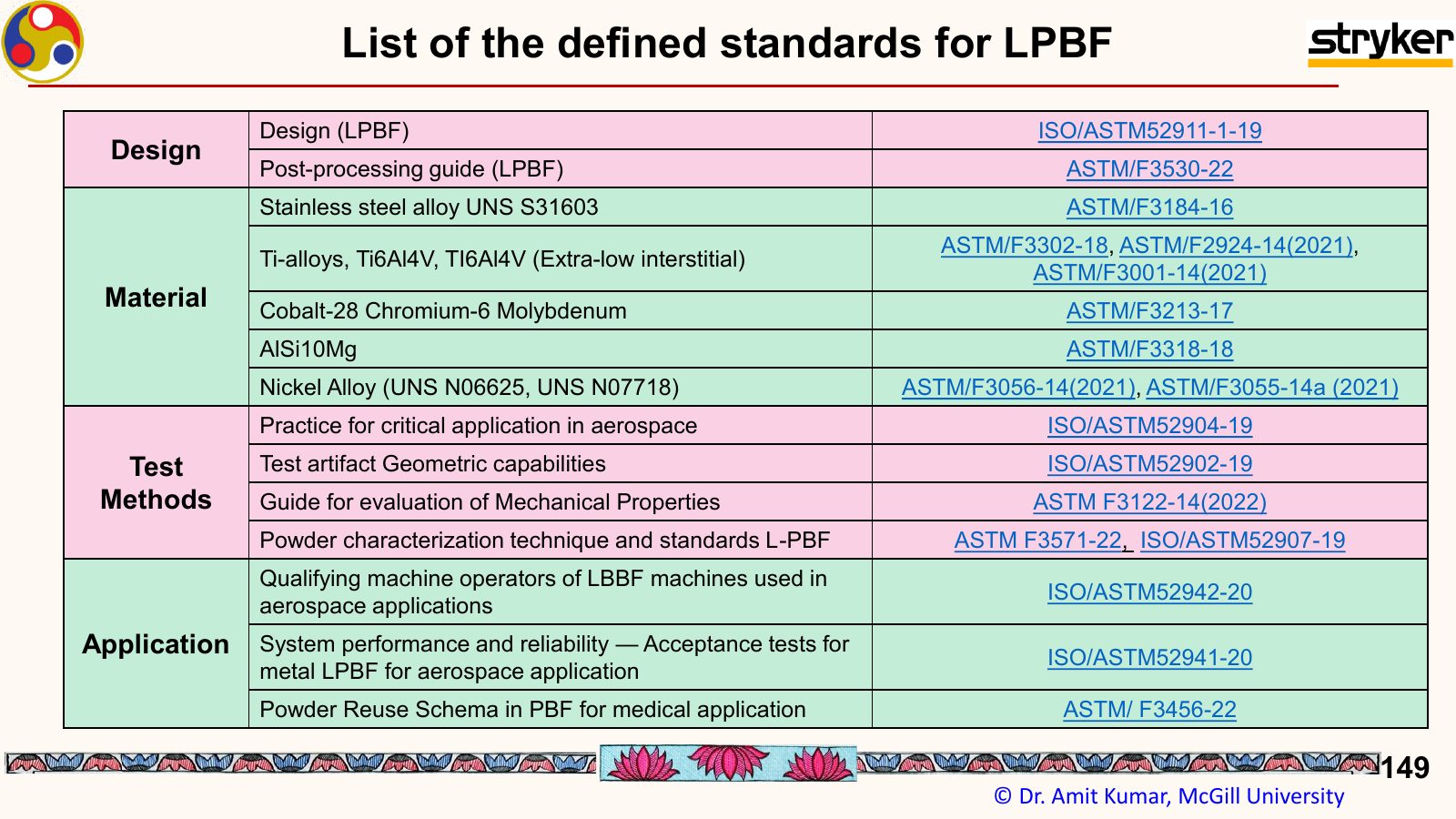
Part C, slide 342. The LPBF standards map: design, materials, test methods and applications.

Scroll or swipe left to right, use the arrow keys, or the buttons above.

Ask about a course

Companies, universities, research centres and individuals are all welcome. Tell me a little about your team and I will reply with a suggested outline.

I usually reply within two working days.