Projects

Case studies from research and industry. Each one says what the problem was, what I did, and what came out of it.

Closed impellers at two scales
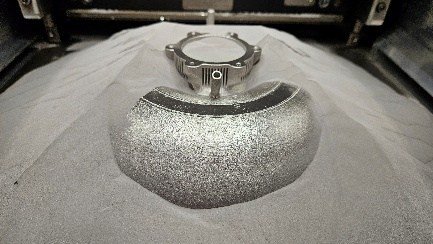
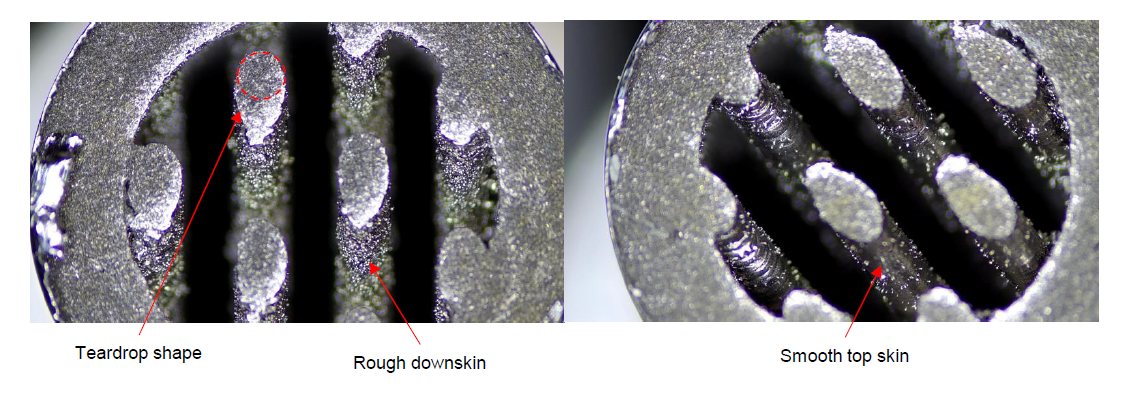
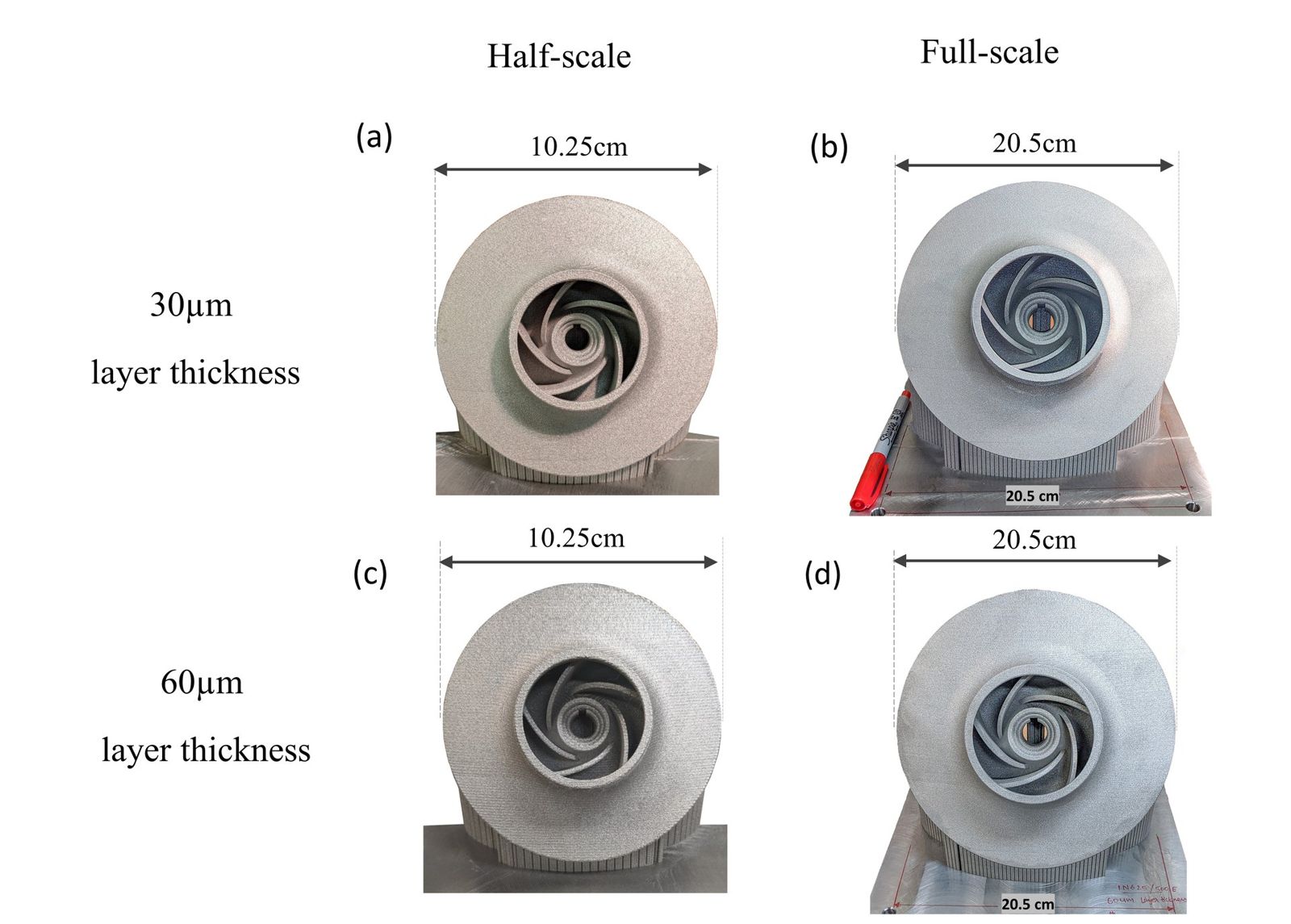
Half- and full-scale closed impellers at 30 and 60 µm layers.

Support-free laser powder bed fusion, from bars to closed impellers

Doctoral research, McGill University, 2018–2024

Overhangs below 45° normally need supports, and internal ones cannot be removed. I developed a geometry-based feed-forward method that balances heat input by adjusting laser parameters layer by layer. It was tested on 60 mm bars and then on closed impellers at two scales and two layer thicknesses.

Each step was characterized: residual stress, surface topography, grain structure, cell size, hardness and tensile properties.

5° overhangs at 30 µm layers; IN625 closed impellers up to 20.5 cm with 790 MPa yield, 1040 MPa UTS, 45% elongation and density above 99.9%. Patent application US20230405681A1.
Impeller paper and low-angle overhang paper

  • LPBF
  • IN625
  • Overhangs
  • Residual stress
  • EBSD
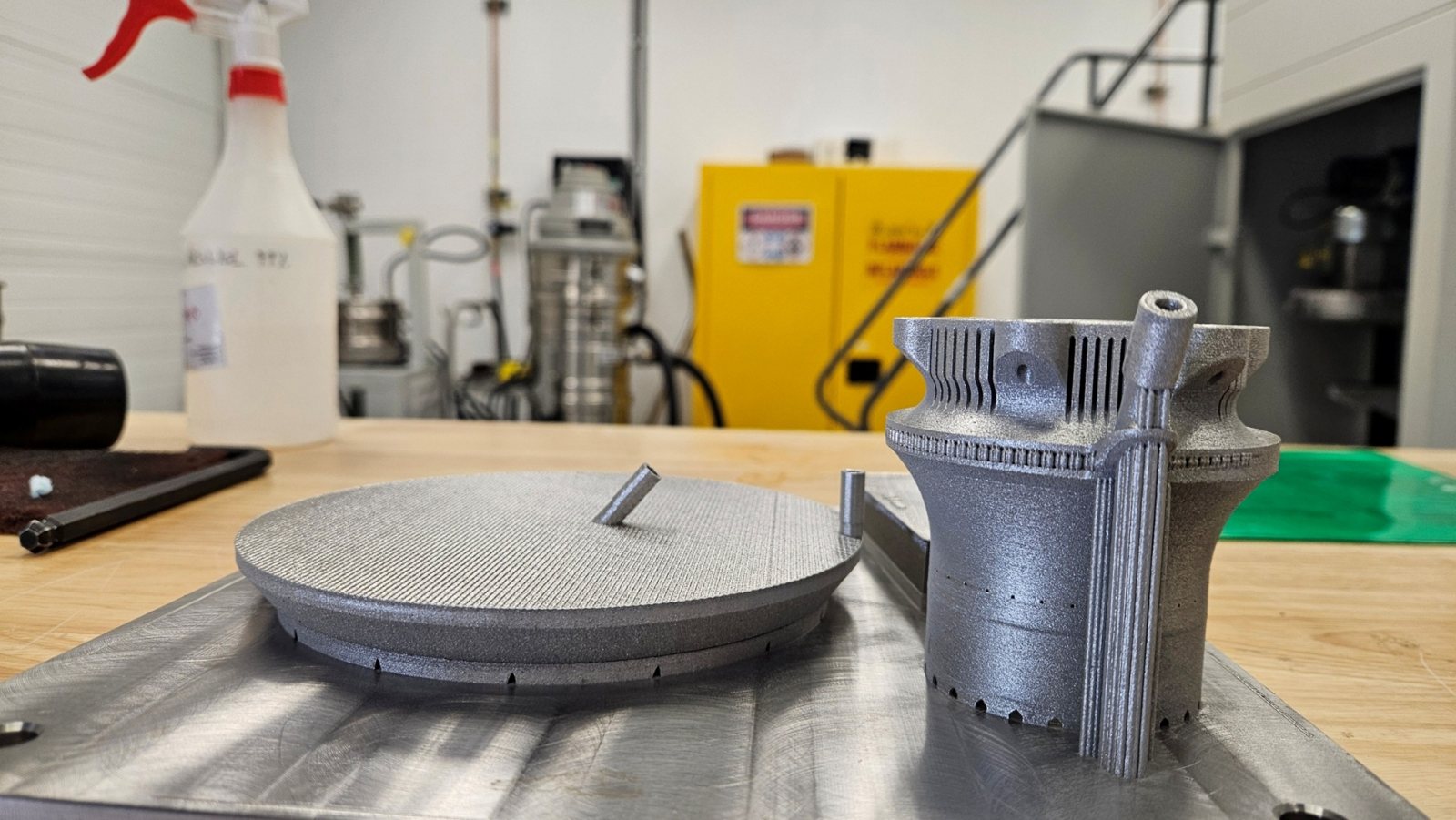
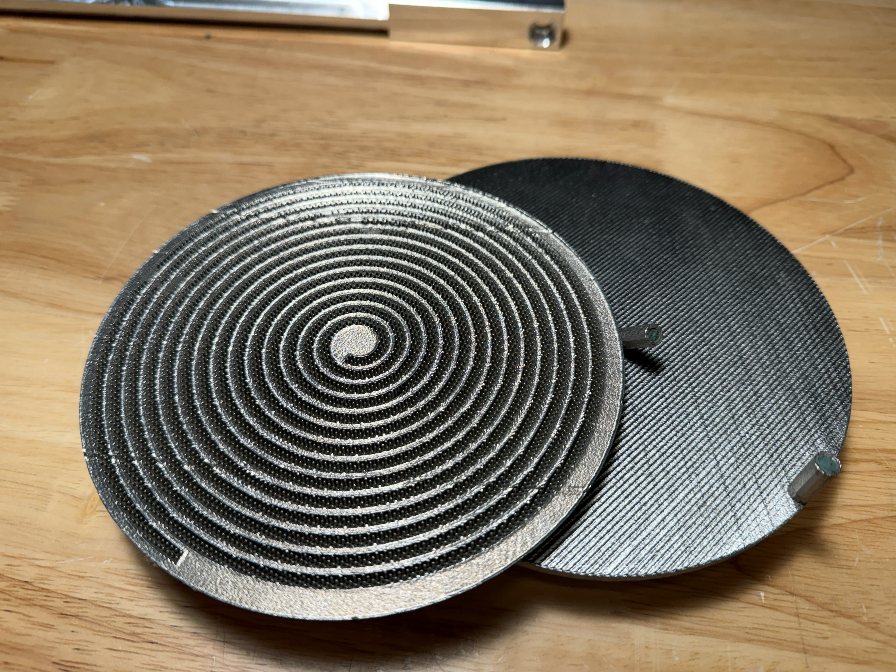
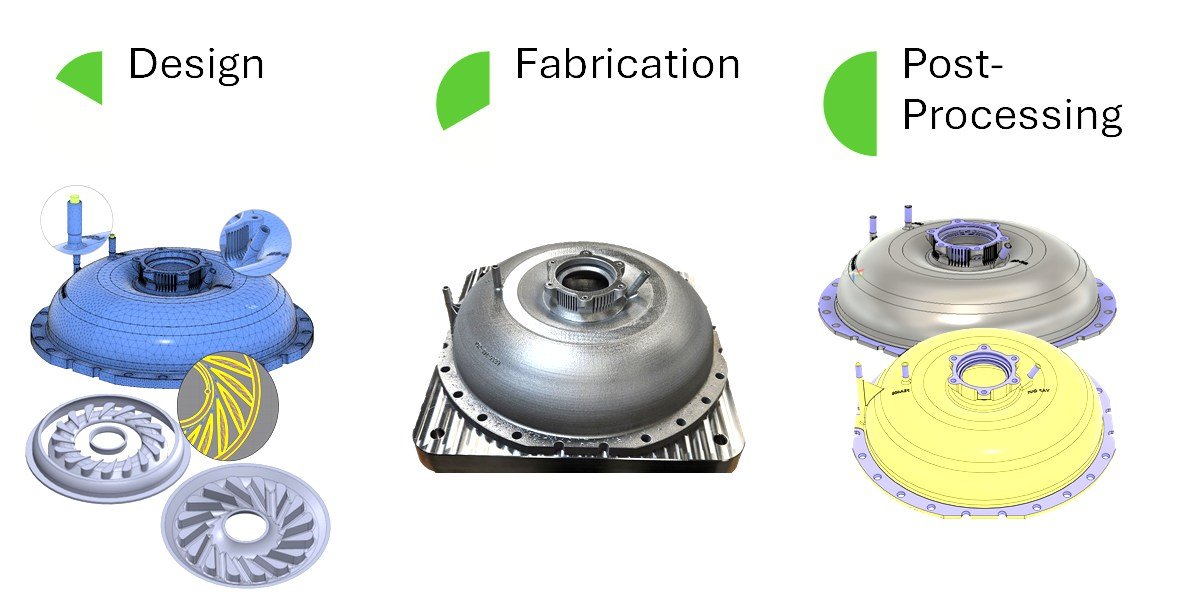
Design, fabrication and post-processing of the swirler
From design to fabrication to post-processing.

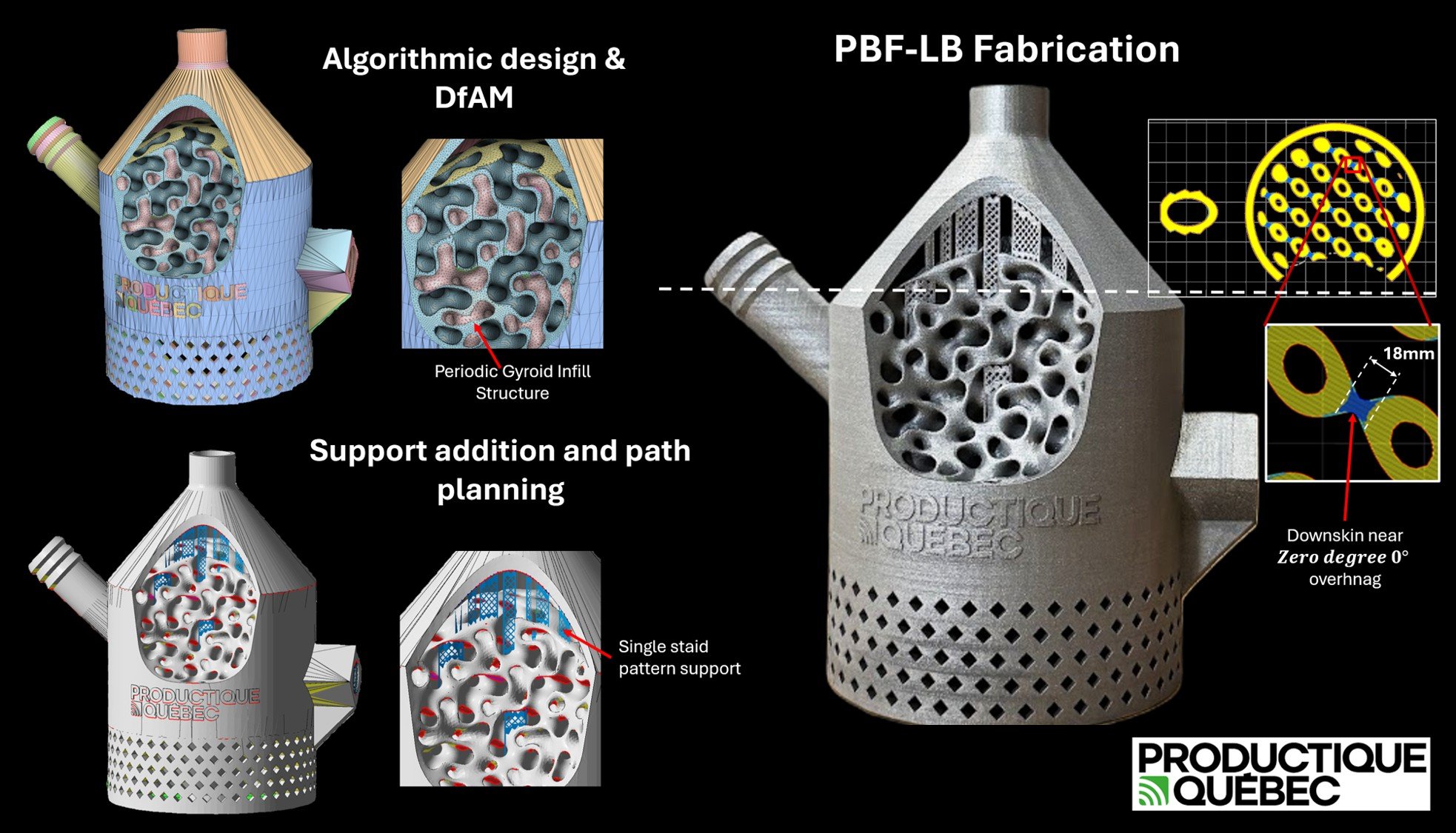
Machine- and material-specific DfAM: the Exonetik swirler

Productique Québec for Exonetik, 2025–2026

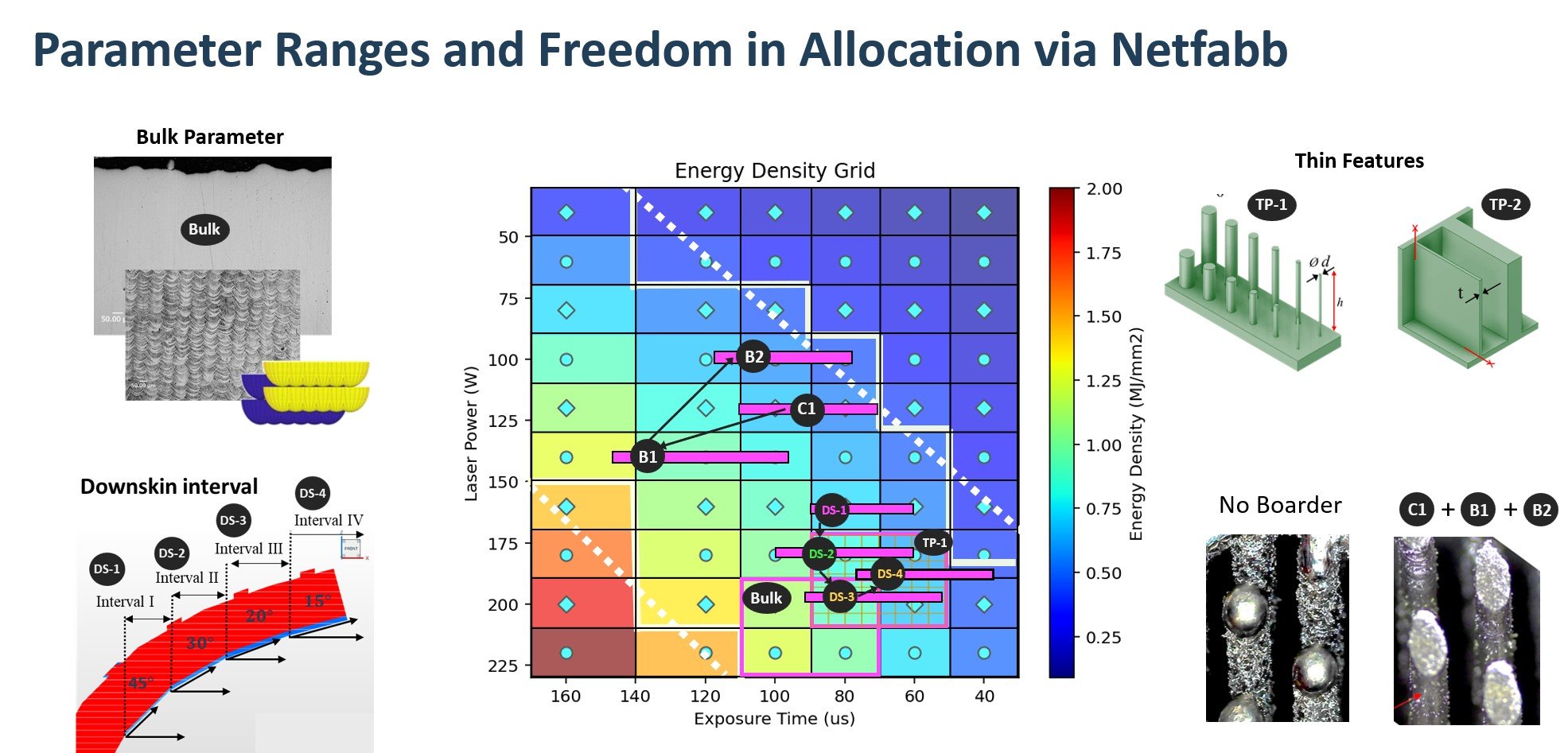
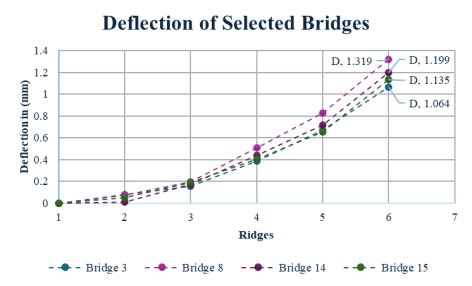
Generic DfAM guidelines are written as if every machine and alloy behaved the same. I characterized IN625 on a Renishaw AM400 (density cubes, NIST bridges, feature artifacts and downskin studies) and turned the results into design rules with region-specific parameters in Netfabb and QuantAM.

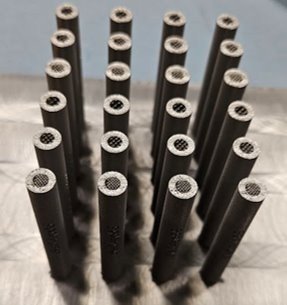
The framework was then applied to Exonetik’s swirler, scaled from half to full size. The design moved through concept, embodiment and detail phases: a tapered roof with angled slots to remove supports, overhangs down to 20° with tailored parameters, a gyroid lattice under a zero-degree roof, and staggered lattice pins in the vanes. After a monitored build, the part was depowdered in stages (air-vacuum, high-pressure water, ethanol), stress-relieved at 760 °C, cut off by wire EDM and machined, and a water-flow test confirmed every internal channel was clear.

≥99.9% density, NIST-bridge distortion about 1.06 mm, roughness from Ra 20 µm to Ra 7 µm, 300 ± 20 µm pins, and a 600 µm strut lattice within 0.02% of nominal diameter and 2.83% of nominal spacing.

See the HI-AM 2.0 slides and the abstract

  • DfAM
  • IN625
  • Renishaw AM400
  • Netfabb
  • Industrial R&D
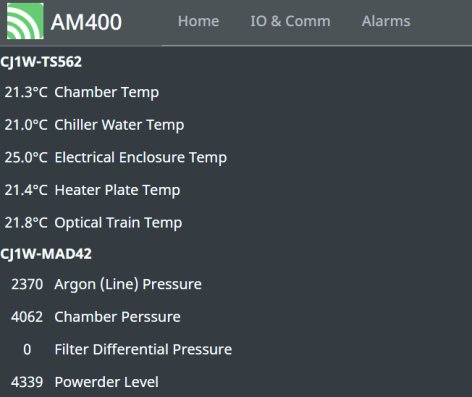
AM400 monitoring dashboard
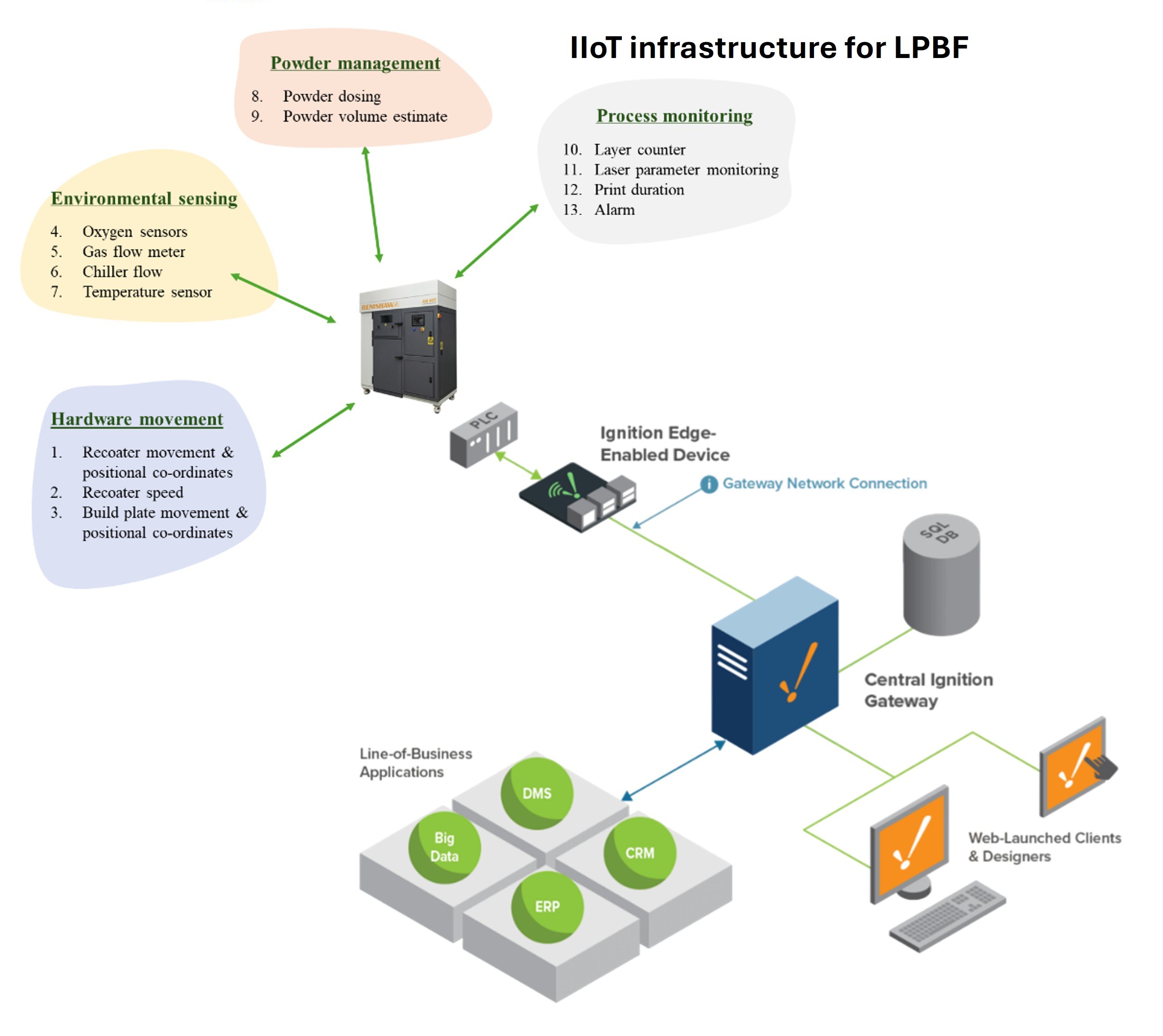
Builds on the Renishaw AM400 were prepared in Netfabb and monitored live.

A Netfabb manual so anyone can build a parameter set

Productique Québec, 2026

Build preparation software hides hundreds of parameters behind short labels, and most teams rely on one expert who knows what they do. I wrote a structured manual for developing, modifying, validating and deploying Netfabb material files for Renishaw LPBF machines, so that any engineer in the lab could do it.

It sets a clear sign convention for build, recoater and gas-flow directions and overhang angles, then explains every parameter in order: global settings, build-time estimation, scan and support ordering, laser order, multi-laser and multi-layer scanning, borders, fill contours, hatch patterns (meander, stripe and chessboard), blocked paths, upskin remelting and the angle-banded downskin intervals that matter for low overhangs. Each definition was cross-checked against Renishaw’s Material Editor documentation, and anything that could not be verified is flagged for checking rather than guessed.

A single reference linking material properties, geometry, scan strategy, laser parameters and thermal management to a qualified build process. It became the basis of my Netfabb course.

  • Netfabb
  • Renishaw
  • Build preparation
  • Training
Dobson Cup award
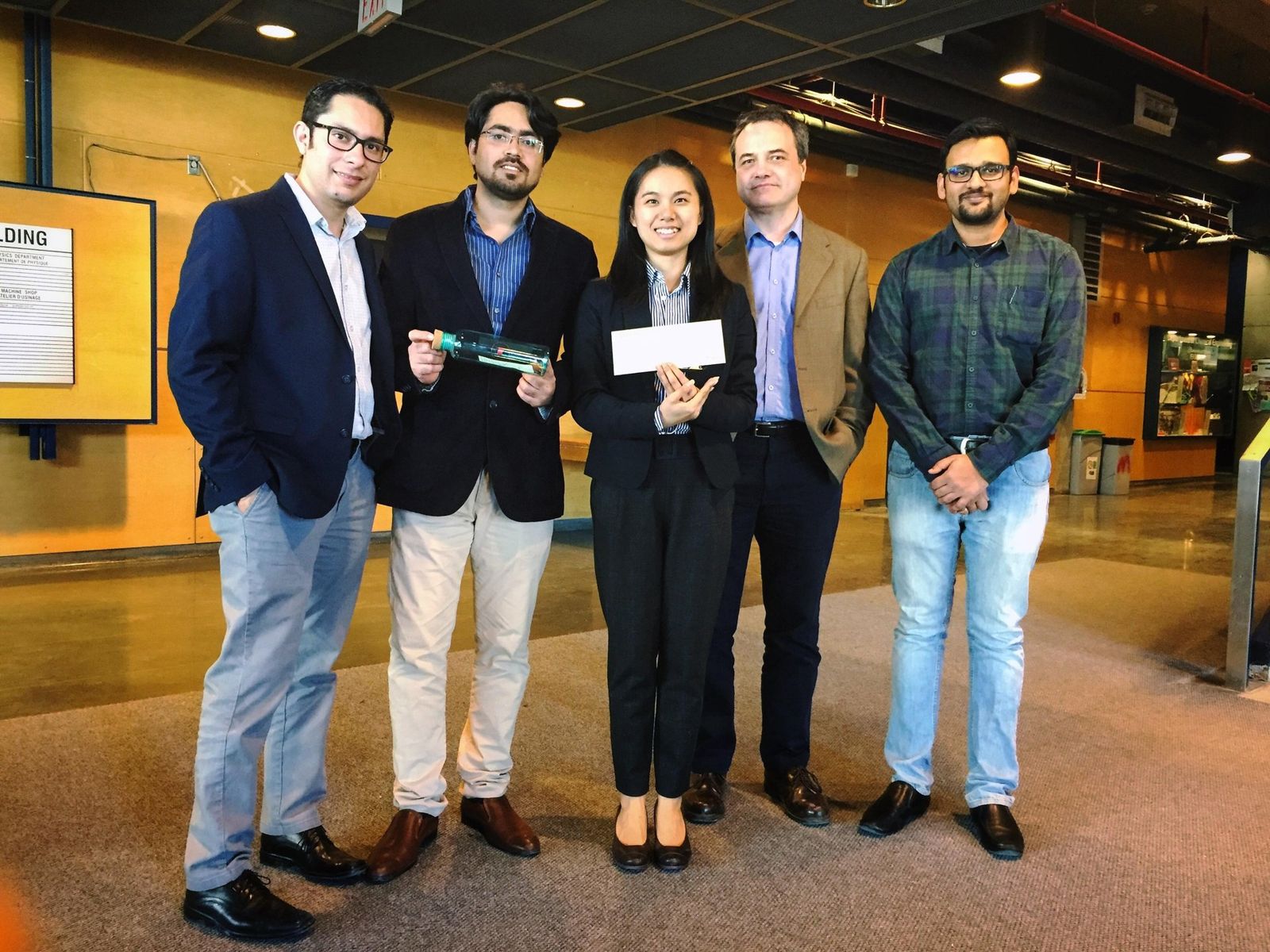
B3D Performance team at the Dobson Cup.

An instrument for powder-layer density

B3D Performance, 2018–2021

The density of each spread powder layer drives porosity and part quality, but it is rarely measured. I led the concept, mechanical design, fabrication, automation and calibration of an instrument that measures it for layers from 10 to 250 µm, including electrical and software subsystems and design reviews with DFMEA and DfMA.

Patent application US20220023951A1 (WO 2021/051197). The prototype won McGill’s Dobson Cup in 2020 and helped secure follow-on funding.

  • Instrumentation
  • Machine design
  • Powder bed
  • Product development
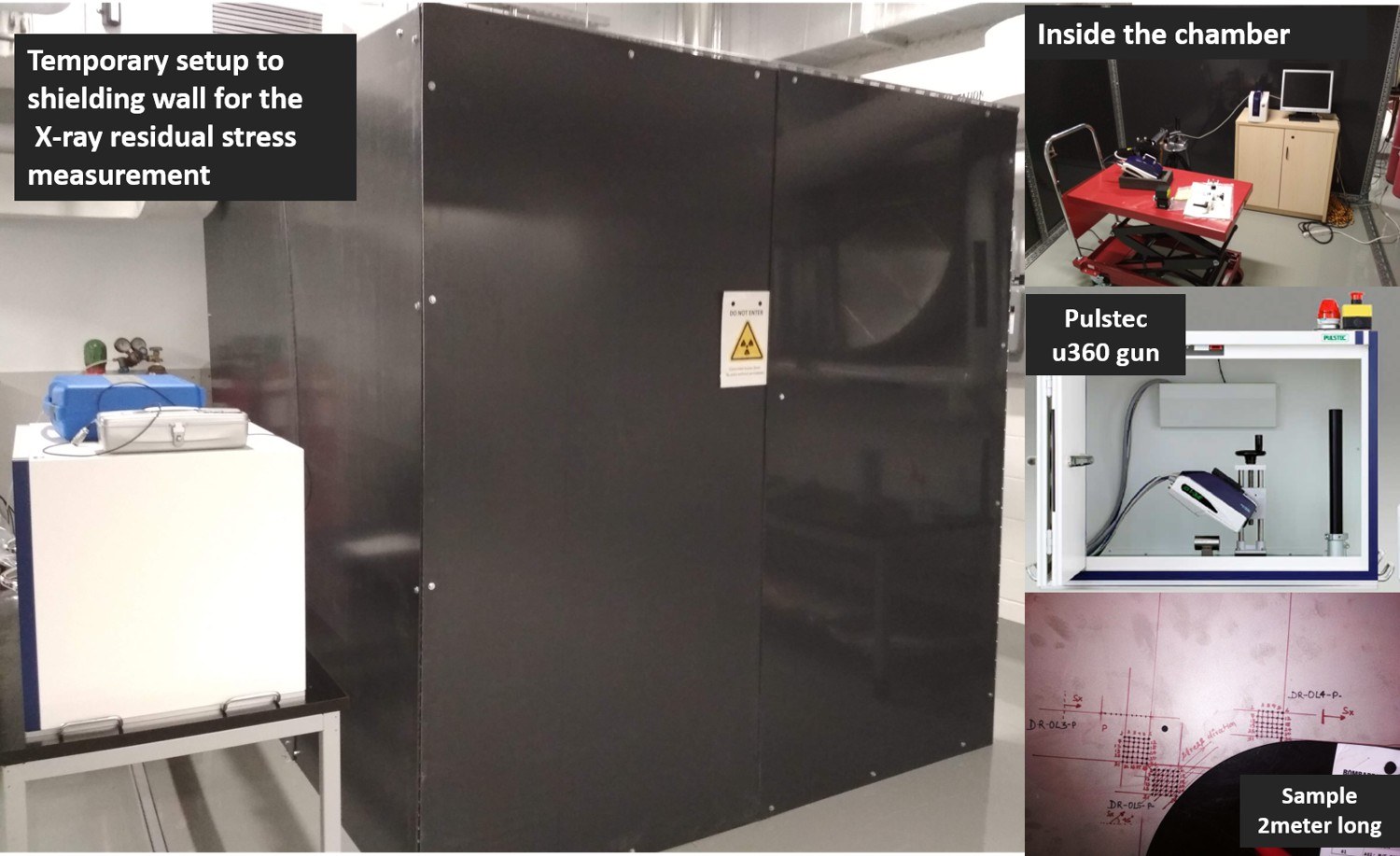
X-ray residual stress measurement setup for 2 m long parts
contain

A residual-stress lab for large aerospace parts

McGill University

I set up and managed a non-destructive X-ray facility for residual-stress measurement on aviation components up to 2 m long, and developed a comparison factor between sin²ψ, cos α and XRD² methods.

Measurements delivered to Bombardier, Pratt & Whitney and NRC Canada. The method work fed into the ASM Handbook chapter on residual stress.

  • XRD
  • NDT
  • Aerospace
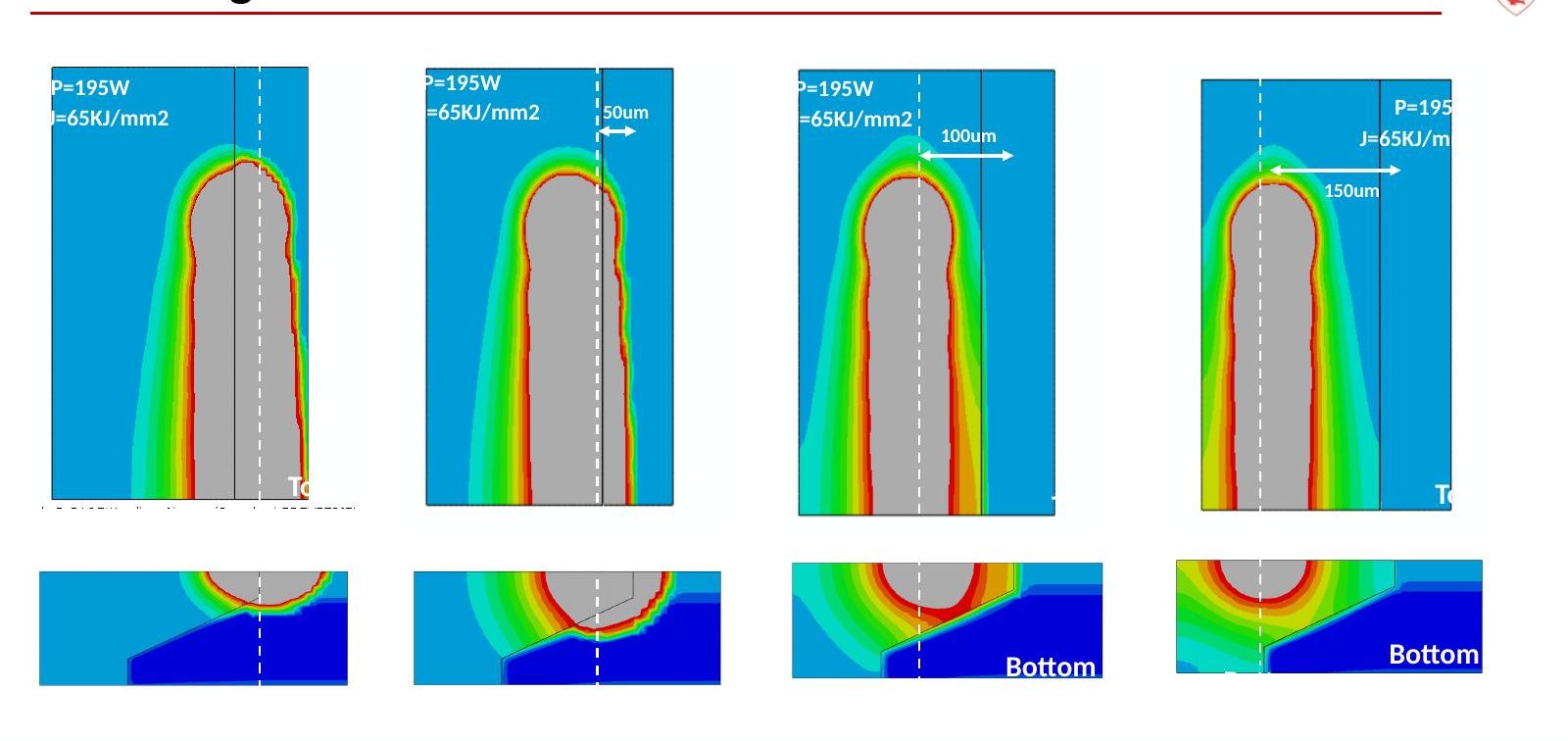
Simulated heat accumulation in overhangs
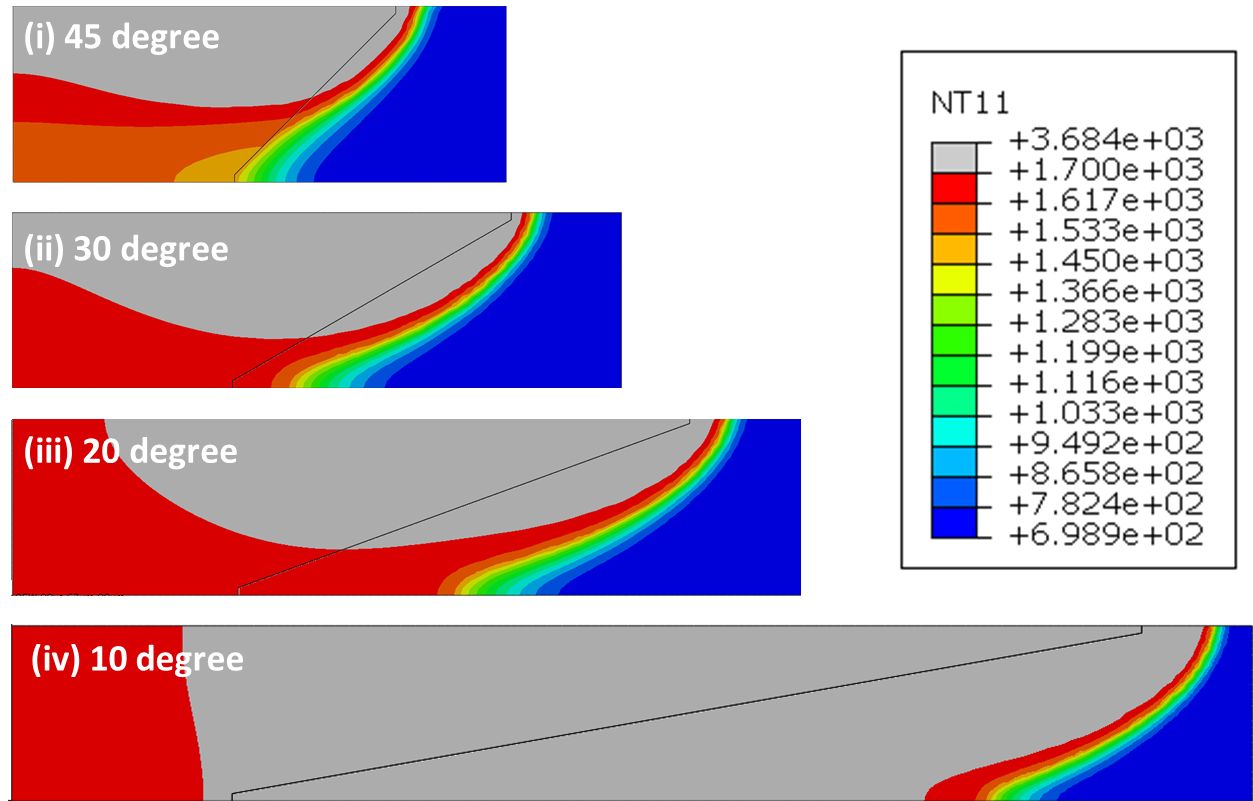
Heat accumulation in overhangs, one driver of residual stress.

Residual stress: from X-ray measurements to the ASM Handbook

McGill University, 2018–2025

My residual-stress work started with a design of experiments on LPBF cantilevers, bars and square tubes. I measured stress by X-ray diffraction along two paths and compared meander, chessboard and stripe scan strategies, part height and surface preparation before and after annealing. The measured surface stresses in these builds were typically in the 200–500 MPa range, and they changed with scan strategy, position and height.

I then compared three X-ray methods, sin²ψ, cos α and XRD², on as-built and electropolished surfaces. Rough as-built surfaces gave poorer repeatability and slightly lower stress, which matters for anyone reporting a single average value. These results, together with the contour, slitting, hole-drilling and neutron diffraction methods, became the basis of the ASM Handbook chapter I co-wrote on residual stresses in additive manufacturing.

ASM Handbook Volume 25A chapter (2025); talk at the Solid Freeform Fabrication Symposium (2019); measurements for Bombardier, Pratt & Whitney and NRC.

Read the ASM Handbook chapter

  • Residual stress
  • XRD
  • Scan strategy
  • ASM Handbook
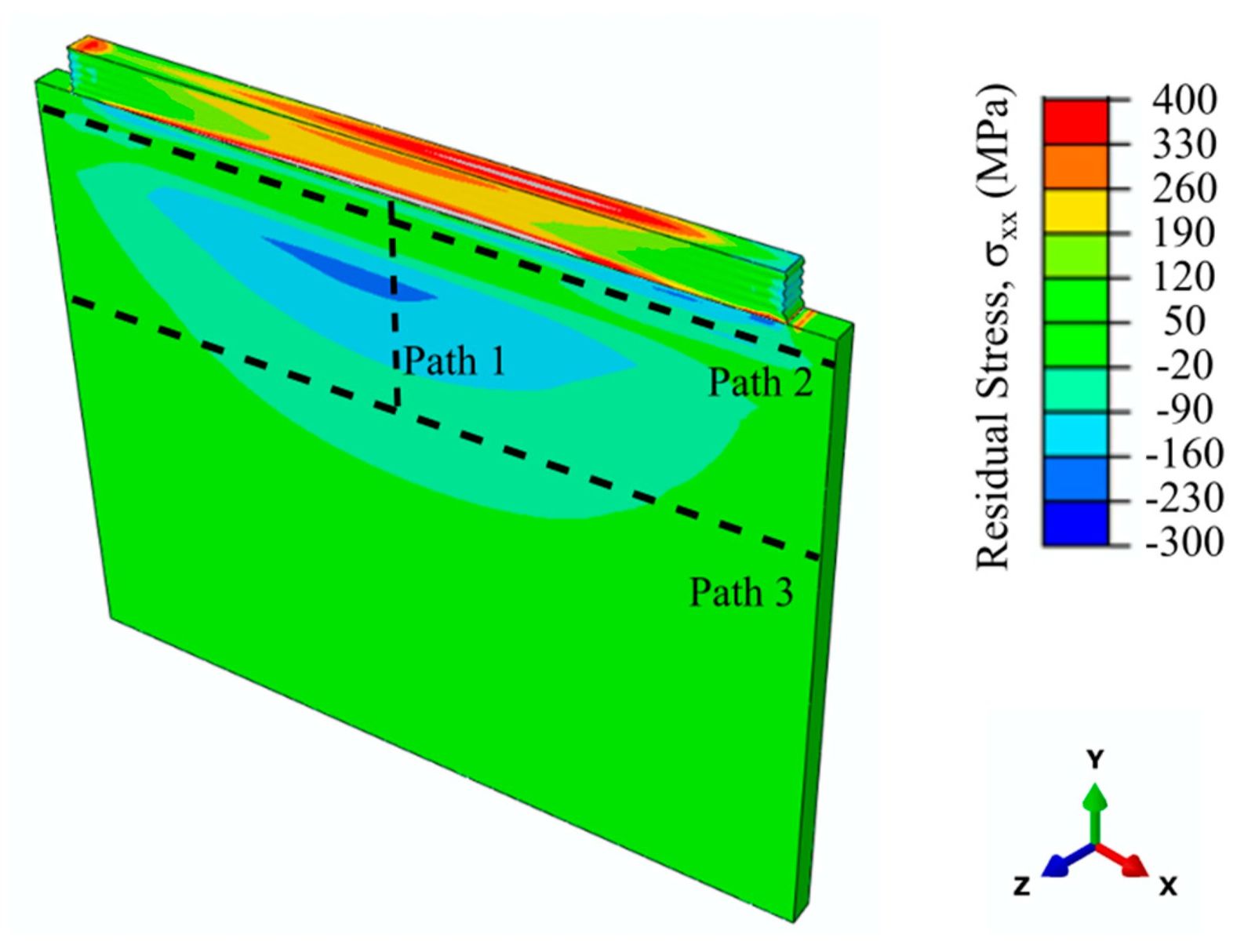
Residual stress contour from the EBAM model
Predicted residual stress in the deposit and substrate.

Thermo-mechanical model of wire-fed electron beam AM

McGill University with NRC

A finite element model of electron-beam additive manufacturing of Ti-6Al-4V, validated with thermocouples, residual stress and distortion measurements on single- and multi-layer builds.

Average thermal error of 3.7%, residual stress within about 100 MPa and distortion within 0.05 mm.

Read the paper

  • ABAQUS
  • Ti-6Al-4V
  • EBAM

Crack-free tungsten by LPBF

McGill University, 2023

Tungsten cracks during LPBF because oxides weaken its grain boundaries. Building under nitrogen instead of argon gave crack-free parts. I contributed DFT calculations showing that dissolved nitrogen hinders oxygen diffusion.

Crack-free tungsten with higher hardness, published in Advanced Functional Materials.

Read the paper

  • Refractory metals
  • DFT
  • Process atmosphere
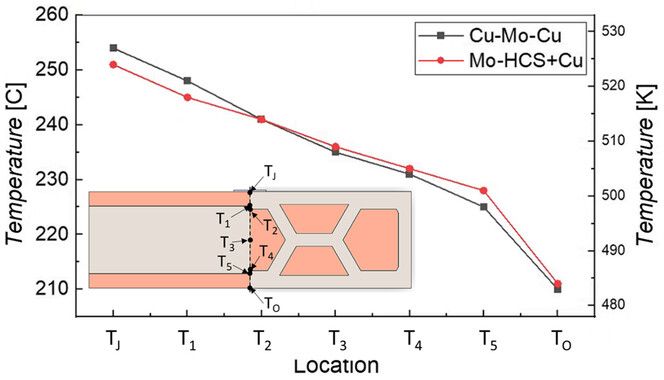
Thermal profile comparison
Temperature along the heat sink, compared with a laminate.

Cu-infiltrated Mo and TZM heat sinks

McGill University, 2023

Honeycomb exoskeletons of molybdenum and TZM printed by LPBF and infiltrated with copper, as an alternative to Cu-Mo-Cu laminates for power electronics.

Density above 99% and a lower thermal expansion (6.6 × 10⁻⁶ K⁻¹) than laminates (7.6 × 10⁻⁶ K⁻¹), closer to GaAs.

Read the paper

  • Mo/TZM
  • Thermal management
  • LPBF
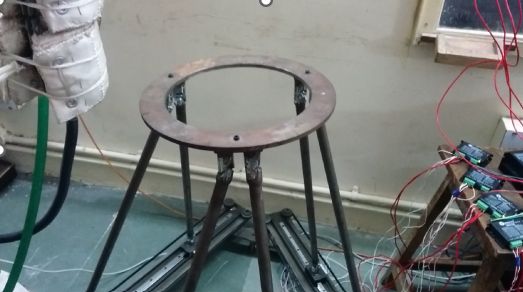
Parallel manipulator
Parallel manipulator for multi-axis deposition.

Robots and laser systems for multi-axis deposition

IIT Bombay, IIT Gandhinagar and McGill

A 5-axis parallel manipulator for support-free deposition, delta robots for polymer printing, a pulsed laser integrated with a gantry for selective melting, and a laser-head retrofit for wire cladding on a CNC.

Working prototypes used for support-free deposition and laser melting experiments.

  • Robotics
  • Path planning
  • Laser integration
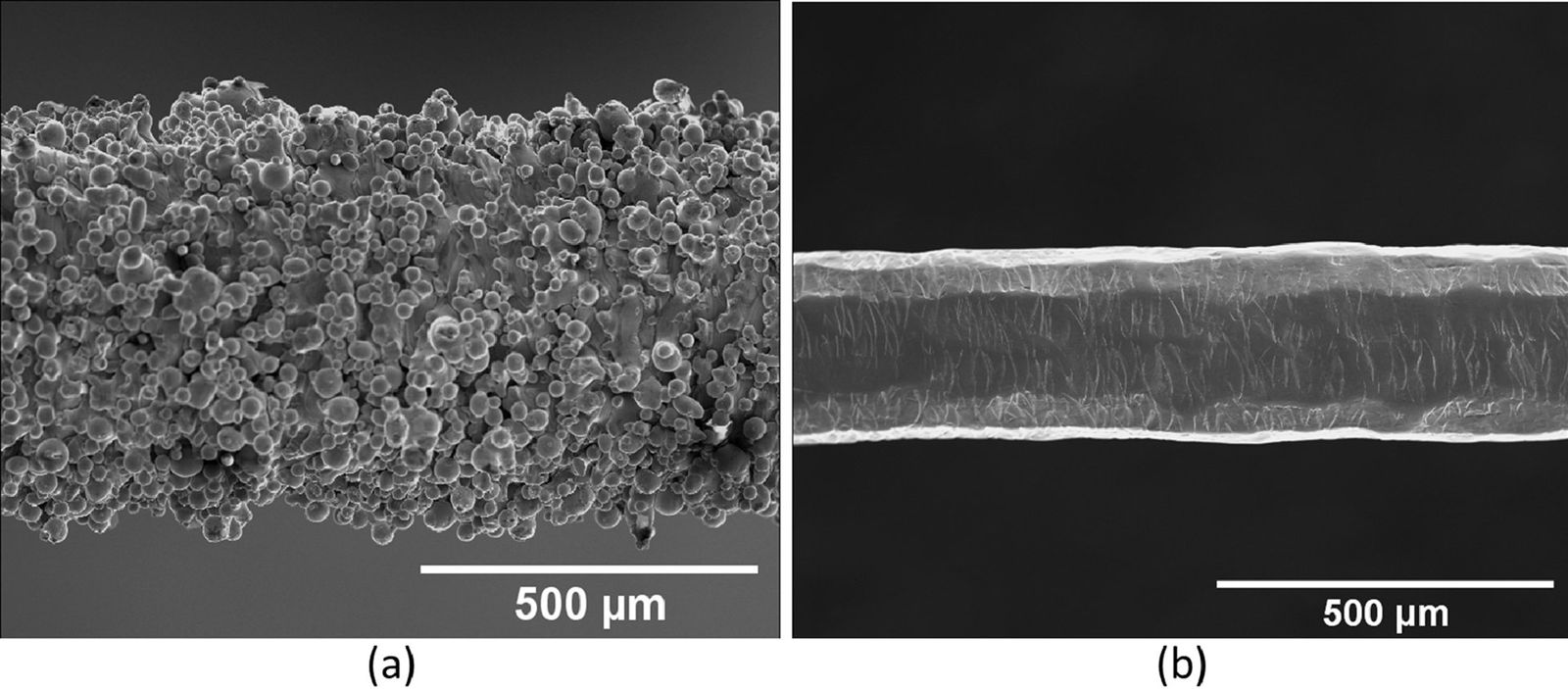
Micro-strut surfaces
As-built and micromachined strut surfaces.

LPBF micro-struts: surface, fatigue and micromachining

McGill University, 2020–2022

Thin struts behave differently from bulk parts because their rough surfaces act like notches. With colleagues I used FEA, X-ray CT and femtosecond-laser micromachining to separate the effects of surface and material.

Three journal papers on tensile and fatigue behaviour of 250 µm 316L struts.

  • 316L
  • Fatigue
  • X-ray CT
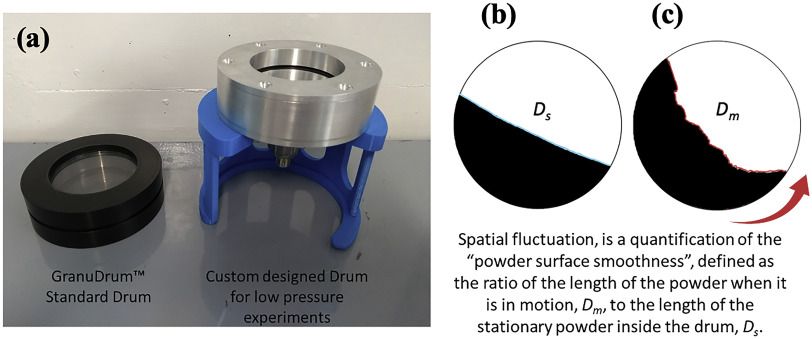
Rotating drum
Standard and custom low-pressure drums.

Powder flow in controlled atmospheres

McGill University with GranuDrum, 2020

Designed and tested a vacuum rotating drum to characterize how AM powders flow at low pressure and in controlled gases, using image processing of the powder surface.

Published in Powder Technology.

Read the paper

  • Powder
  • Rheology
  • Image analysis
Article cover

Powder reuse economics

Independent work, 2026

A quantitative model of oxygen pickup, top-up dilution and batch retirement for titanium powder across 100 builds, and an article on why price per kilogram is the wrong number to watch.

An interactive calculator that runs the model in your browser.

Open the calculator

  • Powder
  • Cost modelling

Some industrial work, including a technology and market assessment of aluminium–scandium alloys, is confidential and described only in general terms.

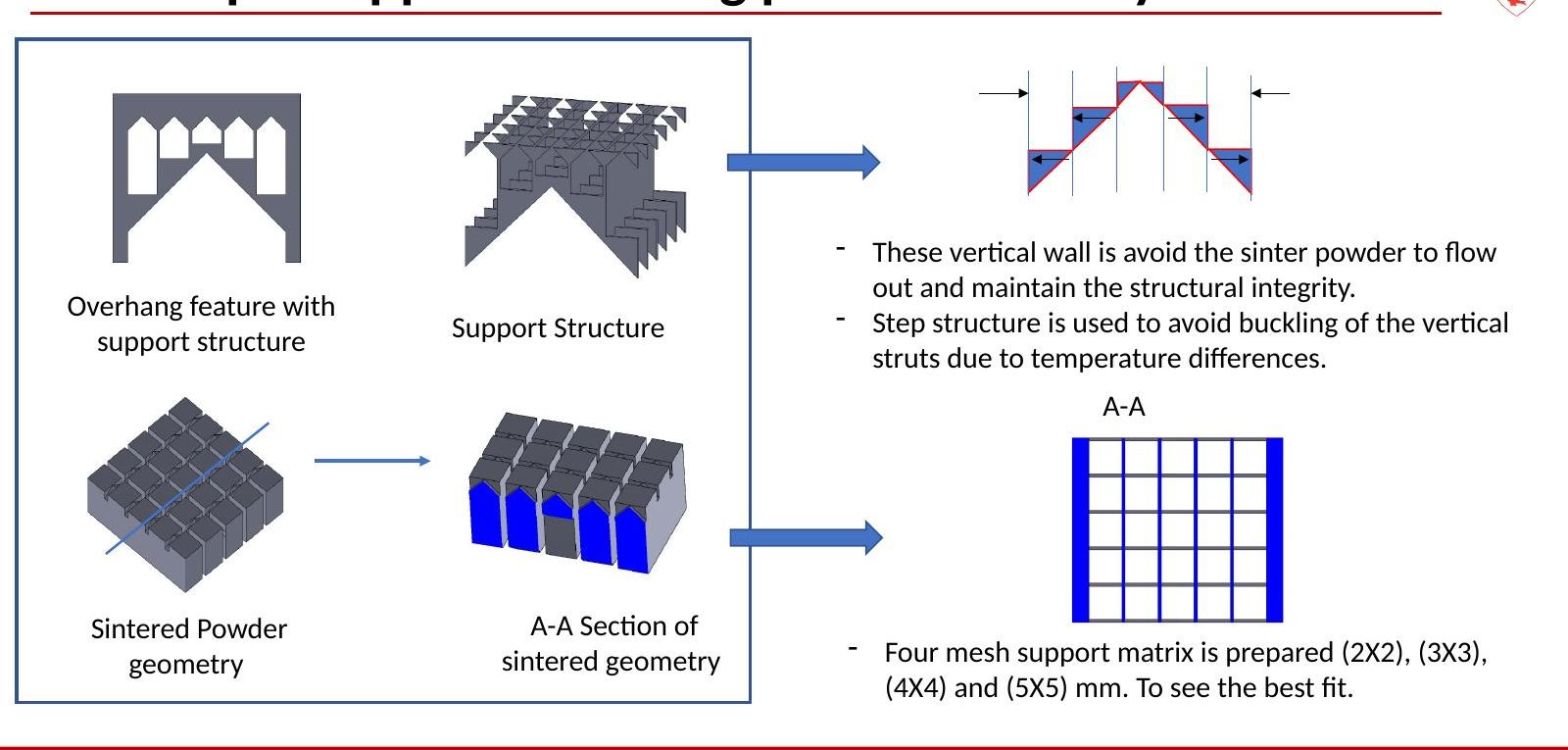
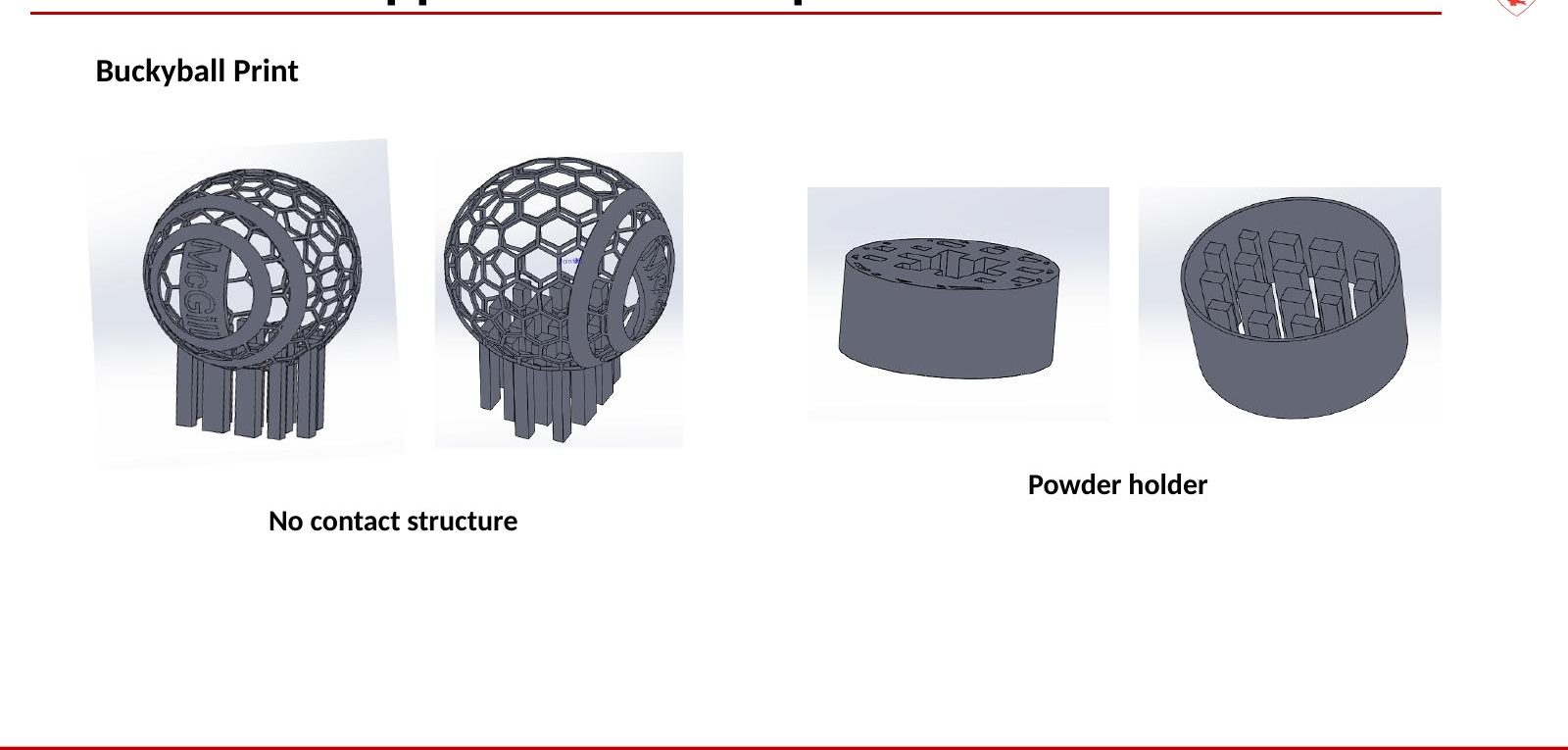
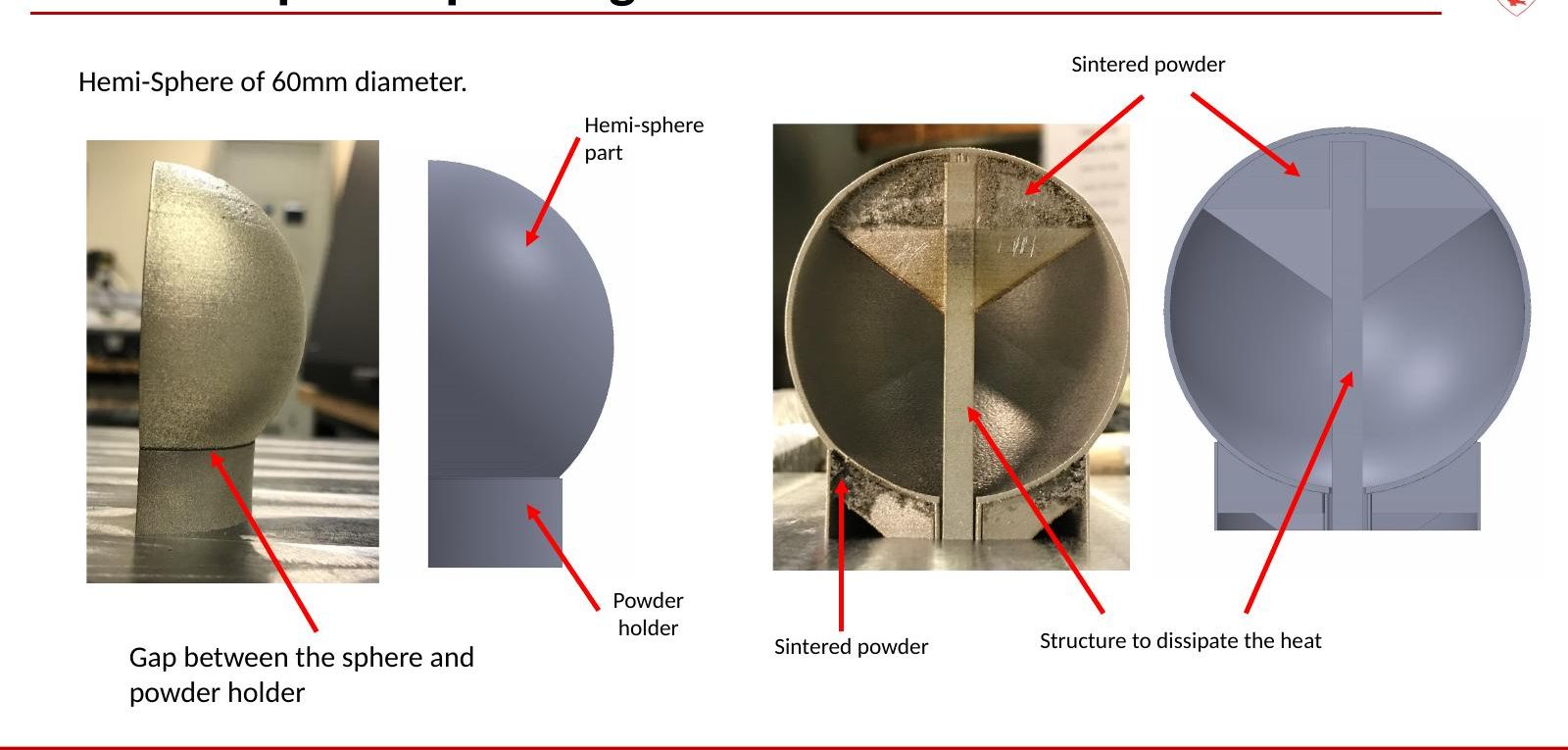
Sintered powder as a support

McGill, 2018–2019: using lightly sintered powder, instead of solid supports, to hold overhangs.

At high temperature, sintered powder conducts heat far better than loose powder, so it can carry heat away from an overhang the way a support does, but it breaks away by hand. I tested the idea in three steps. First, temple-shaped overhangs over sintered-powder blocks, with mesh supports from 2 × 2 to 5 × 5 mm to find the best fit. Second, buckyball spheres printed with no contact structure, sitting on a sintered-powder holder. Third, a 60 mm hemisphere with sintered powder and a heat-dissipating structure inside. The buckyballs came off the holders by hand, with no cutting.

Removing buckyballs from their sintered-powder holders by hand (sped up 4×).
The finished McGill buckyball.
Simulated melt pools at the overhang tip

Simulation

Thermal models of melt pools and overhangs, finite element models of rough lattice struts, and videos of heat building up in a build.

See the simulation work
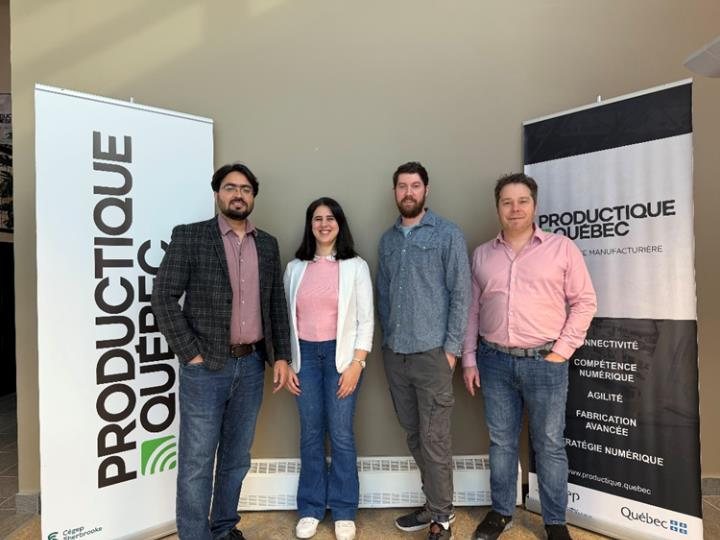
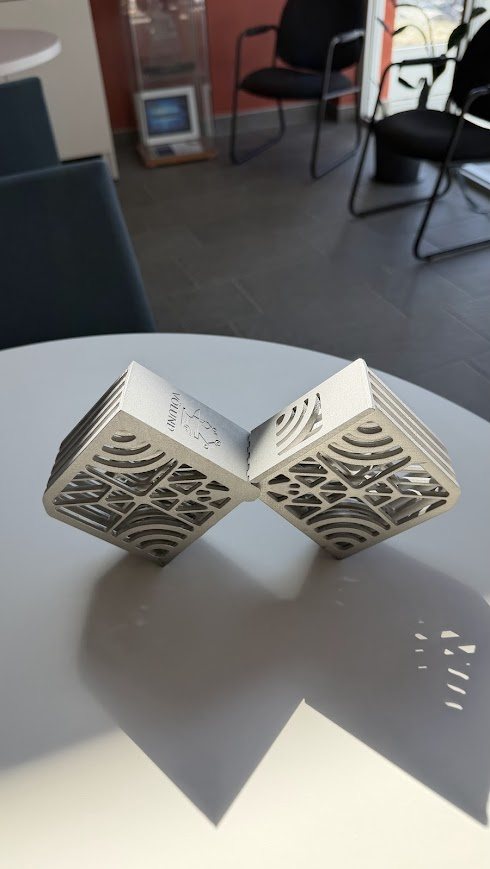
Amit Kumar with the Productique Québec additive manufacturing team LPBF parts made at Productique Québec

In the news: IRDQ visits Productique Québec

In April 2026 the IRDQ network visited Productique Québec’s additive manufacturing cell. I presented our LPBF work with Rym Gazzah, Simon Lacroix and Nicolas Beaudoin, including a phase-change heat exchanger and an assembly demonstrator printed in one piece.

Left to right: Amit Kumar, Rym Gazzah, Simon Lacroix and Nicolas Beaudoin. Right: PBF-LB parts made at Productique Québec.

Read the IRDQ article (in French)