LPBF course for Stryker
A 360-slide course on laser powder bed fusion that I designed and taught to Stryker engineers through IIT Guwahati’s Advanced Training Program on Additive Manufacturing Technologies, Phase II, from 19 July to 14 August 2024.
The course runs from the machine to the qualified part, in three modules. It mixes physics, my own research data and industrial case studies, and it was built for engineers who make medical implants. A selection of slides is shown below; the full course is available to partners on request.
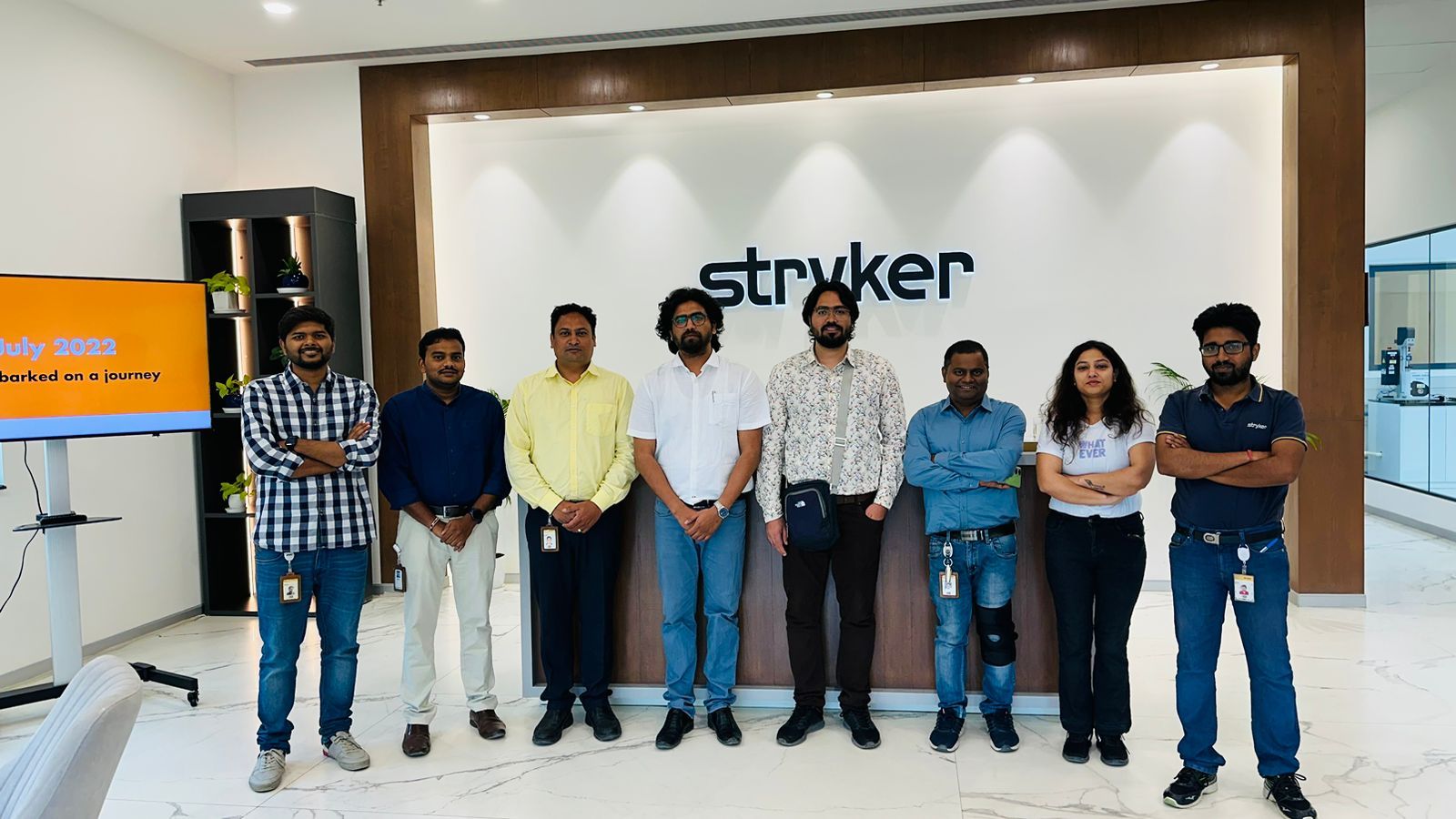
- 360 slides
- 3 modules, from machine to qualified part
- 4 weeks, July to August 2024
- Delivered for Stryker through IIT Guwahati
Part A: LPBF sub-systems
Sessions 1 to 6, slides 1–142
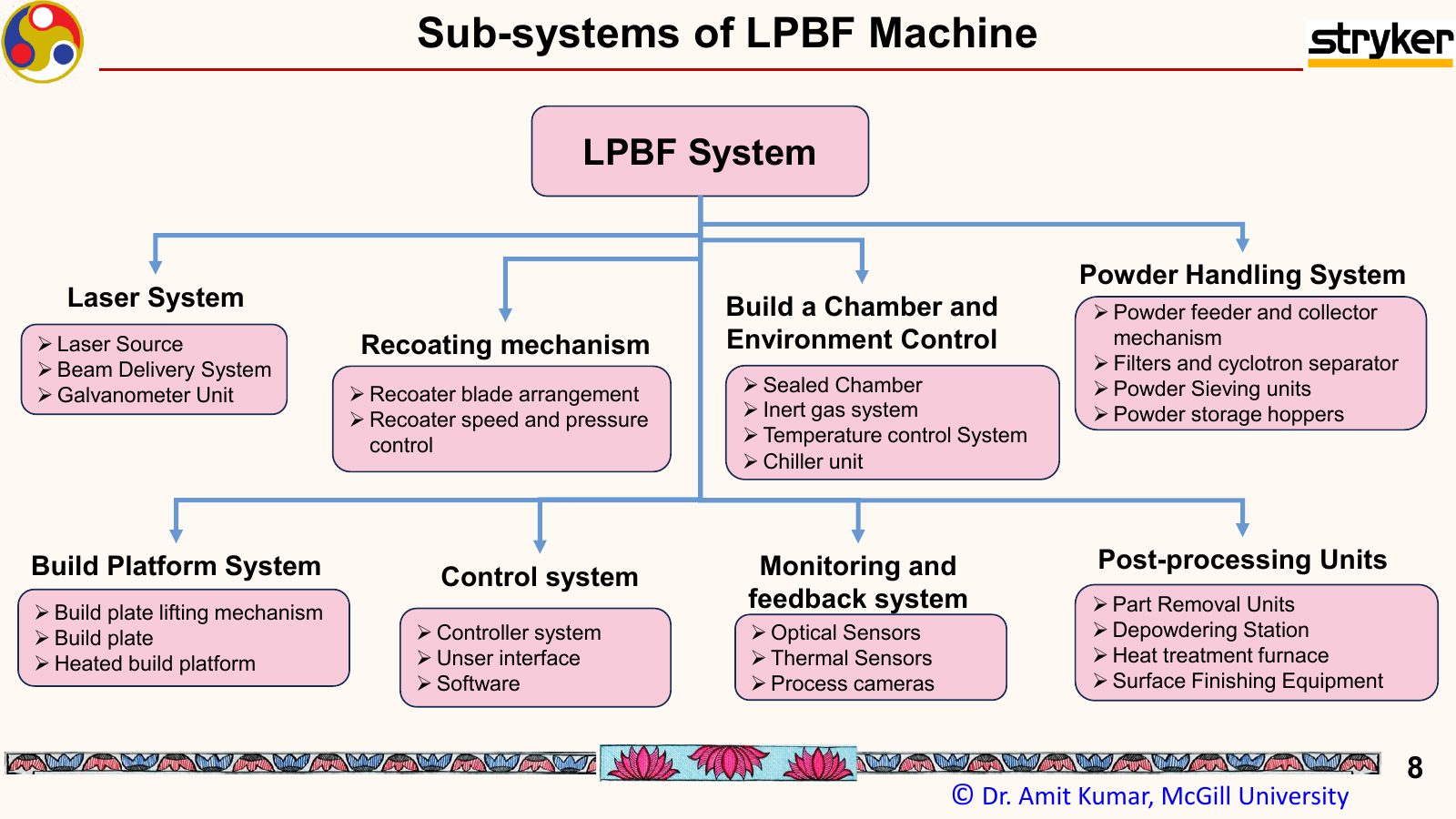
How a laser powder bed fusion machine actually works, sub-system by sub-system, and how each one shows up in part quality.
What it covers
- Laser source, beam delivery, galvanometer and caustic measurement
- Melt pool physics: conduction, transition and keyhole modes, heat-source models
- Recoaters: blade, brush, roller and electrostatic, with soft-versus-hard case studies
- Spatter: formation mechanisms, characterization and the defects it causes
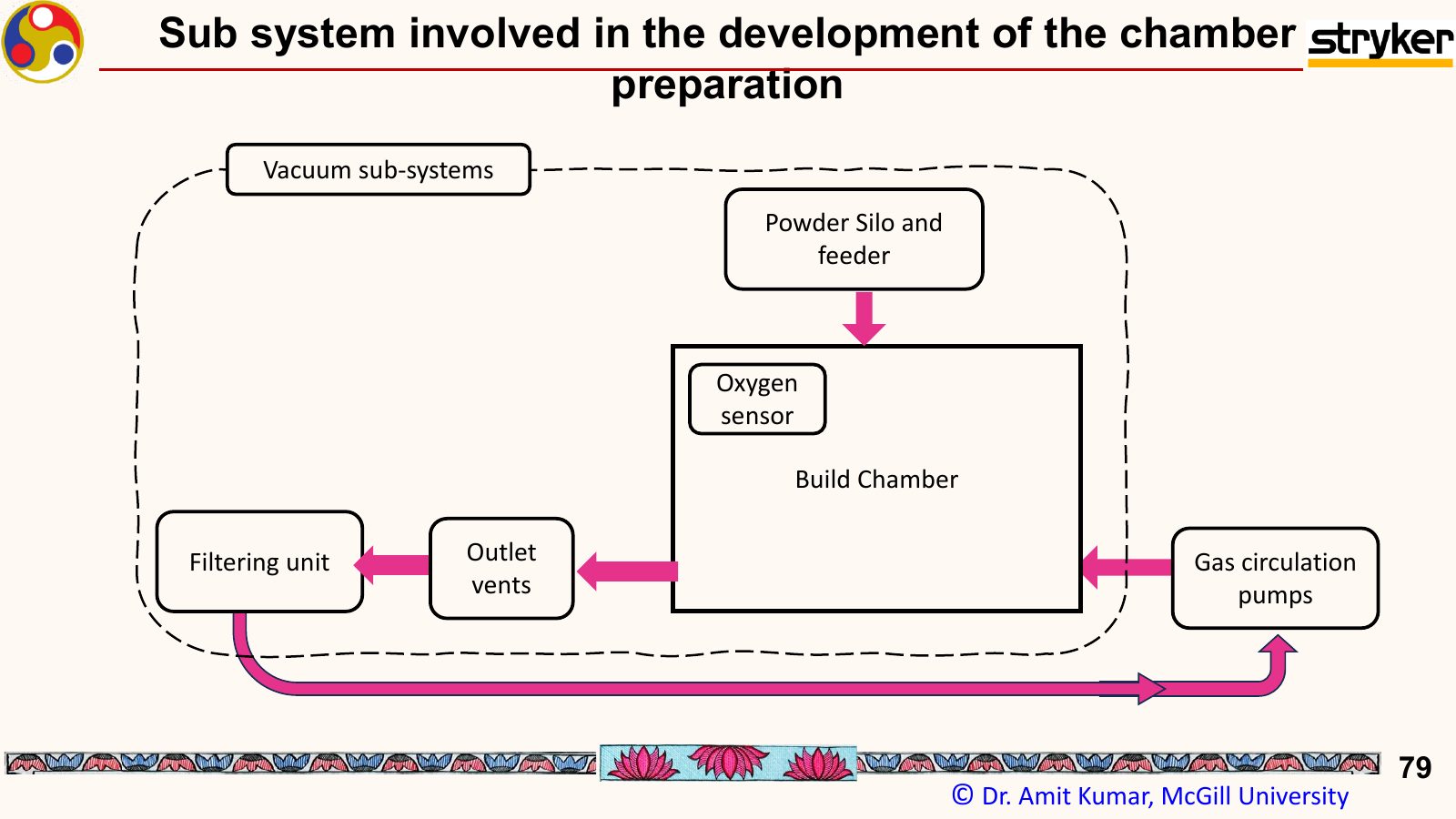
- Sealed chamber, inert gas flow, nozzle placement and chiller
- Build plates: sizes, materials, heating and distortion
- In-situ monitoring: optical, thermal, acoustic and X-ray
- Powder handling, sieving and storage; controllers and software
Part B: materials science, characterization and powder
Sessions S1 and S2, slides 143–193
From a printed part back to the questions an engineer must answer before it can be qualified, and from the powder forward to the build.
What it covers
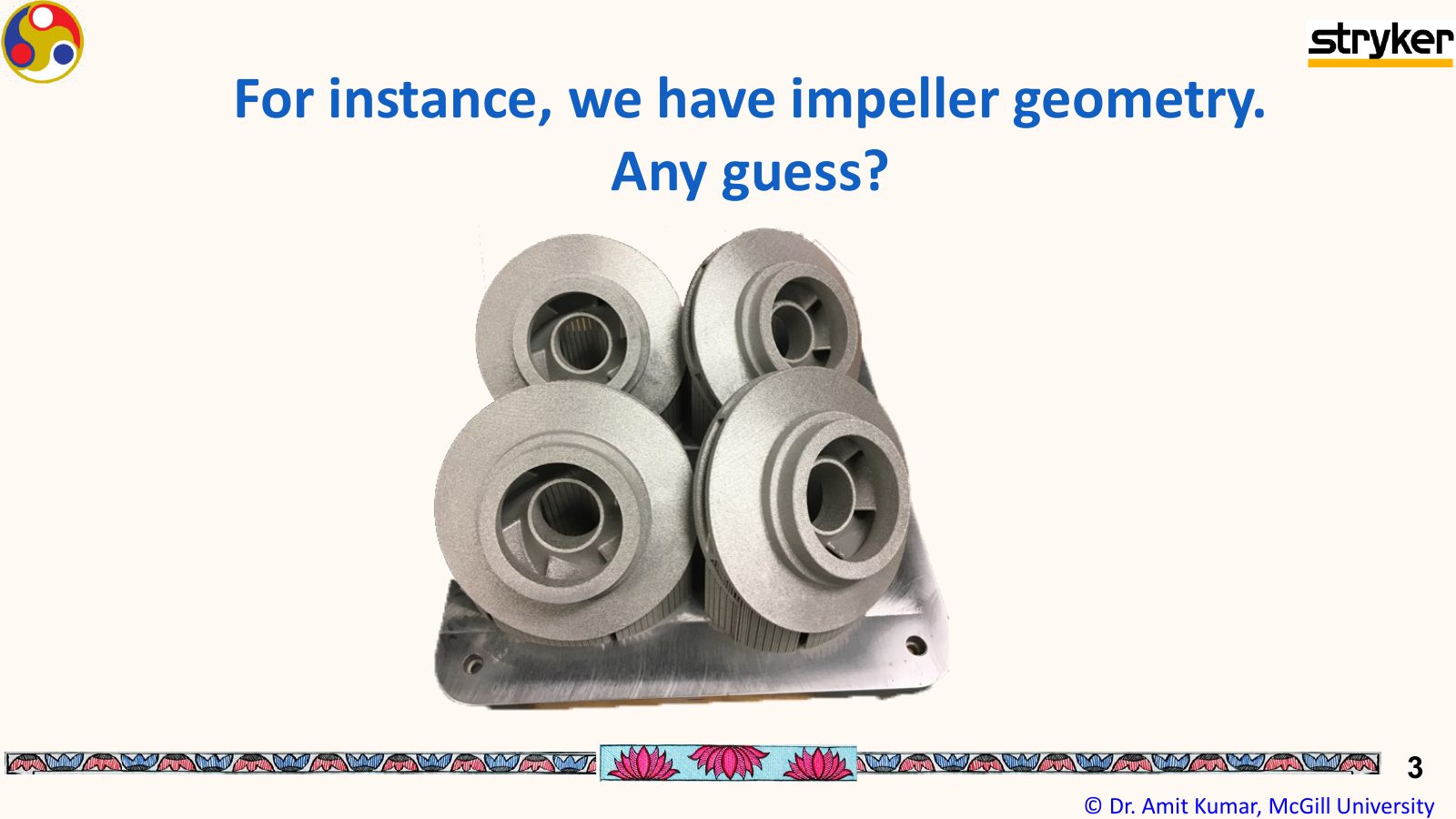
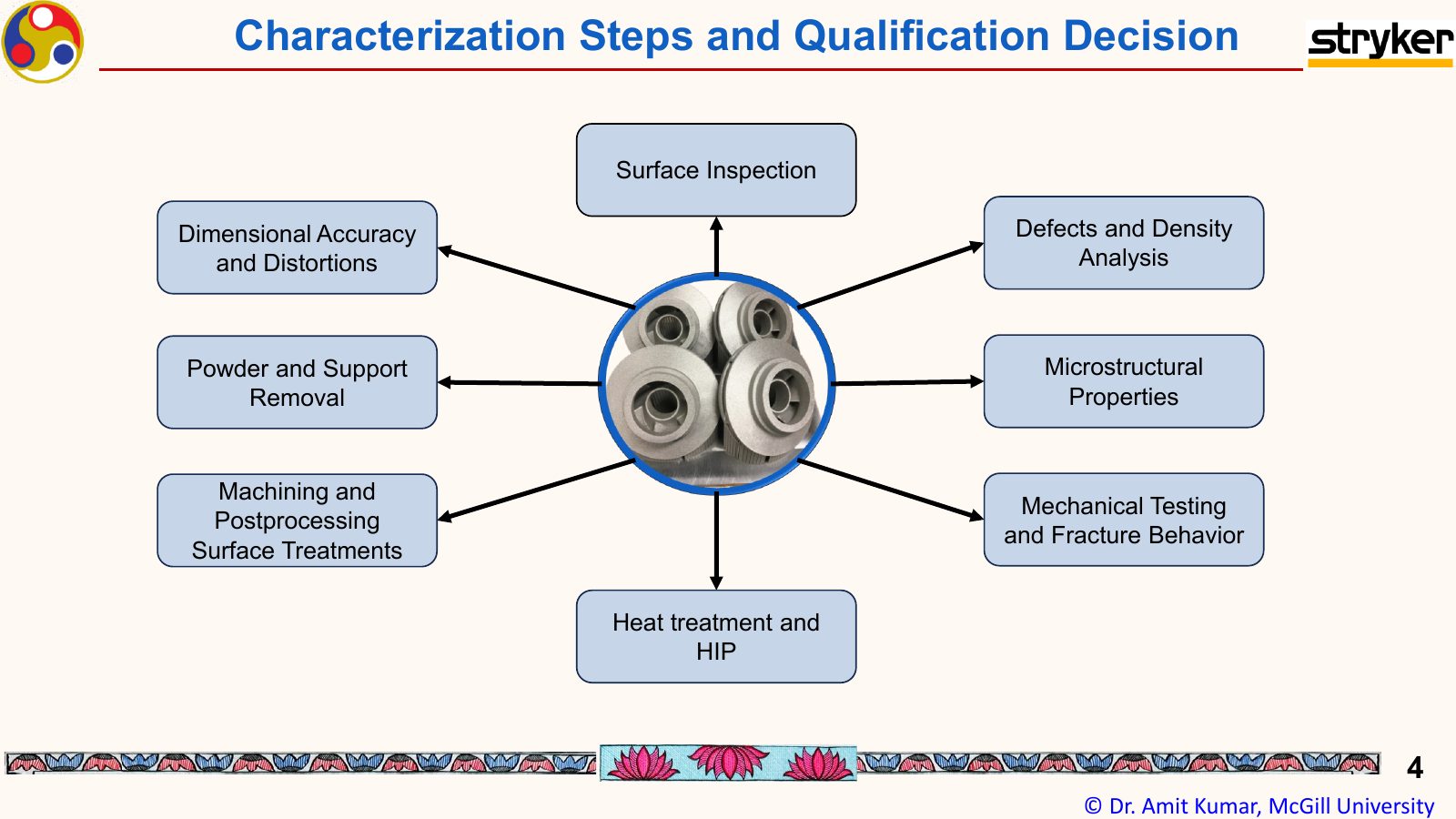
- Qualification decisions: dimensional accuracy, surface, density, microstructure, mechanical testing, heat treatment and HIP
- Residual stress assessment and fracture behaviour
- Machining and post-processing surface treatments
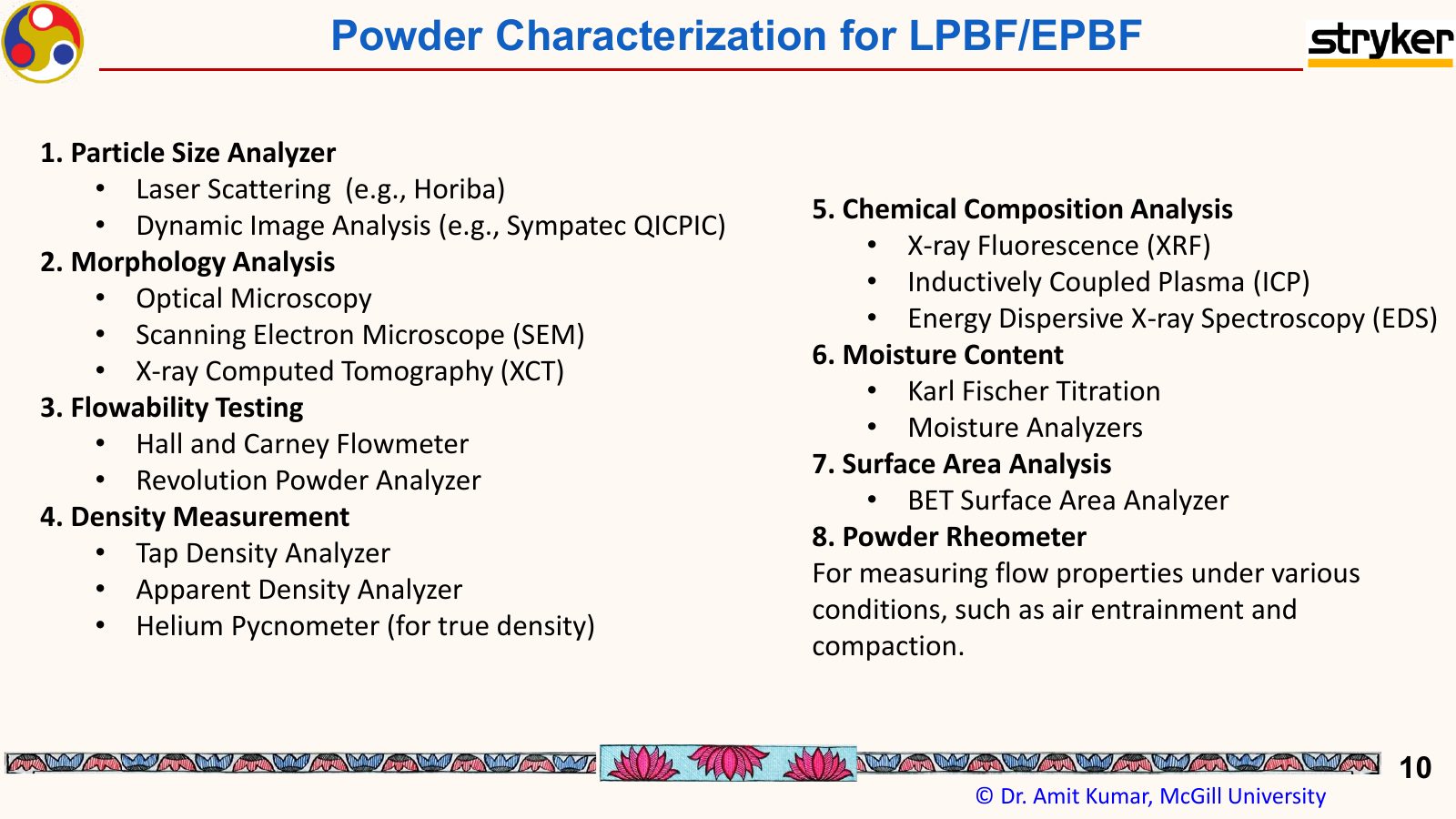
- Feedstock properties: size, morphology, packing and flowability
- Powder characterization methods for LPBF and EPBF
- Spatter particles: chemistry, size, speed and their effect on properties
Part C: defects, process parameters and DfAM
Slides 194–360
Why parts fail, how parameters are chosen, and how to design parts that build right the first time.
What it covers
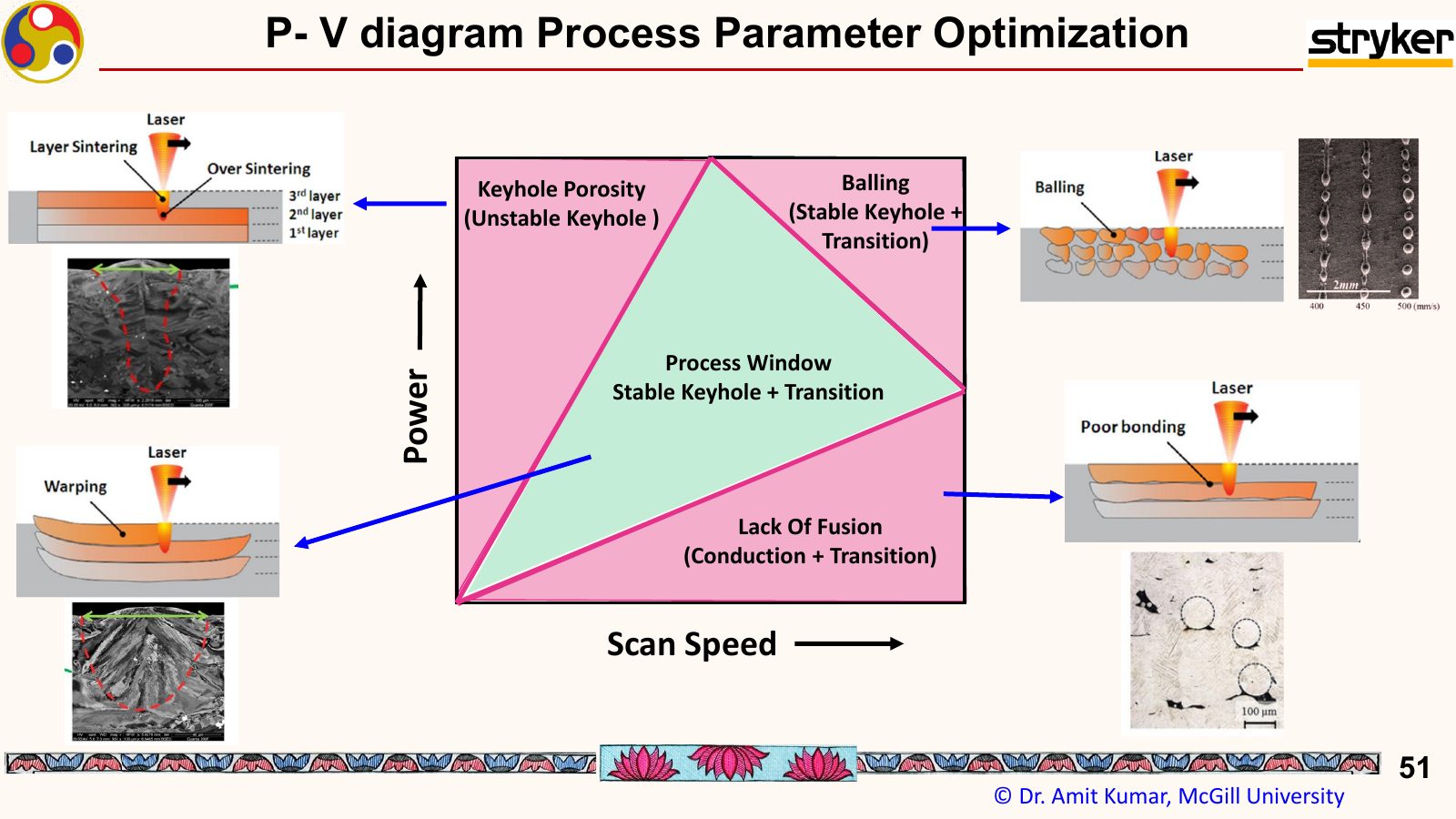
- Defects: cracking, gas and keyhole porosity, lack of fusion, balling
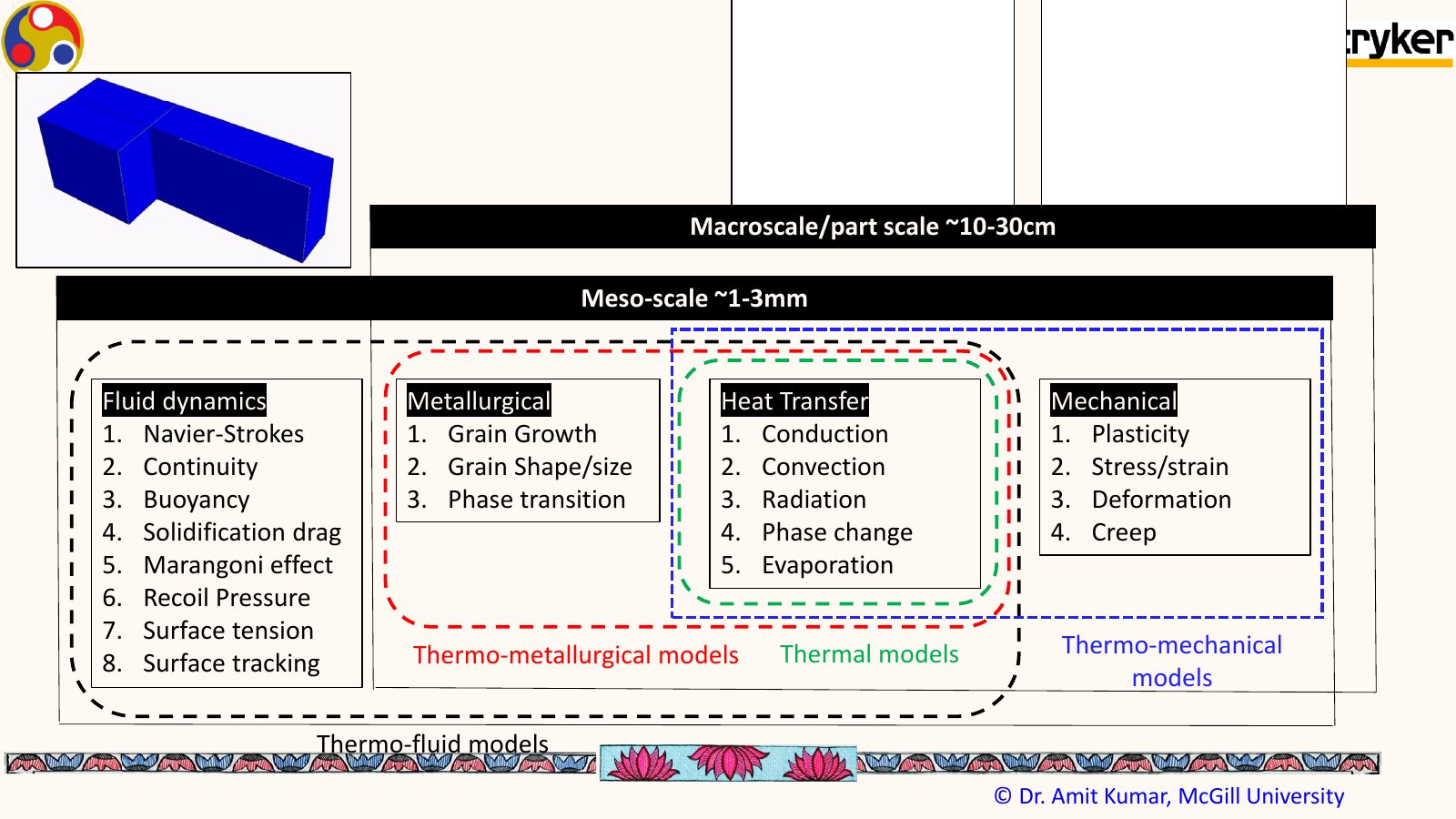
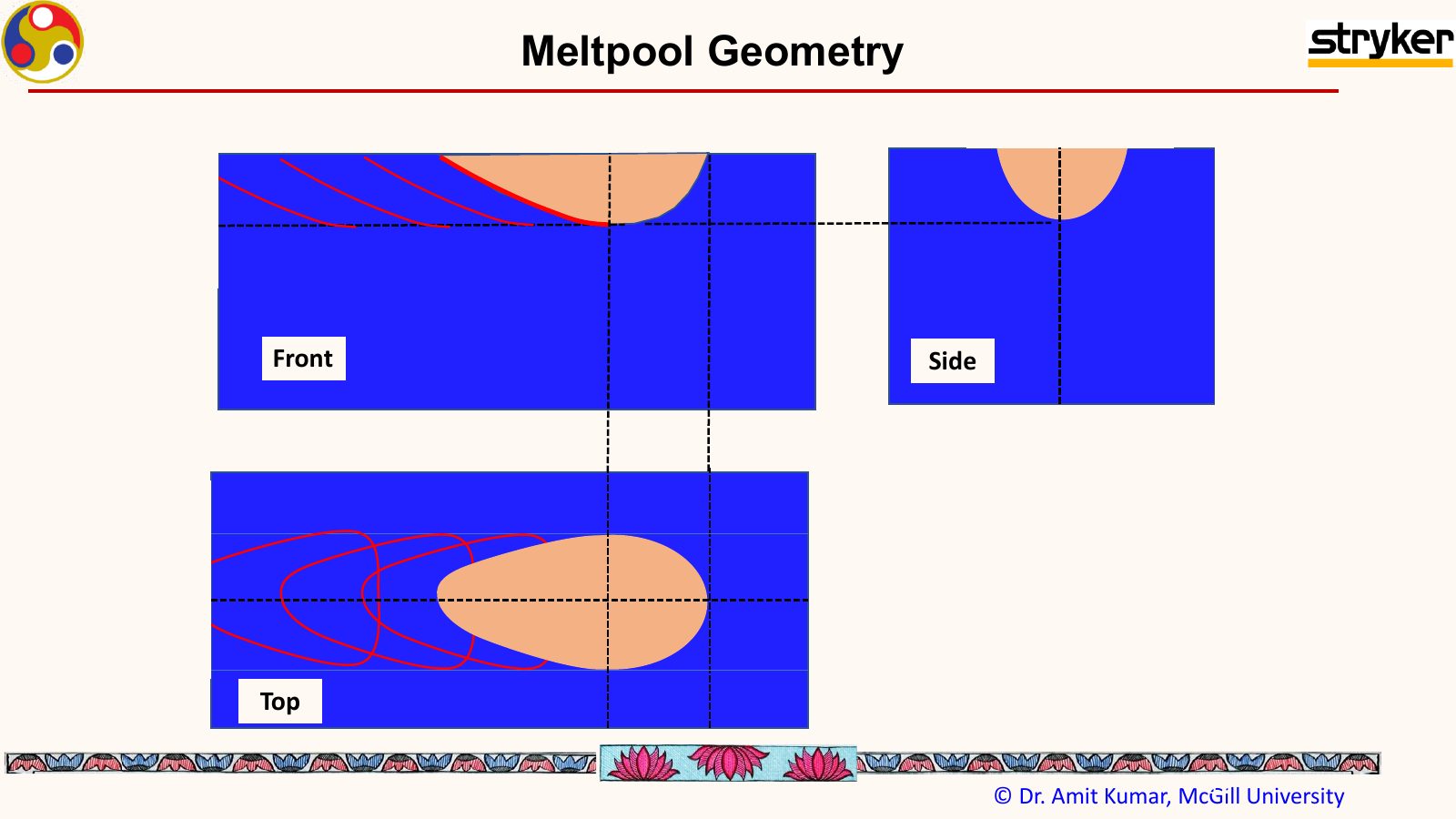
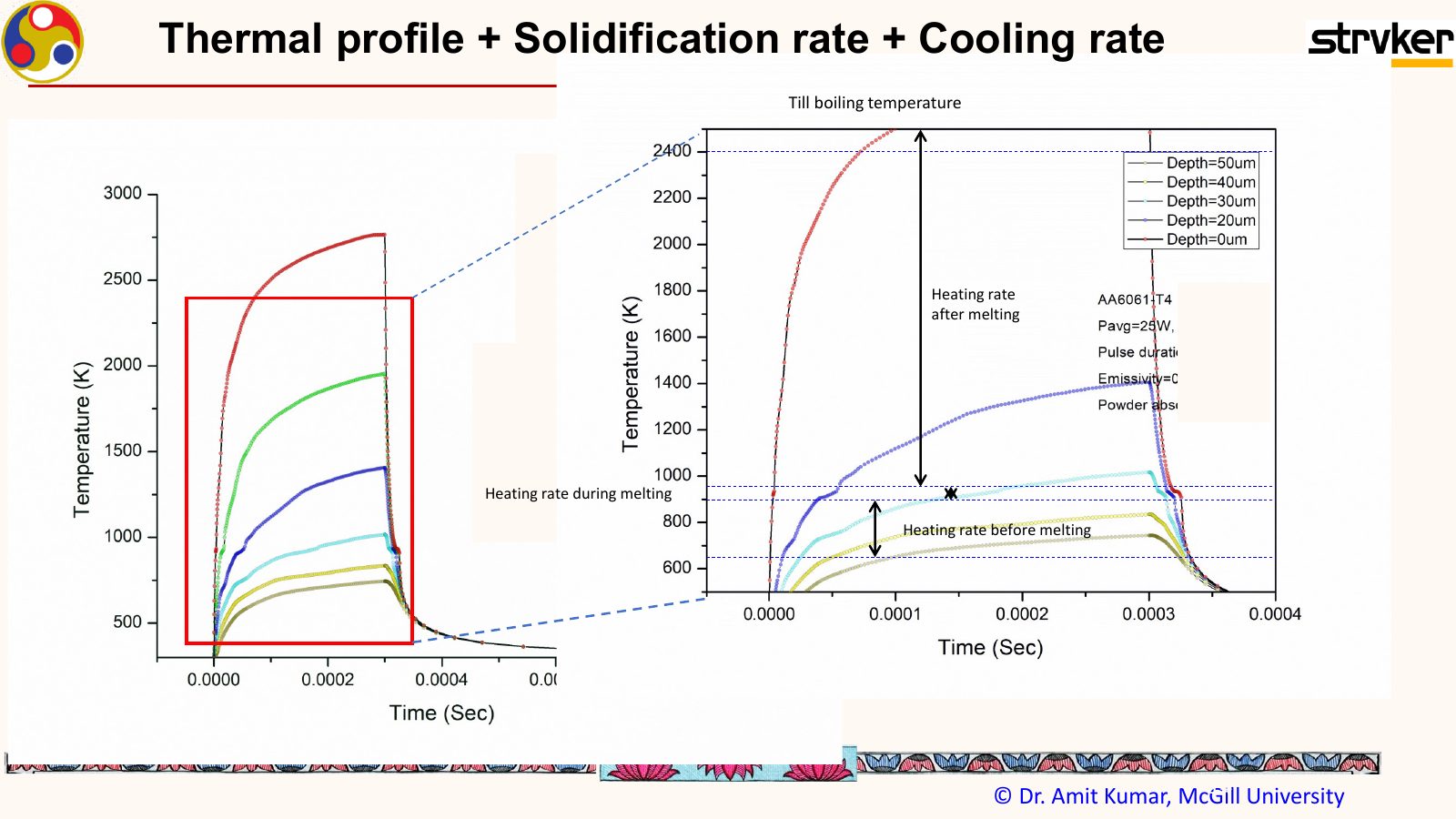
- Process simulation: finite volume (thermo-fluid) and finite element (thermal, thermo-metallurgical, thermo-mechanical) models, melt-pool geometry and cooling rates
- Solidification microstructures and the G–R map
- Residual stress: mechanisms, scale, scan length, bridge geometry and heat treatment
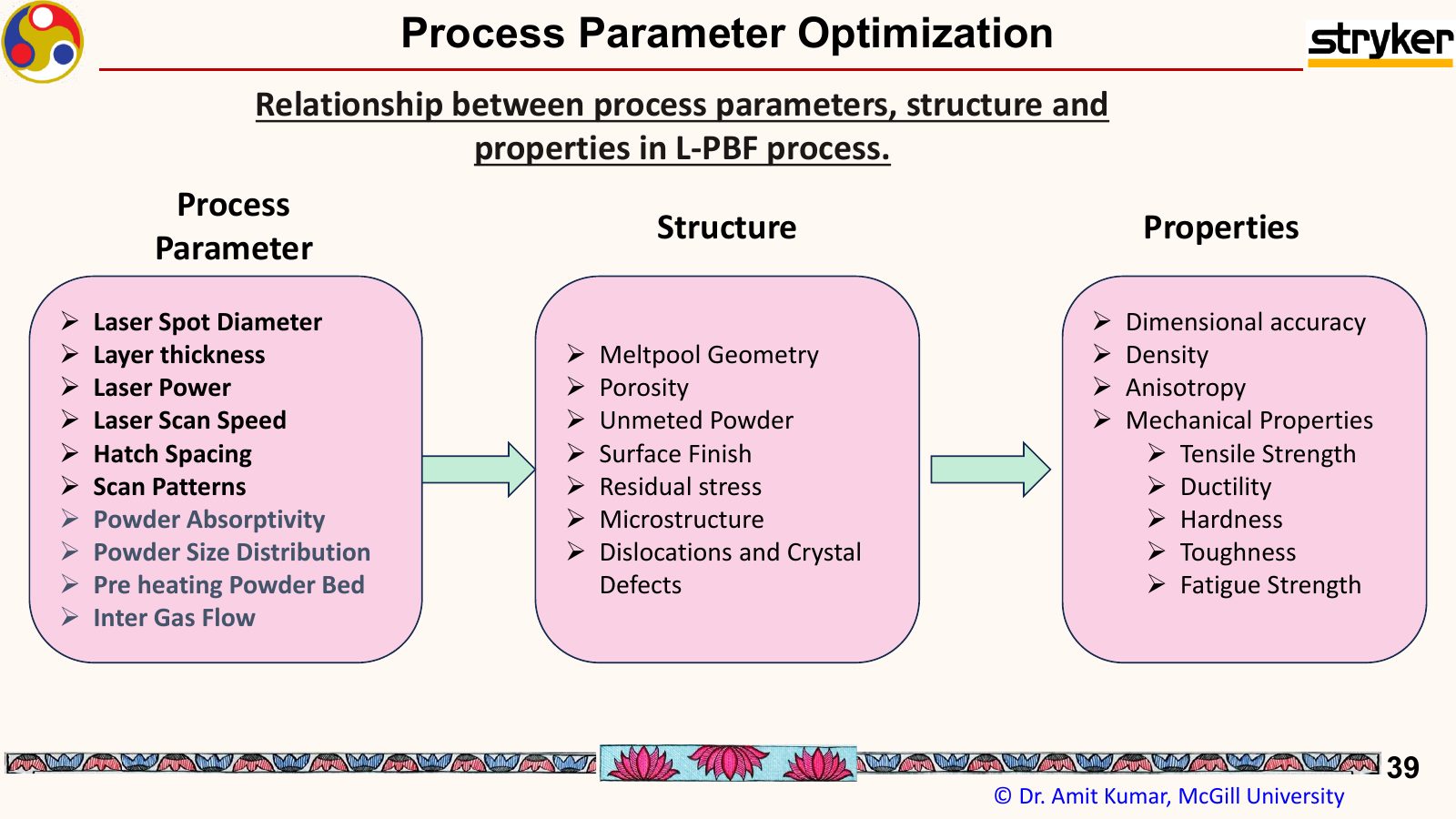
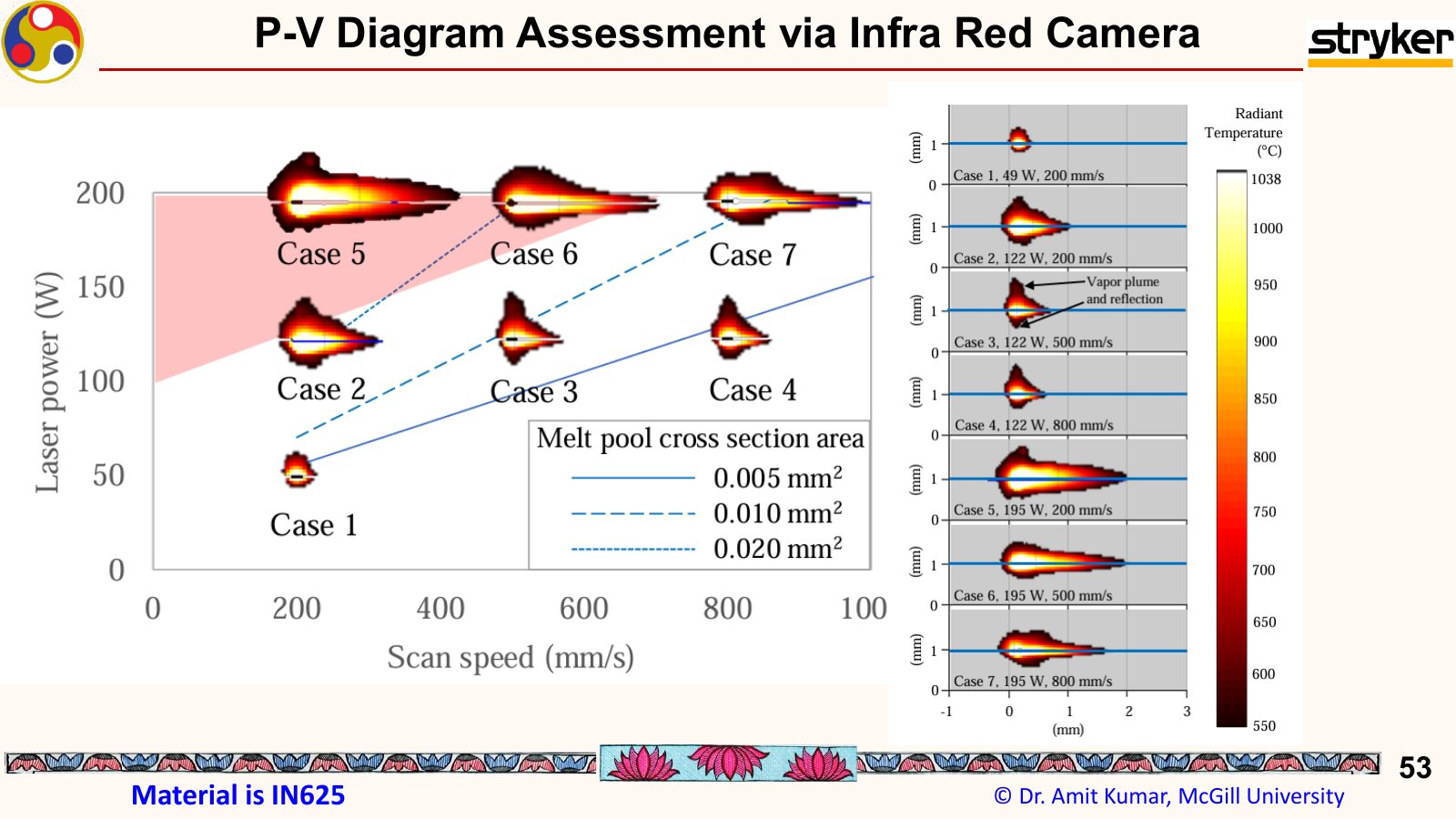
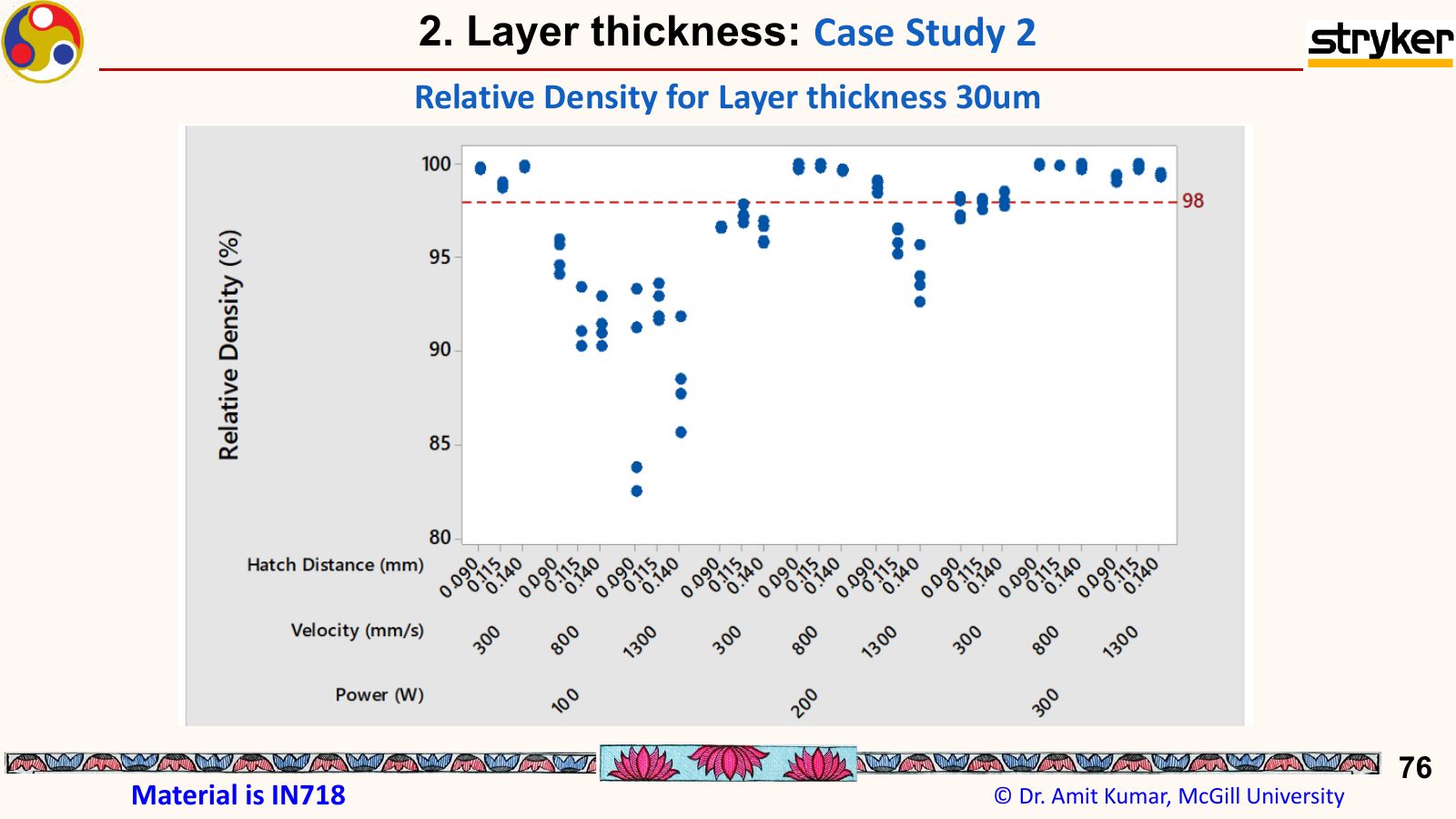
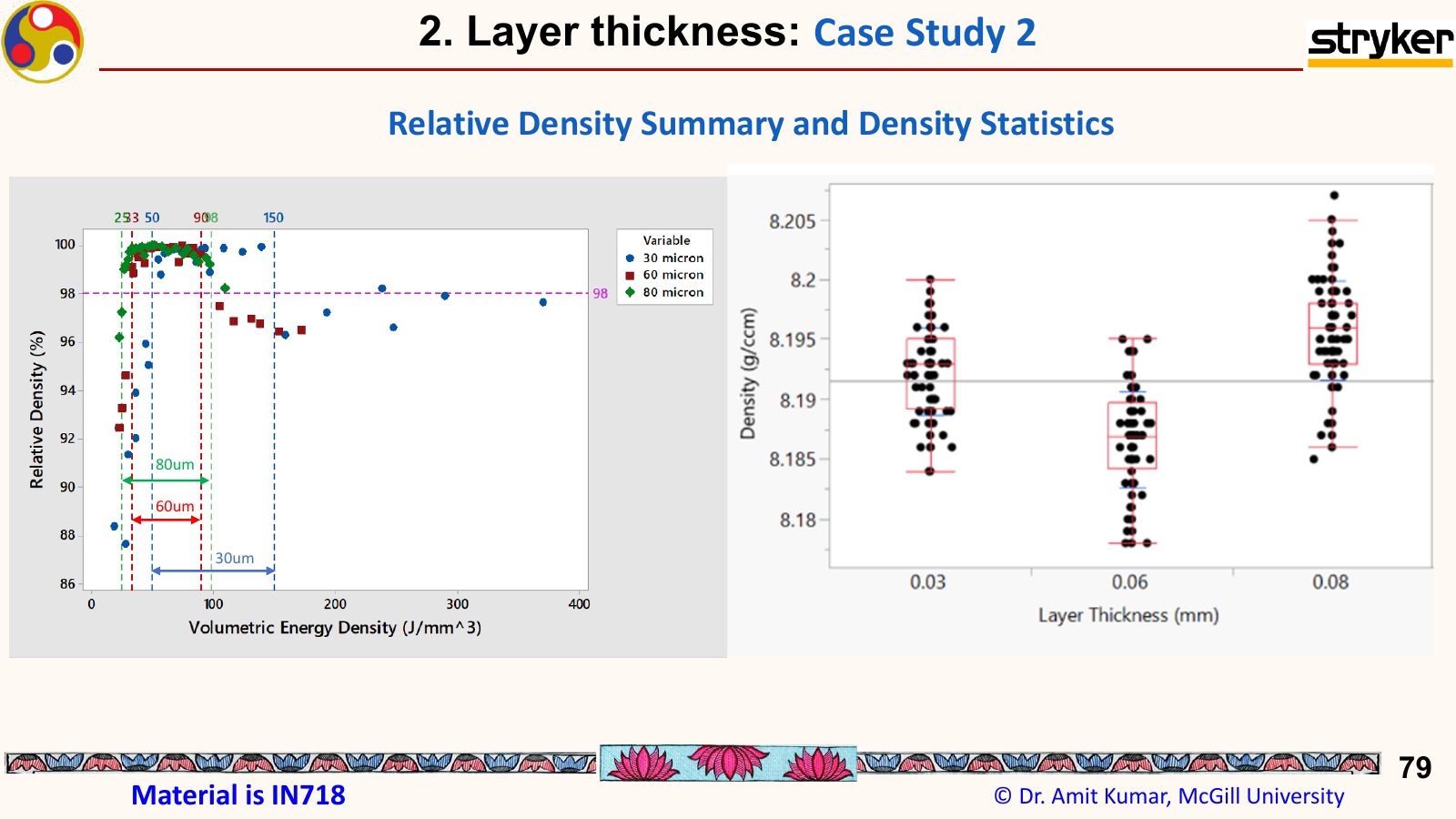
- Process parameters: spot size, power, speed, hatch, energy density, P-V maps
- Layer thickness case studies in SS316L and IN718
- Scan strategies, contouring and layer rotation
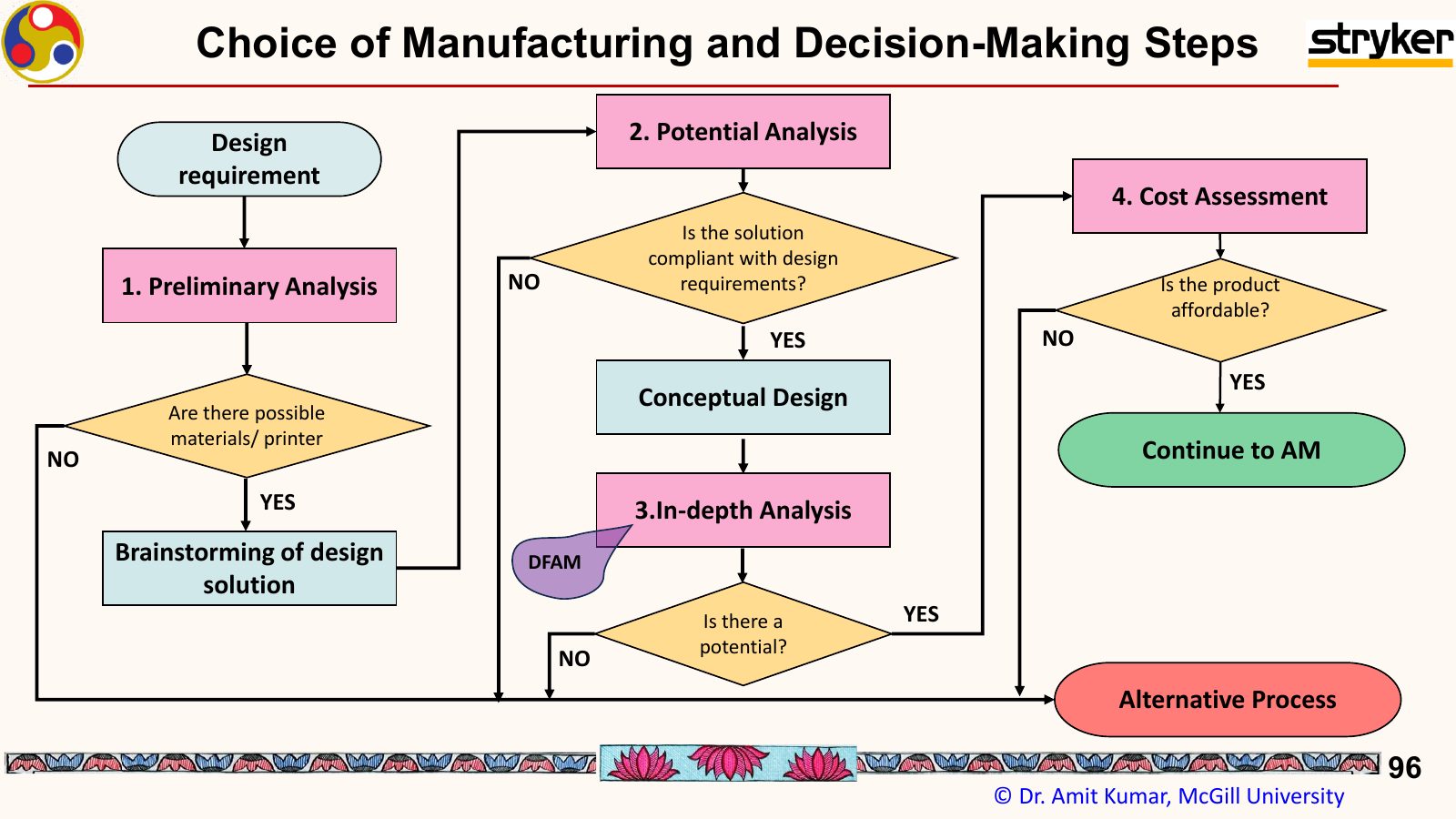
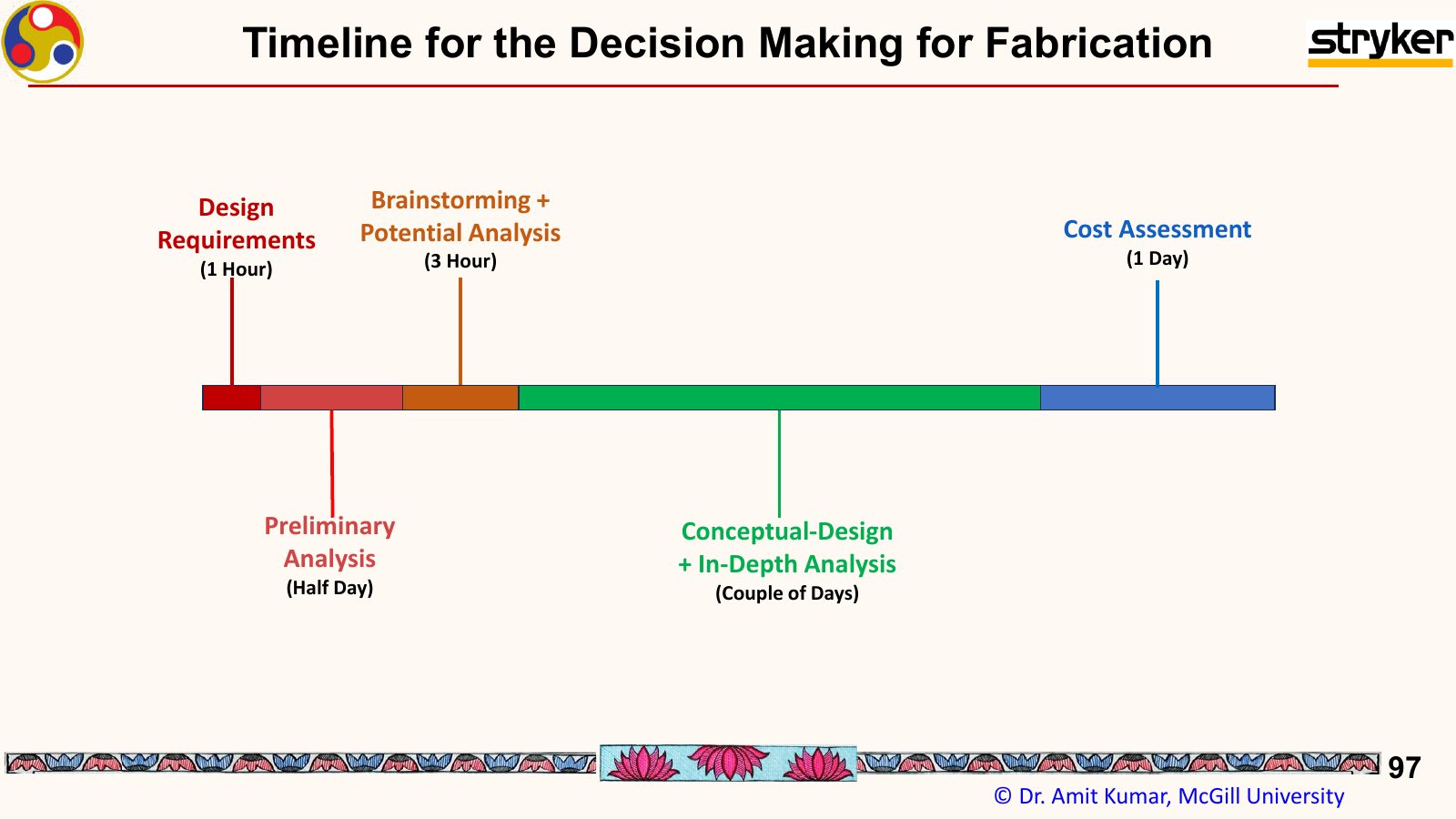
- DfAM: decision-making, benchmarking artifacts, design guidelines and an IN718 case study
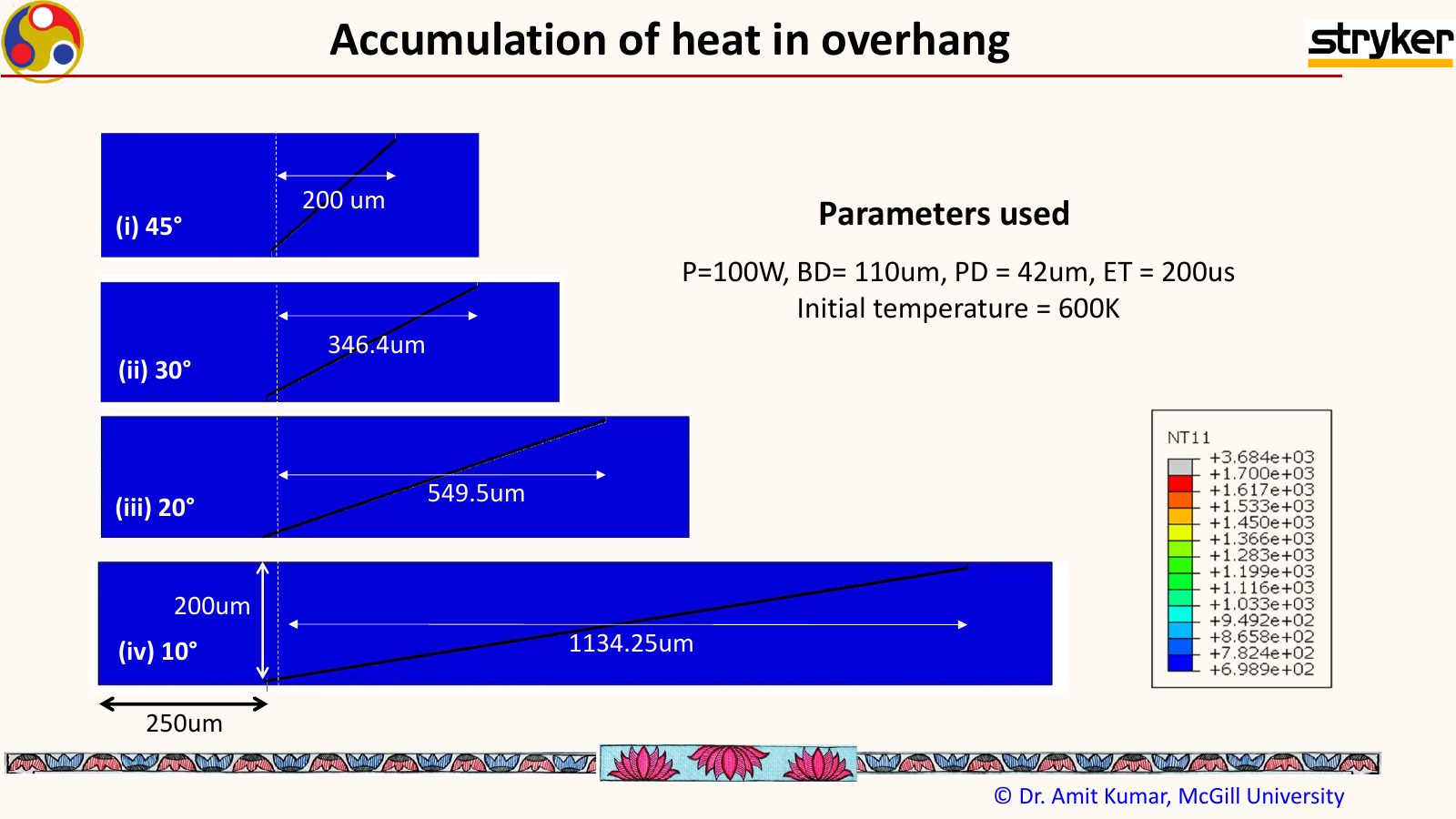
- Overhangs and supports, orientation, topology optimization, generative design and lattices
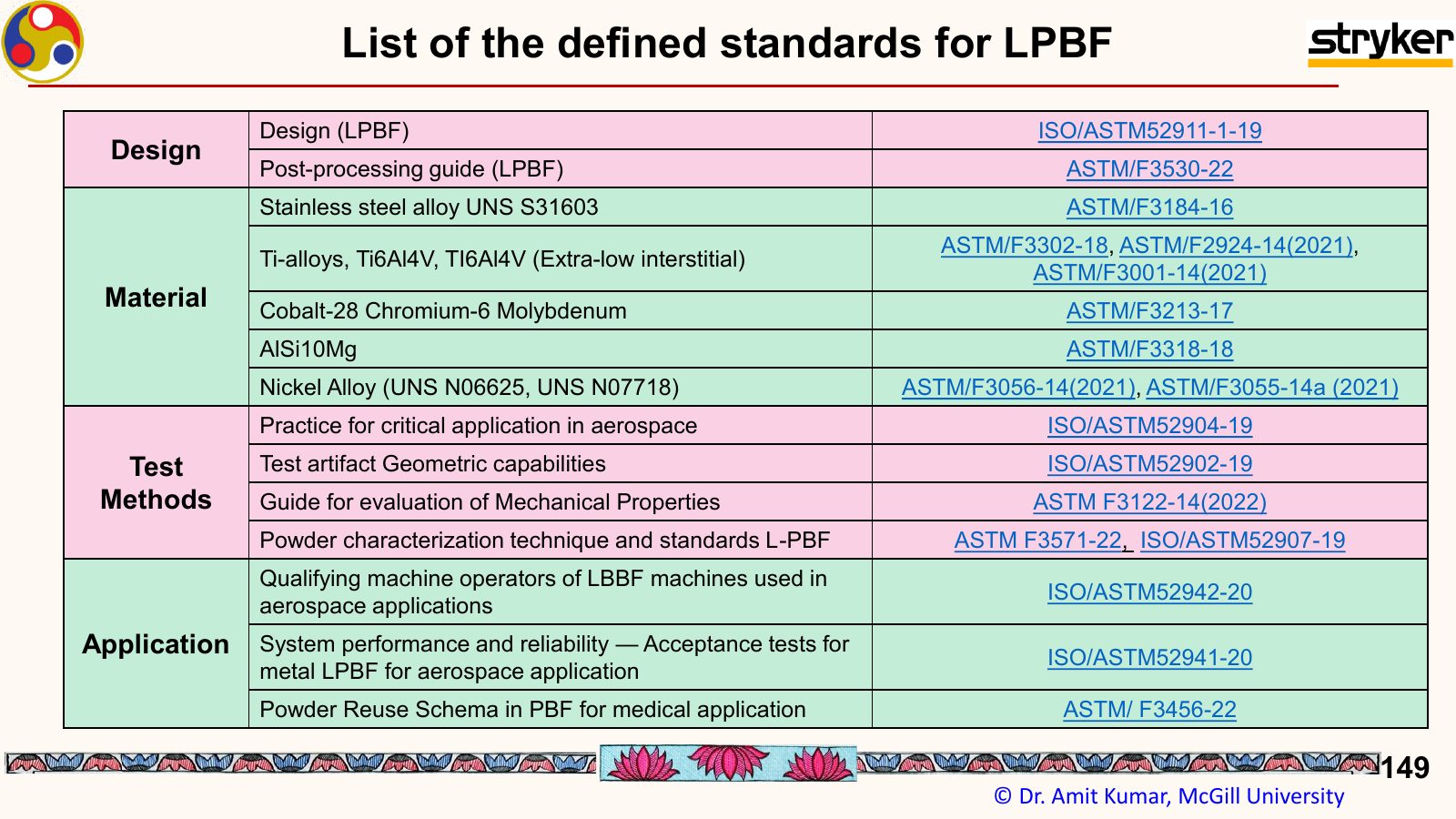
- LPBF standards and surface post-treatments
Want this course for your team?
I adapt the material for industry teams, students and research groups, from a one-day introduction to a full multi-week program.